
Committee approves signing, high-visibility crosswalks for four Buckner Park intersections
Get AI-powered insights, summaries, and transcripts
Subscribe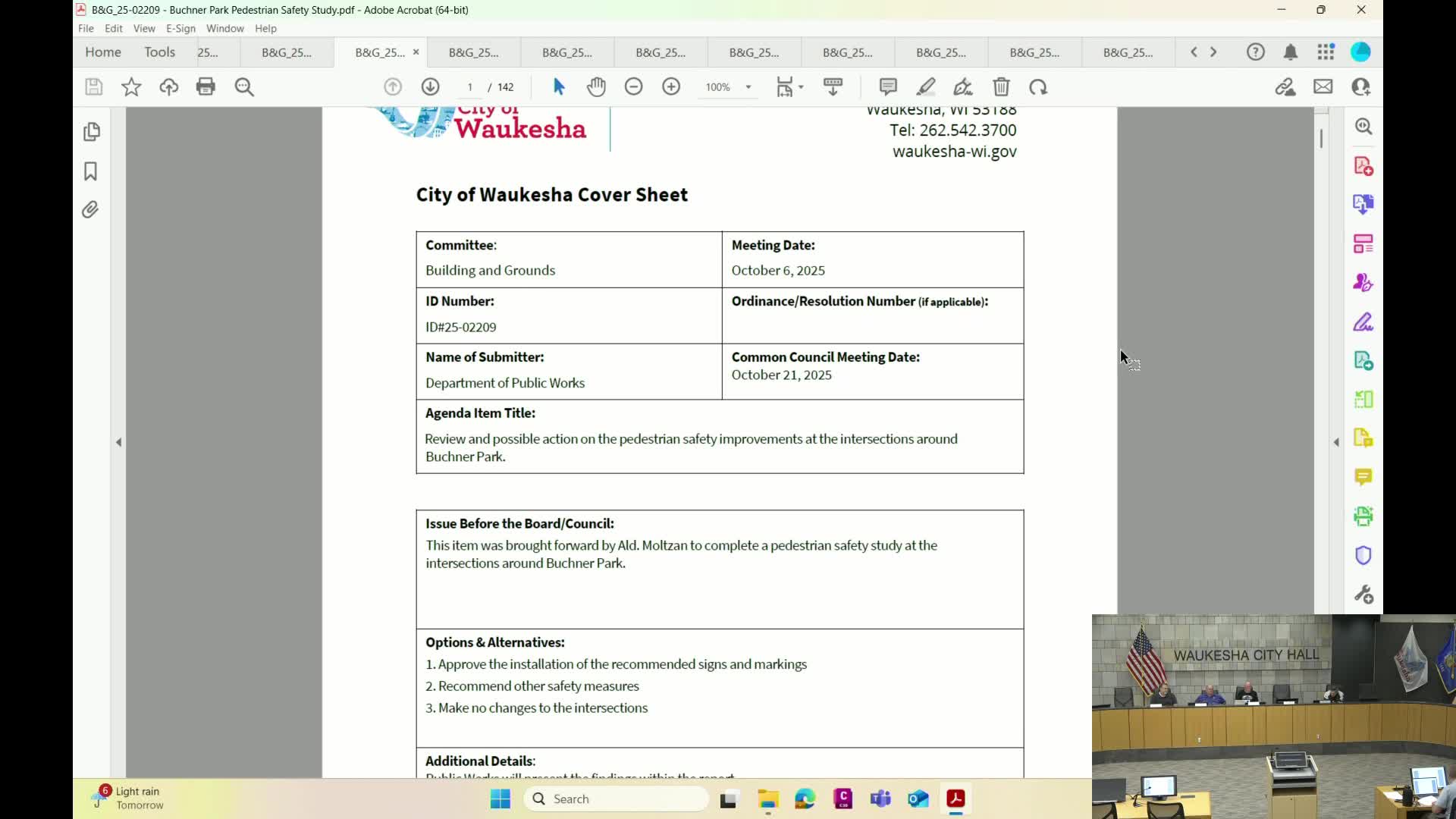
Summary
Engineering recommended and the committee approved short-term pedestrian-safety upgrades — new high-visibility crosswalks, additional signing and selective no-parking zones — for the four intersections around Buckner Park; longer-term reconfigurations remain on a planning list.
The Buildings and Grounds Committee approved staff recommendations Oct. 6 for pedestrian-safety improvements at the four intersections surrounding Buckner Park.
Alex, city engineering staff, told the committee staff had counted pedestrians and reviewed five years of crash history while conducting weekday and Saturday field reviews. “We went out and we we looked at the last, again, 5 years of crash history,” Alex said, then outlined targeted short-term measures including high-visibility crosswalks, additional pedestrian signage and limited no-parking zones to improve sight lines at the busiest legs.
Why it matters: Buckner Park includes a public pool and draws heavy pedestrian activity in warm months; staff found multiple crashes and a high volume of pedestrians at several legs of the park intersections.
Key recommendations approved: adding high-visibility (zebra) crosswalk markings where missing; installing pedestrian-crossing advance signs; removing a now-unsupported “4-way” plaque under certain stop signs to align with the MUTCD; and adding selective no-parking to preserve sight lines on Broadway. Alex said the northwest corner (Broadway and Oakland) had the most crashes among the four corners; “there were 8 crashes over the last 5 years,” he said, and staff recommended a left-side secondary stop sign for westbound traffic to improve visibility. For the northeast corner at Broadway and Greenfield staff recommended high-visibility crosswalks and additional signage after observing one leg carry 122 pedestrians on a Saturday.
Alder Moltzand, who brought the item forward, told the committee she has received numerous resident concerns about near-misses and said the long-term items could be addressed when Greenfield Avenue is scheduled for reconstruction in the five-year capital plan.
Committee action: Alder Rick Lemke moved to approve staff recommendations; the motion passed unanimously.
Timing: some pavement markings will wait until spring because the city’s paint machine is stored for the season; signage work can proceed once ordered.
Background: staff distinguished short-term operational improvements from longer-term intersection reconstruction concepts and noted several approved treatments follow accepted MUTCD guidance.