Get Full Government Meeting Transcripts, Videos, & Alerts Forever!
Get email alerts on the Public Works Graffiti topic
No spam. Unsubscribe anytime.
Council approves one‑time funds for graffiti abatement trailer; members press for alternatives to repeated cleanup
Summary
Committee reviewed a one‑time transfer to buy a trailer to support a newly funded graffiti abatement crew and discussed longer‑term strategies — murals, designated art areas, and community service — to reduce recurring cleanup costs.
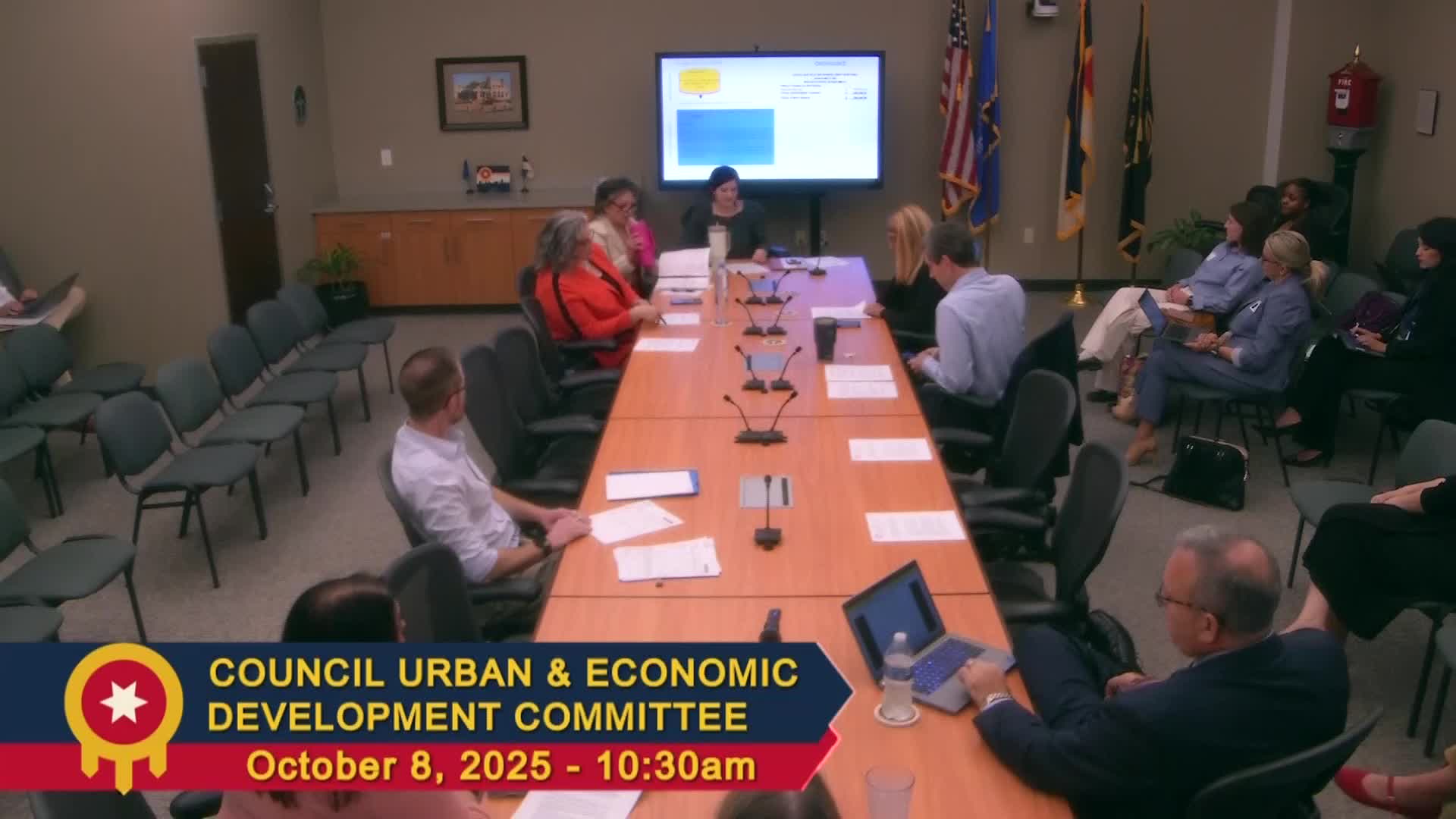
The Urban Economic Development Committee discussed and endorsed a one‑time budget transfer to buy a trailer for a newly funded graffiti abatement crew, while several councilors urged the city to pursue alternatives that reduce recurring abatement costs.
Staff explained additional short‑term capital funds were needed after public works acquired a surplus truck but lacked a trailer to transport cleanup equipment for the second graffiti abatement crew established in the FY26 technical budget. The ordinance would appropriate approximately $56,056 (committee materials cited an amount in that range) from the short‑term capital fund balance to buy the trailer and allow the new two‑person crew to operate as planned.
Council discussion and alternative strategies Multiple councilors asked for the committee to explore preventive strategies rather than repeated cleanups. Suggestions included designated legal walls or yards where graffiti artists could paint, more commissioned murals in high‑tagging locations, and increased use of state crews through interagency memoranda of understanding because many tags appear on state structures such as overpasses. One council member suggested using community service programs to reduce contractor costs and another noted the importance of a targeted, data‑driven approach to deploy crews to hotspots.
Staff noted that some grant funds were restricted to particular corridor areas (for example, the IDL) and that the crew expansion and the trailer purchase would be a one‑time capital expense; operating funds for the crew were already in the technical changes. The committee did not change the purchase plan but asked staff to continue exploring preventive and partnership strategies with state and county agencies.
Ending Committee approved the one‑time capital transfer to acquire a trailer to support the second abatement crew and requested follow‑up conversations about prevention, hotspot mapping and use of grant restrictions in targeting work.