Get Full Government Meeting Transcripts, Videos, & Alerts Forever!
Get email alerts on the Vacant Storefronts topic
No spam. Unsubscribe anytime.
Cambridge applies for state vacant‑storefront tax program and releases new small‑business dashboard
Summary
City staff said they updated a vacant‑storefront database showing a 21% drop in vacancies year‑over‑year and applied for a state one‑stop vacant storefront tax designation that could bring up to $50,000 to support businesses occupying long‑vacant spaces.
Cambridge’s economic development staff reported an updated vacant‑storefront inventory and said the city has applied for a state “one‑stop” vacant storefront tax designation that could make up to $50,000 available to a business taking a space that has been vacant at least six months.
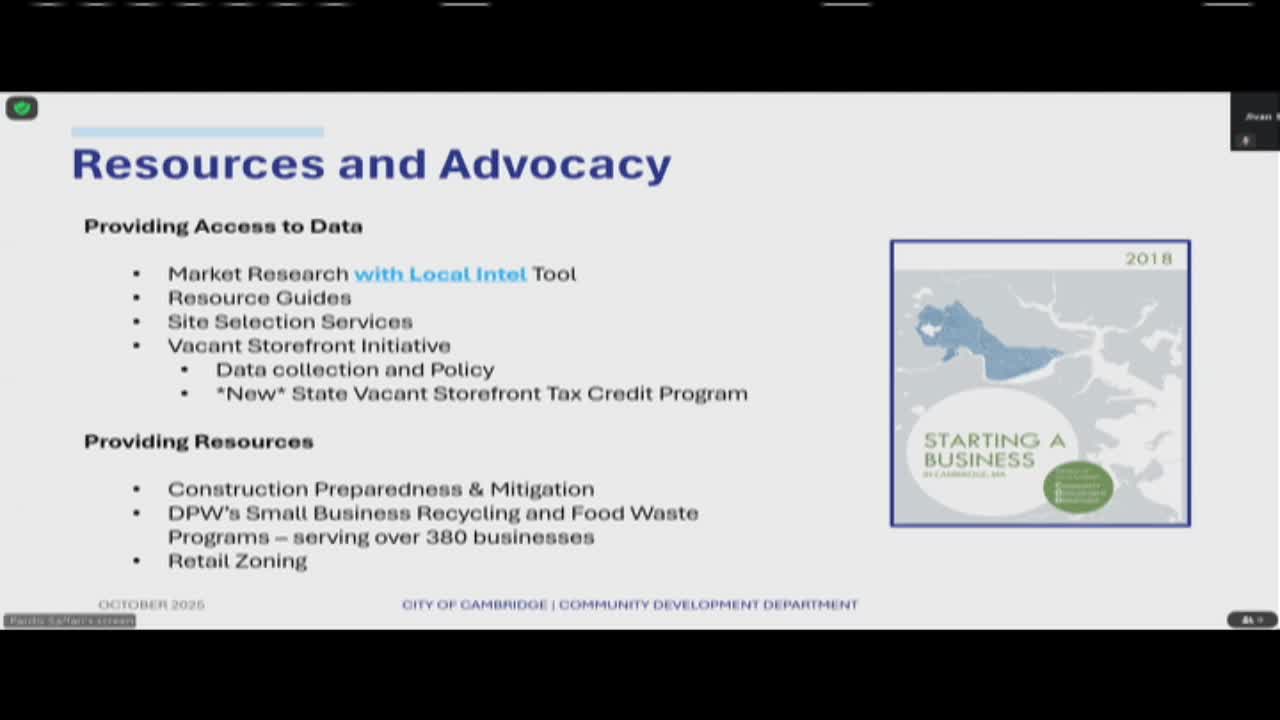
Pardis Cifani described a recent update to the city’s vacant storefront database and said the division saw a 21% drop in vacant storefronts from last fall to this fall. She also announced the city applied for the state program, which, if designated, allows a municipality to distribute up to $50,000 in state tax credits to help a business move into a long‑vacant storefront. The city may split the award across multiple locations or allocate it to a single site, Cifani said, and staff will provide details as the state releases guidance.
Cifani also demonstrated a new public dashboard that summarizes FY25 small‑business grant activity, showing the number of grants awarded (54 in FY25), average grant size by program, program types and geographic distributions of recipients. She emphasized that federally funded grants follow HUD eligibility rules and may use low‑to‑moderate income census tracts or microenterprise definitions (five or fewer employees) to determine eligibility.
The committee requested follow‑up information on program reach and state program rules; no formal votes were taken on the vacant‑storefront application at the hearing.