Get Full Government Meeting Transcripts, Videos, & Alerts Forever!
Get email alerts on the Wildlife Management topic
No spam. Unsubscribe anytime.
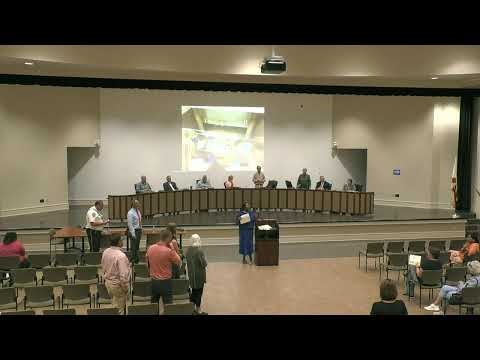
Spanish Fort council approves USDA wildlife services agreement after public objections
Summary
The Spanish Fort City Council voted 4-2 on Oct. 6 to authorize a cooperative services agreement with the U.S. Department of Agriculture’s Wildlife Services for trapping and removal of nuisance wildlife after public commenters urged nonlethal alternatives and council members asked about relocation legality.
The Spanish Fort City Council voted to authorize a cooperative services agreement with the U.S. Department of Agriculture Animal and Plant Health Inspection Service (APHIS) Wildlife Services to trap and remove animals deemed a nuisance, including coyotes, beavers, muskrats and nutria.
The measure, introduced as resolution 15 56 2025, was adopted on a roll call vote: Councilmember Smith — yes; Councilmember Gustafson — yes; Councilmember Perry — no; Councilmember Wynne — yes; Councilmember Prabner — no; Mayor Michael M. McMillan — yes.
The vote followed a public comment period in which Tracy Glover, executive director of ARC, a local animal advocacy nonprofit, urged the council to reject the proposed contract and pursue nonlethal options. “We urge the city to protect them,” Glover said, arguing that trapping and killing beavers, muskrats and coyotes is “overly broad and will result in the senseless killing of beneficial wildlife.” She offered ARC’s help to research coexistence strategies and public education campaigns.
Resident Donna Haas asked what had prompted the proposed contract and whether staff had contacted state wildlife authorities. Council members and staff described repeated reports of coyote attacks on pets in specific neighborhoods and drainage problems caused by beaver dams in parts of Spanish Fort Estates and Spanish Branch. David (staff member) said the program is focused on “specific areas to address these concerns,” not a citywide removal effort.
Council discussion included questions about relocation. During the meeting Shannon (staff member) and other staff advised that the contract is written as a “trap and remove” service and that the agreement is a not-to-exceed dollar amount that ends when the issue is resolved. A staff member stated during the discussion that “it’s illegal to relocate live animals in the state of Alabama,” and that federal agencies do not override that state law.
Council members expressed concern about pet safety and neighborhood incidents as part of their rationale for the vote. The resolution authorizes the mayor to execute a cooperative services agreement with USDA APHIS Wildlife Services; staff said USDA would determine when issues in targeted areas were resolved.
Public commenters who opposed lethal removal asked the council to delay action and review materials ARC submitted about alternatives such as deterrence, public education and beaver flow devices. The council did not adopt a delay; the resolution was adopted that evening.
The contract’s text was attached as an exhibit to the resolution. The resolution and contract set the scope to the identified problem areas; the agreement’s financial cap was described in the meeting as a “not to exceed” dollar amount but a specific total was not read into the record.