Get Full Government Meeting Transcripts, Videos, & Alerts Forever!
Get email alerts on the Injection Wells Brine topic
No spam. Unsubscribe anytime.
Ohio brine injection risks raised in Vienna public forum; speaker urges monitoring and community outreach
Summary
A longtime Ohio Valley resident warned Vienna council members about risks from oil-and-gas brine injection, citing radioactive isotopes, large annual injection volumes in Washington County and court cases alleging trespass. The council did not take formal action but discussed further conversation and monitoring.
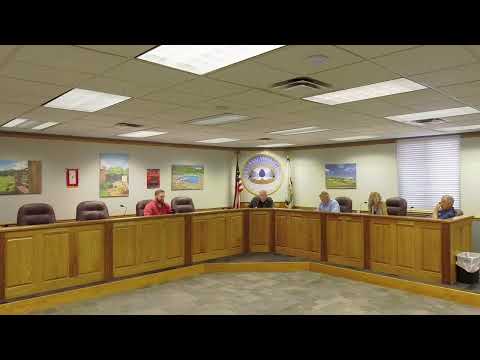
Glenn Newman, a long‑time Ohio Valley resident, told the Vienna City Council during the public forum that the spread and injection of oil-and-gas "brine" waste poses risks to groundwater and local wells and called for ongoing monitoring and community outreach.
Newman, who said he posts data from the environmental database EWG.org/tapwater and has attended regional meetings on the subject, described brine as wastewater containing high salt concentrations, heavy metals and, he said, radium isotopes. “I can live with a candle, but I can’t live without clean water,” Newman said, summarizing why he brought the issue to the council.
In his presentation Newman cited state and local figures: he said the Ohio Department of Natural Resources (ODNR) lists Ohio with 232 active injection wells as of June 5, 2025, and he provided year-by-year injection volumes for Washington County drawn from local reporting — for example 257,356,032 gallons in 2023 and 215,000,000 gallons in 2021. Newman also referenced a 2020 trial in which a jury awarded Triad Hunter damages related to migration of injected liquids from a neighboring salt-extraction operation, and he cited an Ohio Attorney General report he said documented migration from the Redbird Disposal well at Vito, Ohio.
Newman described property-level impacts he said have been reported in regional meetings: oil and gas wells that began producing heavy brown water or lost production and homeowners who lost access to previously available household gas. He said some affected landowners have sued and that engineers can sometimes trace injection water to source wells over time.
Council members and city staff did not adopt any ordinance or resolution at the meeting. Elected officials acknowledged the concern and discussed the limits of municipal authority over injection wells, noting that direct regulation sits with state agencies. One council member emphasized there is not a universally accepted, causal link between injection wells and earthquakes and urged careful review of technical evidence. City representatives described Vienna’s municipal water treatment and regular monitoring; staff said the city uses carbon-based treatment and conducts the required testing on the municipal supply.
Council members suggested this issue would benefit from broader, less formal discussion and outreach involving county and regional partners; the mayor said the council would welcome further conversations and possible coordination with neighboring boards and water providers. Newman asked for a community point of contact; the council encouraged follow-up meetings and information-sharing but recorded no formal assignments or votes.
No immediate regulatory actions were taken by the Vienna City Council at the meeting; council members recommended further information gathering and suggested staff and interested residents pursue a community forum or working group outside a formal council agenda.