Get Full Government Meeting Transcripts, Videos, & Alerts Forever!
Get email alerts on the Land Trust Solar Lease topic
No spam. Unsubscribe anytime.
Bill to amend Chamorro Land Trust lease for Guam International Country Club moves forward amid debate over valuation and environment
Summary
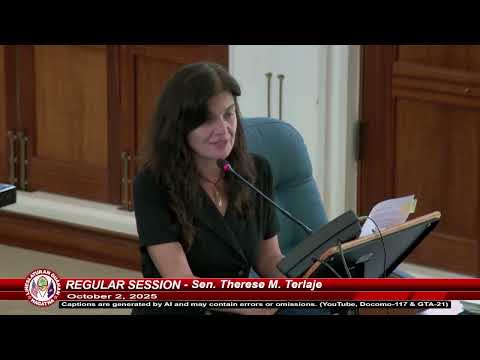
Senator Saint Augustine moved Bill 135‑38 COR to the third‑reading file; the bill would amend the lease between the Chamorro Land Trust Commission and Guam International Country Club to permit a solar project and accelerate payments to CLTC.
Senator Saint Augustine moved to place Bill 135‑38 COR on the third‑reading file. The bill, as presented, would amend the lease for Lot 10122‑12 in Dededo between the Chamorro Land Trust Commission (CLTC) and the Guam International Country Club (GICC) to allow development of a solar farm and to provide CLTC with accelerated rent payments intended to fund land‑trust infrastructure and housing efforts.
What the bill would do: Key provisions read on the floor and in the committee markup include: - Designation of approximately five hectares around the clubhouse and certain adjacent parcels for use in a solar‑generation project, with portions reserved for CLTC occupancy to reduce agency rental costs; - A requirement that solar components be PFAS‑free and be removed and recycled at the end of the lease term rather than disposed in Guam landfill; - A money guarantee from the developer to secure removal, payment of arrears and rent obligations; - An option for CLTC to require an accelerated payment of future rent to CLTC as a net present value (the bill states the amount shall not be less than $9,000,000), with 10% due after signing a power‑purchase agreement with Guam Power Authority (GPA) and the remainder when power is first delivered; - An increase in periodic rent escalation rate from 10% every five years to 12% every five years for the amended lease.
Sponsor argument: The sponsor said the accelerated payment and the solar project could provide immediate arrear relief to CLTC, reduce operating costs for several government agencies by relocating them into the clubhouse, and produce renewable power to help GPA meet statutory clean‑energy goals. The sponsor said CLTC’s board unanimously supported the bill with stated conditions and that an estimated 65‑megawatt solar farm would produce clean electricity and reduce Guam’s fuel purchases.
Concerns raised on the floor: Several senators expressed concerns about valuation and competitive procurement. Questions included whether the net present value figure ("not less than $9,000,000") would shortchange CLTC given the potential multi‑decade value of a solar‑power contract, whether the appraisal method and discount rate were adequate, and whether the lease conversion and solar development had been subjected to a competitive procurement process. Neighbors and some public commenters at the hearing raised environmental questions about storm resilience, migratory birds and possible impacts to air navigation or glare.
Sponsor response and clarifications: The sponsor said "no less than $9,000,000" is a floor and that CLTC may use MAI‑certified appraisers to determine the net present value; the sponsor also said the developer would invest in project construction, estimated in committee materials to be in the hundreds of millions of dollars, and that CLTC would receive other in‑kind benefits such as relocation of government offices into the clubhouse footprint.
Procedural status: The measure was placed on the third‑reading file after debate and an objection was overridden by a voice/count vote in favor. The bill will be scheduled for third reading; it is not yet law and amendments may follow.
Ending: Supporters framed the measure as a pathway to finance CLTC infrastructure and increase renewable energy supply; critics urged stronger valuation, competitive procurement, and environmental protections before final approval.