
Senate advances Debt Collection Fairness Act to protect consumers from garnishment and aggressive collection
Get AI-powered insights, summaries, and transcripts
Subscribe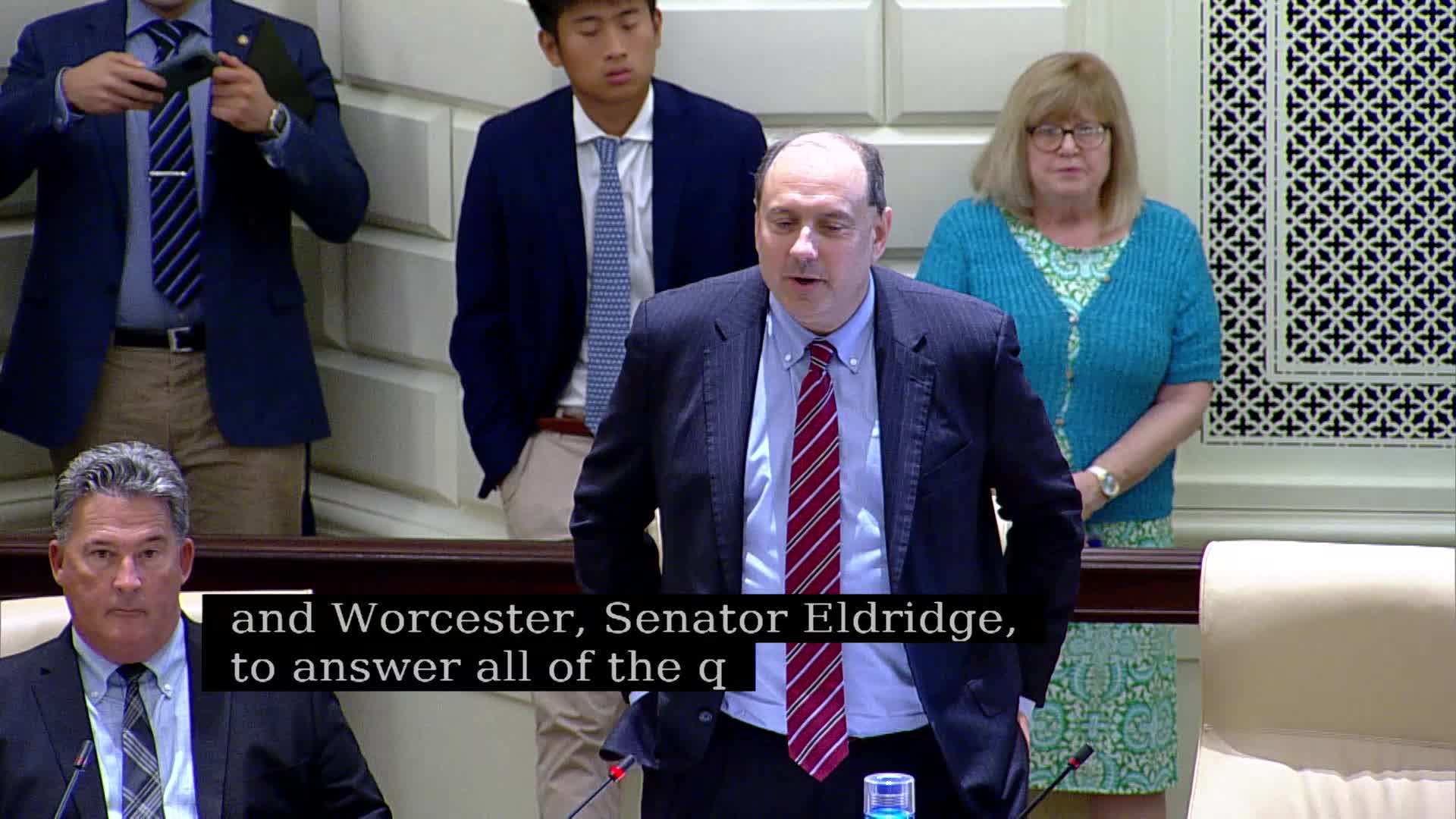
Summary
The Senate advanced S.2551, the Debt Collection Fairness Act, after debate outlining four main consumer-protection provisions: higher garnishment exemptions, lower post-judgment interest rates, an end to civil arrest warrants for consumer debts, and a reduced statute of limitations.
The Massachusetts Senate advanced An Act Relative to Fairness in Debt Collection (S.2551) during the same session, adopting a Ways and Means substitute and ordering the bill to a third reading before passing it to be engrossed.
Senator James B. Eldridge, who presented the bill on the floor, described four principal reforms: raising protected amounts against wage garnishment, reducing the interest rate on consumer debt judgments, ending imprisonment through civil arrest warrants for failure to pay consumer debt, and shortening the statutory limit for collection suits from six years to five.
Eldridge said the bill "is not... walking away from the fact that consumers must pay their debt, but rather making sure that there are adequate protections as well as reasonable financial, tracks for people to pay their debts back and still provide for themselves and their families." He described the garnishment change as increasing the protected threshold from the current statutory measure to 65 times minimum wage (the sponsor cited this as $975 in floor remarks) or 90% of gross wages, whichever is greater.
On judgment interest, Eldridge said the bill would lower the post-judgment interest rate from 12% to 3% for consumer debts, a change intended to prevent payments that never extinguish underlying balances. He also described ending the practice of civil arrest warrants for consumer debt and cited 2016 data showing small-claims courts issued roughly 1,300 civil arrest warrants in Massachusetts while calling the practice "terrifying." Eldridge gave examples he said were provided to the committee, including one case where Greater Boston Legal Services intervened to prevent enforcement actions that would have required sale of exempt property.
Eldridge described the reduction in the statute of limitations from six to five years as a protection against stale or poorly documented claims. He emphasized that the bill does not eliminate valid debts but seeks to curb abusive collection practices and give consumers a fairer path to repayment.
Senators from multiple sides of the chamber praised the leadership that brought the bill forward. The Senate adopted the Ways and Means amendment and, after a roll-call procedure, the clerk recorded votes and the presiding officer announced the bill passed to be engrossed. The floor exchange included requests to spread remarks on the record and multiple senators urging colleagues to vote in favor.
Why it matters: supporters said the measure will protect low- and moderate-income residents from losing basic living standards to garnishment, reduce excessive interest that can prevent debt repayment, and eliminate the use of arrest warrants for civil consumer debts. The bill references several empirical examples and advocacy groups, including the National Consumer Law Center and Greater Boston Legal Services. The bill was advanced for further action; the Senate did not announce a specific implementation timetable during floor debate.