
Appeals court probes sufficiency of evidence tying defendant to firearm-license records in Theron White case
Get AI-powered insights, summaries, and transcripts
Subscribe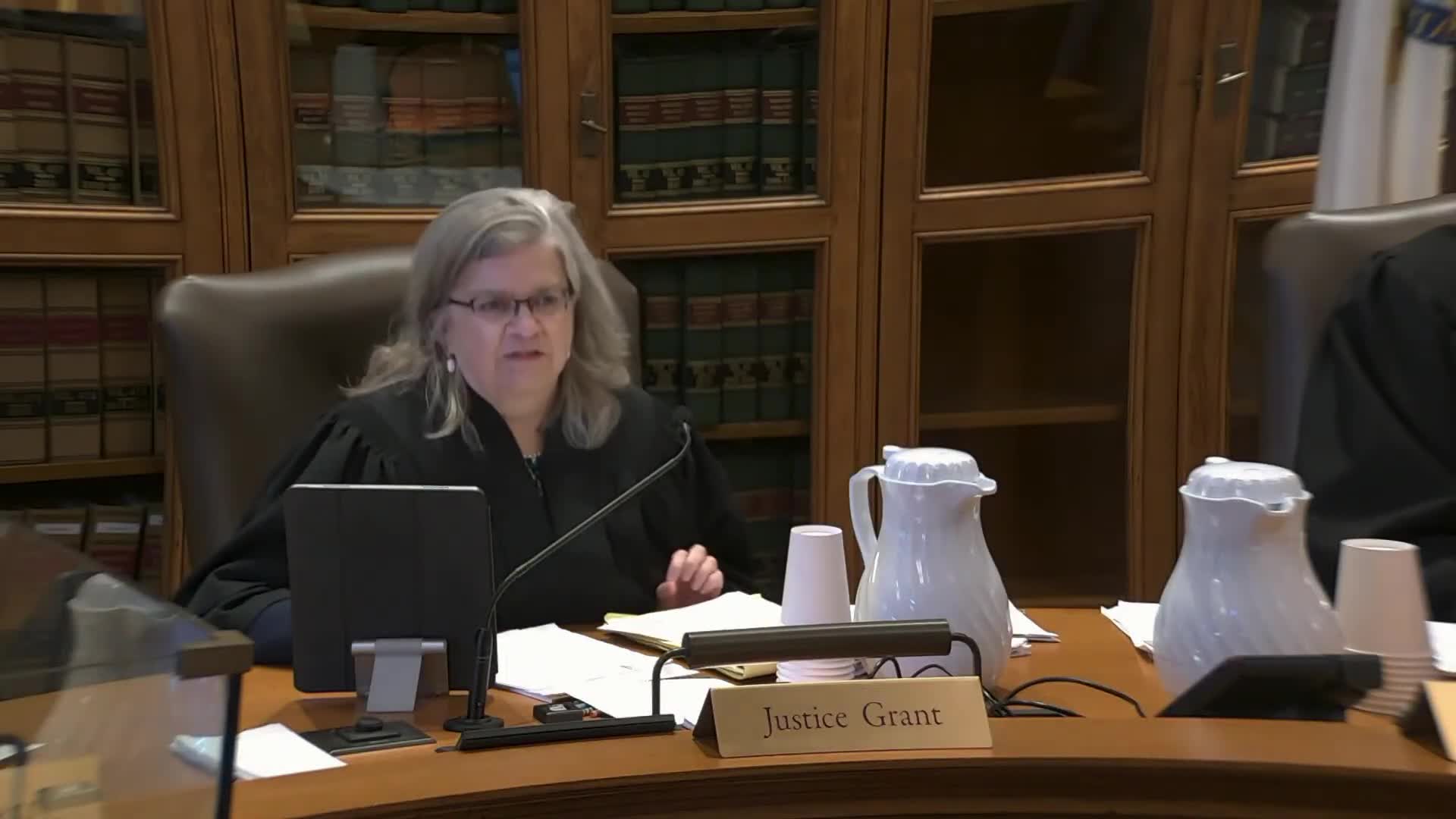
Summary
In Commonwealth v. Theron White the court examined whether testimony and a CJIS printout adequately identified the defendant as the person without a Massachusetts license and whether the jury could reasonably infer knowledge that a recovered revolver was loaded.
The Massachusetts Appeals Court considered Oct. 1 whether the Commonwealth presented sufficient evidence to tie a CJIS licensing printout and officer testimony to the defendant in Commonwealth v. Theron White and whether the jury could reasonably infer the defendant knew the recovered revolver was loaded. Attorney Robert Prevento, representing the appellant, argued that the Commonwealth had not connected the CJIS record's name and date of birth to the defendant in the courtroom with adequate foundational testimony and that an admission about an out‑of‑state license, standing alone, was insufficient. “At the close of the Commonwealth's case, there was no evidence that that license belonged to that specific defendant,” Prevento told the panel. Assistant District Attorney Lindsay Conkey, arguing for the Commonwealth, said officers testified the defendant claimed an out‑of‑state license and that the physical evidence — a revolver whose rounds were visible in photographs admitted at trial — supplied corroboration. “The defendant's own admission, the affirmative claim of having the out of state license, and then I think you can also take into consideration the flight,” Conkey said, pointing to video and testimony about a chase. Why it matters: the court is asked to apply Lattimore‑style sufficiency review and recent appellate decisions (including Smith and related authority) to determine whether identification foundations and corroboration met the constitutional threshold for a jury verdict. The outcome could affect how prosecutors present CJIS printouts and foundational testimony in subsequent‑offense or license‑status prosecutions. Evidence and disputes: defense counsel stressed gaps in foundational testimony about how the CJIS record was linked to the defendant sitting in the courtroom and highlighted the thinness of the record on whether the license referenced was conclusively his. The Commonwealth noted multiple officers' testimony, the defendant's alleged admission that the license was in a bag (later contradicted by his trial testimony), and photos of the recovered revolver (exhibits identified as 4A and 4C) that counsel said showed rounds protruding. Knowledge of loaded condition: the panel asked whether the photographs and the revolver's presentation to the jury permitted a reasonable inference that the defendant knew the gun was loaded. The Commonwealth argued external characteristics of revolvers and case law (including Silvello and Resende cited at argument) permit such an inference; the defense urged that the record does not establish that knowledge beyond speculation. Court response and next steps: the panel probed both sides on foundational testimony for the CJIS printout, whether defense counsel made required‑finding motions at the appropriate times, and the standard for inferring knowledge about a firearm's loaded condition. No decision was issued at argument. Practical takeaway: prosecutors should expect scrutiny of foundational testimony when relying on CJIS records and should prepare witnesses to tie electronic records to the person in court; defense attorneys may press preservation and Lattimore‑sufficiency points when identification hinges on name and birth date alone.