Get Full Government Meeting Transcripts, Videos, & Alerts Forever!
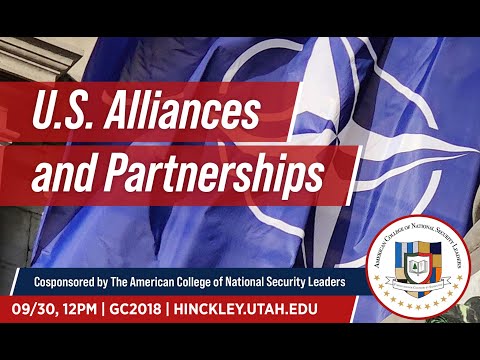
Panel at University of Utah Says NATO Remains Central as Members Debate Limits of Collective Defense
Summary
Retired and former U.S. military leaders at a Hinckley Institute forum said NATO remains indispensable for collective security, while panelists and audience members flagged gray‑area incidents, defense spending and the ally‑versus‑partner distinction as central challenges.
At a Hinckley Institute forum at the University of Utah, four panelists with extensive NATO experience said the North Atlantic Treaty Organization remains central to Euro‑Atlantic security even as members debate where collective defense begins and how much each country should contribute. Major General Donna Barbish, retired U.S. Army, convened the discussion and framed the panel around whether NATO — founded in 1949 — still meets member states’ needs as threats change. “Challenge your assumptions,” she told the audience before turning the session over to the panel. Vice Admiral Kevin Greene, U.S. Navy, described two priorities he said matter most for states: “The first is strength. Countries have to be strong. They have to be strong diplomatically, informationally, military, and economic,” he said, adding that NATO is “indispensable for the security ... of the free world.” Greene emphasized that eastern NATO members, including Poland and the Baltic states, are acting as the alliance’s “first responders.” Bruce Lemkin, a member of the Senior Executive Service and a former Deputy Under Secretary of the Air Force for International Affairs, said interoperability — the ability of militaries…
Already have an account? Log in
Subscribe to keep reading
Unlock the rest of this article — and every article on Citizen Portal.
- Unlimited articles
- AI-powered breakdowns of topics, speakers, decisions, and budgets
- Instant alerts when your location has a new meeting
- Follow topics and more locations
- 1,000 AI Insights / month, plus AI Chat