
Appeals court hears dispute over mechanic’s lien and privity after arbitration in Belle Fleur case
Get AI-powered insights, summaries, and transcripts
Subscribe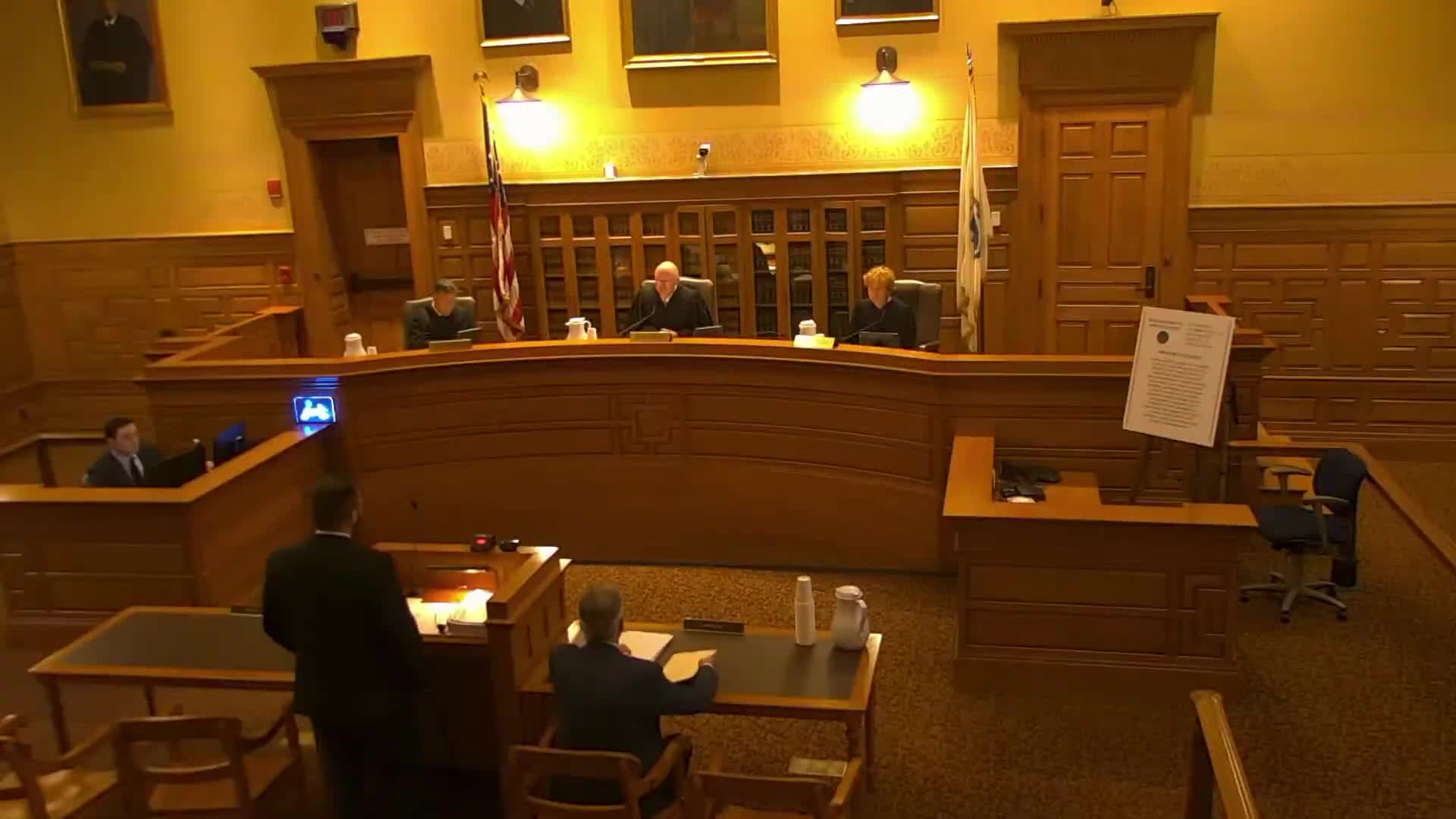
Summary
A landowner and tenant dispute over a mechanic’s lien, arbitration findings, and whether Belfour Realty was wrongly named on lien drew argument; the court considered competing claims that the lien overstated amounts and wrongly included an owner not party to the contract, and took the matter under advisement.
The Appeals Court heard argument in a dispute over a mechanic’s lien, related arbitration, and whether a property owner named on a statement of account was properly included in the contractor’s lien and subject to preclusion by arbitration. Appellants’ counsel Benito Zappia told the panel that Belle Fleur Realty—identified by appellants as the property owner—was never a party to the construction contract with Construction Source Management (CSM) and that listing the owner on the statement of account and lien was a “knowing and willful misrepresentation” that has blocked financing and should have led to dissolution of the lien. Zappia noted a contested difference between the amount sought on the lien ($2.2 million) and the arbitrator’s award ($1.6 million). CSM counsel Michael Mahoney responded that the trial judge properly found privity between the tenant (Bellflower Holdings/BFH) and the owner (Bellflower Realty/BFR), that the parties had consented to arbitration and did not timely appeal the award, and that judge Hodges’ findings and the arbitration record bound the parties. Mahoney told the panel the judge’s determination that the transfer of the property was not a good-faith attempt to avoid debt supported the inclusion of the owner on the lien and the denial of slander-of-title and related counterclaims. The court questioned whether the statute’s mandatory language requiring a verified complaint to discharge a lien (Gen. Laws c.254, §15A) was properly applied or could be bypassed when the dispute is already in arbitration and litigation, and whether privity and issue preclusion barred the owner’s separate slander-of-title counterclaim. Counsel also discussed whether remedies short of dismissal (remand to determine lien scope, fee justification, or reexamination of privity) were appropriate. The panel took the case under advisement following argument. No final ruling was announced at argument.