
Appeals court hears challenge to trial judge’s disqualification of counsel in closely held cannabis dispute
Get AI-powered insights, summaries, and transcripts
Subscribe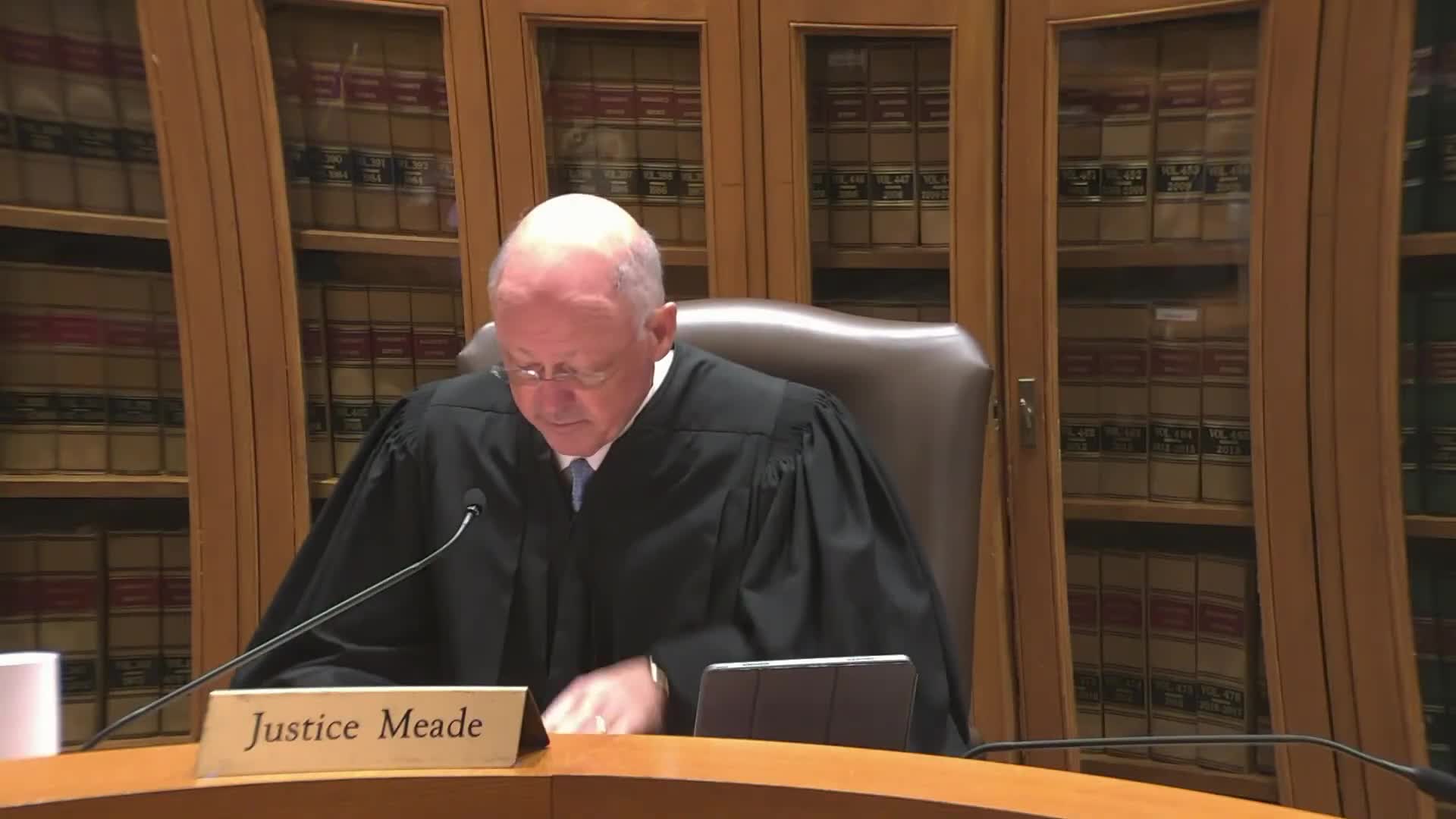
Summary
In an appeal over counsel disqualification in a suit between two co-owners of Canneberg Cultivation, attorneys debated whether conflicts under Massachusetts Rules of Professional Conduct Rule 1.7 justify disqualifying counsel without an evidentiary hearing; the court took the matter under advisement.
The Massachusetts Appeals Court on the oral-argument calendar heard competing views on whether a trial judge properly disqualified a lawyer from representing both a closely held cannabis company and one of its co-owners in a dispute between the company’s two sole owners. The case centers on whether the alleged competing interests of the two owners created an unwaivable concurrent conflict under Rule 1.7 of the Massachusetts Rules of Professional Conduct and, if so, whether the trial court abused its discretion by ordering disqualification without an evidentiary hearing. Appellant counsel Robert Curtis, arguing for the disqualified lawyer’s client, said the record showed the litigation was essentially “Bujold versus Morrison” and that Canneberg had no independent corporate interest separate from the owners. Curtis told the panel that the judge “didn’t make findings” and that “an evidentiary hearing was warranted” before disqualification. Appellee counsel David Vinz, representing Robert Bujold and related appellees, told the court the judge correctly found an “unwaivable concurrent conflict of interest under rule 1.7” and that the trial court properly applied Rule 1.9(a) in concluding the lawyer could not represent a party adverse to a former client in the same matter. The parties debated whether the underlying count at issue (count 5) is a direct claim by the company or a derivative claim brought on the company’s behalf, and how that label affects whether the court should apply Rule 1.7 alone or also examine Rule 1.13(g). Vinz told the panel a footnote in the lower court’s decision mischaracterized count 5 but argued that the mislabeling was immaterial because a direct-adverse finding under Rule 1.7 would be dispositive. The panel asked several questions about standards of review and the proper path if only one representation (the company or the individual) were disqualified rather than both. Counsel acknowledged that the record contains undisputed allegations that Morrison applied for a competing permit, that documentary evidence had been submitted to the trial court, and that discovery had occurred in the case, but disputed whether those facts were sufficiently developed to support disqualification without an evidentiary hearing. The court took the case under advisement. No formal ruling was made at argument. The appeal focuses on whether (1) Rule 1.7 requires disqualification in the face of allegations that a majority owner took actions harmful to the corporation, (2) the judge erred by not holding an evidentiary hearing before disqualifying counsel, and (3) Rule 1.9 forbids the lawyer’s continued representation of either party if the lawyer formerly represented one of them.