
Phoenix Community Assistance Program reaches staffing milestones; behavioral health units report rising call transfers
Get AI-powered insights, summaries, and transcripts
Subscribe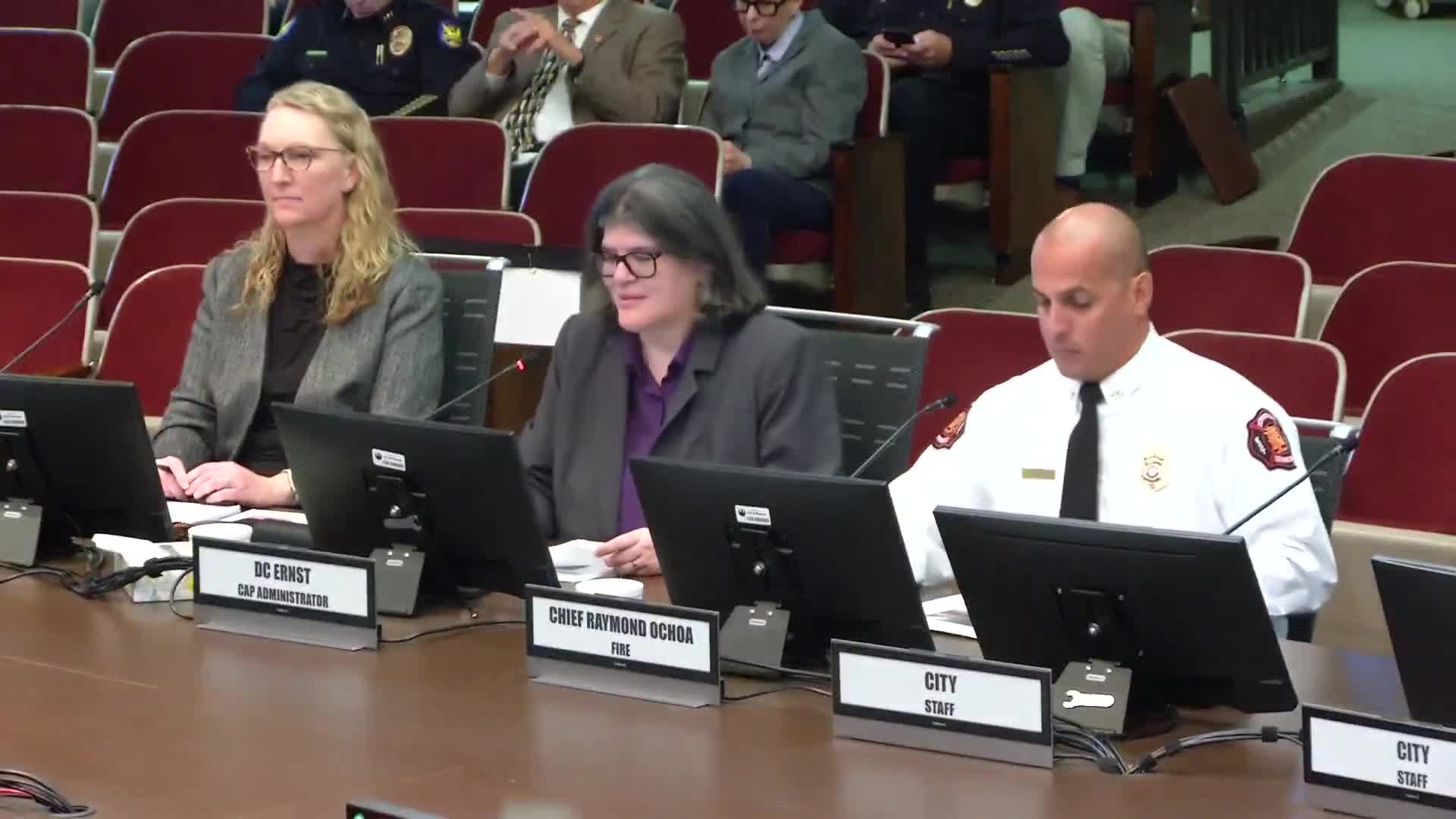
Summary
City staff told the subcommittee that the Community Assistance Program (CAP) has staffed nine behavioral health units with 24/7 coverage and is 93% toward overall CAP staffing goals. Call transfers from police dispatch to CAP's behavioral health dispatch increased 98% year-over-year, staff said.
Community Assistance Program (CAP) staff told the Public Safety & Justice Subcommittee on Oct. 1 that CAP has significantly expanded alternative response capacity for behavioral health and crisis calls.
DC Ernst, Community Assistance Program administrator, told the committee CAP completed six onboarding classes in 2025 and had reached “93% of our staffing goals.” Ernst said the program reached its target of nine behavioral health units as of June 2025 and established 24-hour, seven-day-a-week coverage for those units.
Ernst said crisis response units continue to operate primarily as co-response teams together with police and fire for incidents such as house fires, unexpected deaths, domestic violence and child abuse investigations. CAP has staffed six crisis response units and is recruiting to reach a goal of 10 total crisis response units. Ernst said CAP anticipates full 24/7 crisis response coverage in 2026.
The administrator reported a 98% increase in calls transferred from police communications to CAP behavioral health dispatch between the first eight months of 2024 and the same period in 2025, with 417 transfers in August 2025—the highest monthly total since transfers began. Total call volume for behavioral health units rose 94% year-over-year for the same period, Ernst said.
When Councilmembers asked what typically happens to a person in crisis when police and a behavioral health unit respond together, Ernst said, “Typically, if the officer can transfer the care to a behavioral health unit, then we will take over the care of that individual, and the officer will leave the scene.” He said CAP’s goal is to stabilize people in place where possible, connect them to services or, if someone poses a danger to self, pursue petitions for evaluation.
Ernst described response-time targets around a 25-minute standard and said August 2025 median response times were about 20 minutes for behavioral health units and 22 minutes for crisis response units. He noted CAP units comply with traffic laws and do not use lights or sirens, and that Harvard Kennedy School’s Government Performance Lab finds similar response-time comparators in other jurisdictions.
The subcommittee did not take formal action; members praised the program’s expansion and asked staff to continue recruitment, report on vacancies and to refine call-transfer processes with police and fire dispatch.