
Appeals court reviews whether victim testimony corroborated defendant's confession in indecent-assault case
Get AI-powered insights, summaries, and transcripts
Subscribe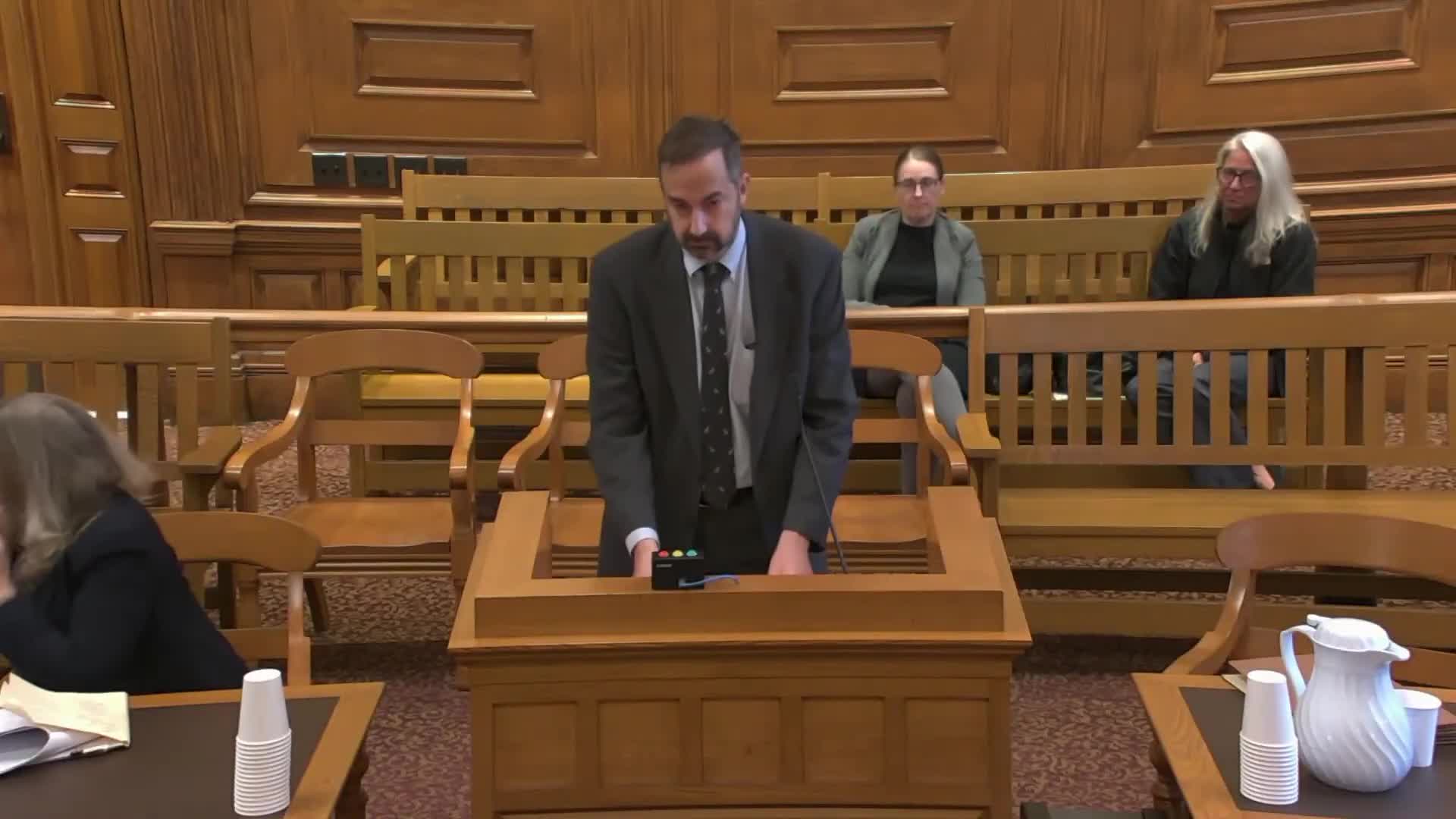
Summary
In Commonwealth v. Michael Ford the panel considered whether the victim's testimony and other evidence sufficiently corroborated the defendant's admission to support an indecent-assault conviction, and whether location discrepancies or other-count testimony met the minimal corroboration standard.
The appeals panel heard argument in Commonwealth v. Michael Ford on whether the defendant's admissions were adequately corroborated to support an indecent-assault conviction. Defense counsel argued that the corroborating testimony came from events that occurred at different locations or times and therefore did not meet the requirement that corroboration relate to the specific confessed act.
Attorney Christopher DeMeo argued the defense position that admissions must be corroborated by evidence tied to the charged offense, not merely other bad-act testimony. He noted that the victim's testimony described at least one occasion in a car and that several other contacts described did not establish the charged offense in North Attleboro as indicted. DeMeo relied on precedents that require corroboration to be focused on the specific crime at issue.
Assistant District Attorney Jennifer Thompson said the jury heard the victim's testimony that an indecent assault had occurred and that the defendant in interview confirmed conduct; Thompson argued that the corroboration requirement under Ford is minimal and can be satisfied by evidence showing that a sexual act occurred and that the defendant engaged in similar conduct. She added the evidence of other sexual acts and the defendant's admissions supported the verdict.
Justices pressed both sides on whether Ford's corroboration rule applied given an available live witness and whether the corroboration need only show that "a sexual offense occurred by someone" rather than connecting every element to the defendant. The Commonwealth argued jurors could reasonably infer from the total record and admitted statements that the charged act occurred as alleged.
The panel took the matter under advisement after argument. Counsel debated whether the corroboration requirement was satisfied by the victim's testimony alone or whether the admission required corroboration linked to the specific act in the indictment; the court will issue a written decision.