
Appeals court hears challenge to contempt finding in long-running guardianship dispute
Get AI-powered insights, summaries, and transcripts
Subscribe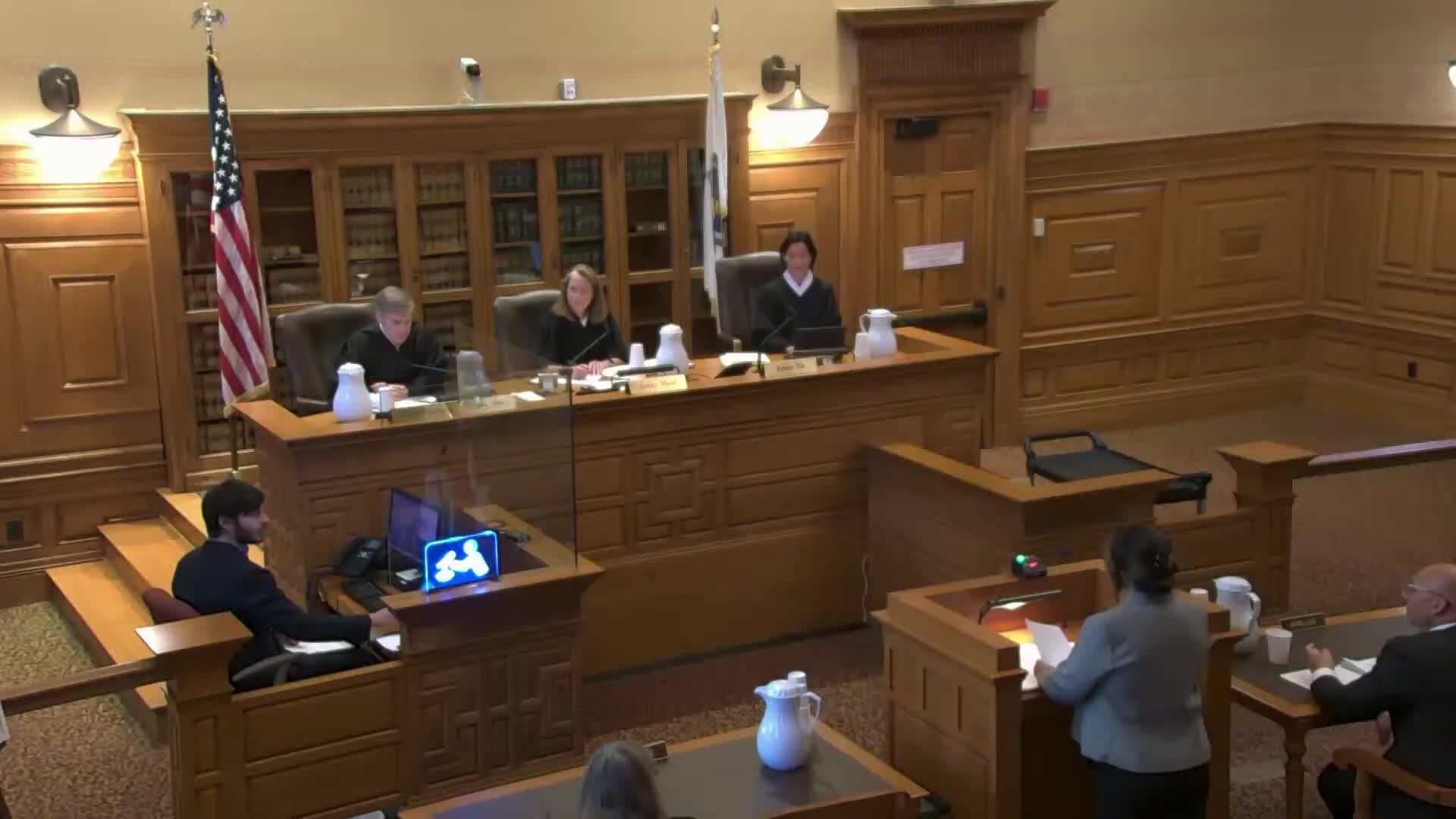
Summary
The Massachusetts Appeals Court heard argument in an appeal asking the court to vacate a contempt finding against a child's guardian, focusing on whether the probate judge evaluated the guardian's ability to comply in light of the guardian's duty to act in the ward's best interest and later child-abuse disclosures to mandated reporters.
An appeals panel heard arguments on Oct. 2 in the case arising from the guardianship of R.P., where the guardian was found in contempt after withholding visitation with the child's mother. Attorney Jennifer DeFeo, who said she represents the guardian, asked the court to vacate the contempt judgment, arguing the probate judge did not evaluate whether the guardian lacked the ability to comply given his obligation to act in the ward's best interest.
The issue matters because the guardian's statutory duty (as presented in argument) and the child's reported physical and emotional reactions were central to counsel's contention that a contempt finding was not supported by consideration of the totality of circumstances. DeFeo told the panel: "We are requesting that this court vacate the contempt judgment that was issued against him where the guardian did not have the ability to comply with the decree, and the judge who issued the contempt failed to do an analysis under both custody of Anh and the best interest of the child standard."
DeFeo emphasized that the child exhibited physical symptoms ("stomach pain, heart racing") and that mandated reporters and a Department of Children and Families (DCF) social worker had investigated 51A reports and found the child credible and not coached. She said DCF "found that the child was credible in what he believed happened" and that the guardian faced a choice between forcing visits and safeguarding the child's welfare.
Attorney Jean Kaiser, who said she represents the child and supported the guardian's position on the contempt appeal, argued the probate judge should have reassessed whether the visitation order remained in the child's best interest before sanctioning contempt because guardianship matters treat the child's best interest as paramount. Kaiser noted that the trial record included an ongoing motion for relief from judgment at the time the contempt issues were considered and argued that judges hearing a guardianship contempt must specifically consider whether the order continued to serve the child's welfare.
Attorney Michael Penta, identifying himself as counsel for the mother, urged the court to defer to Judge Ulrich's credibility findings and factual assessment. He said the judge who issued the visitation decree had presided over a multi-day trial and found the guardian's conduct discouraged visitation; Penta characterized the appeal as a narrow challenge to a contempt finding rather than an attack on the underlying visitation order.
At argument, the panel questioned which factual findings are reviewable in the narrow appellate inquiry and whether the record showed a guardian lacked the present ability to comply. Counsel for the guardian pointed to the child's later disclosure and to DCF findings as relevant to the totality-of-circumstances review; opposing counsel stressed the timing of the contempt allegations predated that disclosure and again urged deference to the trial judge.
The case was submitted to the court at the conclusion of oral argument. The appeals court will decide whether the contempt finding should be vacated or upheld based on the record and the parties' legal arguments.
The arguments focused on (1) whether a contempt finding requires the trial judge to weigh a guardian's duty to act in the child's best interest against a court order, (2) the timing and probative value of DCF's 51A investigation and disclosures, and (3) the limits of appellate review for factual findings made after multi-day proceedings. If the contempt is vacated, the probate court's prior decision may be revisited; if affirmed, the contempt will stand.