
Abington officials outline plan to borrow up to $285 million for new middle school; early borrowing would phase tax impact
Get AI-powered insights, summaries, and transcripts
Subscribe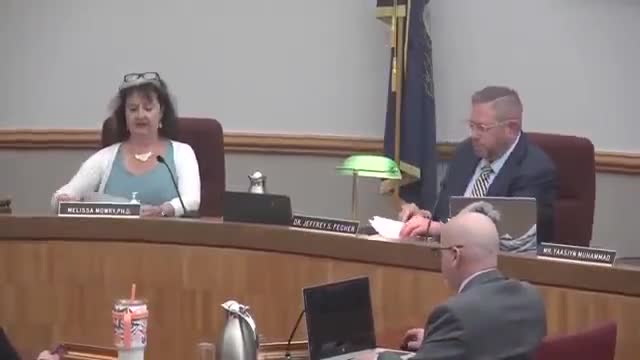
Summary
A financial adviser presented an early schedule for issuing up to $285 million in general obligation bonds to finance a new Abington middle school. The district also approved a reimbursement resolution to allow general‑fund coverage of early project costs that will later be paid from bond proceeds.
Abington school leaders on Sept. 30 heard a detailed financing presentation about the $285,000,000 referendum-approved middle school project and approved a reimbursement resolution that would let the district temporarily cover early project costs from the general fund until bond proceeds are available.
The district’s invited financial adviser, Audrey Baer of Piper Sandler and Company, laid out an early borrowing scenario that would phase the work and the borrowing in three pieces rather than all at once. “For estimate’s sake and to start the discussions, we are looking at potentially 3 borrowings, $20,000,000, $135,000,000, and $130,000,000 in the coming years,” Baer told the board, stressing the figures are early estimates and will change as bids and timing are finalized.
The presentation emphasized that market factors reduce the bond proceeds below the ballot amount: fees, original issue discounts/premiums, insurance and cost-of-issuance estimates reduce the referendum ceiling to an estimated $270,000,000 available for construction in the illustrative scenario Baer showed. She also explained that capitalized interest — borrowed money held in the construction fund to pay early interest — can be used to phase in budget impacts over several years rather than hitting taxpayers immediately.
Why it matters: the board is still early in the planning process. Borrowing timelines and the structure of sales affect both the district’s near-term budget and long‑term debt service paid by taxpayers. The board passed a reimbursement resolution prepared by bond counsel George Magnotta that allows the general fund to be reimbursed from future bond proceeds for project management, site surveys, geotechnical work, schematic design and other pre‑issuance expenses. As the resolution notes, the district may incur “up to a few million dollars” in such preliminary costs depending on timing.
Baer summarized how different sale methods can affect timing and pricing. A negotiated sale — where the district selects an underwriter and times the market — offers more flexibility than a competitive auction that must happen within a predetermined window. She also reminded the board that municipal bonds are typically sold in $5,000 increments and described the tax treatment for Pennsylvania residents: interest on Pennsylvania municipal bonds is generally exempt from federal and state income tax, creating demand among retail investors.
Board members asked practical questions about timing and budget impact. Finance staff and Baer said the district’s plan, based on current draw schedules provided by the project manager, is to borrow the initial $20,000,000 in the 2025 series and wire those proceeds into the district’s designated construction account; payments on that borrowing would begin in the following school year. Baer reiterated that the district currently has roughly $10.7 million of fixed debt service in this year’s budget and that adding the middle school borrowings would phase increases in the future debt-service line.
The reimbursement resolution approved the same night allows the district to treat certain near-term project expenses as capital and later reimburse them from bond proceeds. Bond counsel prepared the resolution to avoid having capital planning costs remain permanent general-fund expenditures if there is a delay between project work and bond issuance.
Board action and next steps: the board approved the reimbursement resolution during the meeting. Baer and district staff repeated that figures, schedules and the borrowing plan remain preliminary; final borrowing amounts, sale method and timing will be decided as bids and market conditions are known.