
County opioid advisory reviews grant template, debates eligibility and reporting
Get AI-powered insights, summaries, and transcripts
Subscribe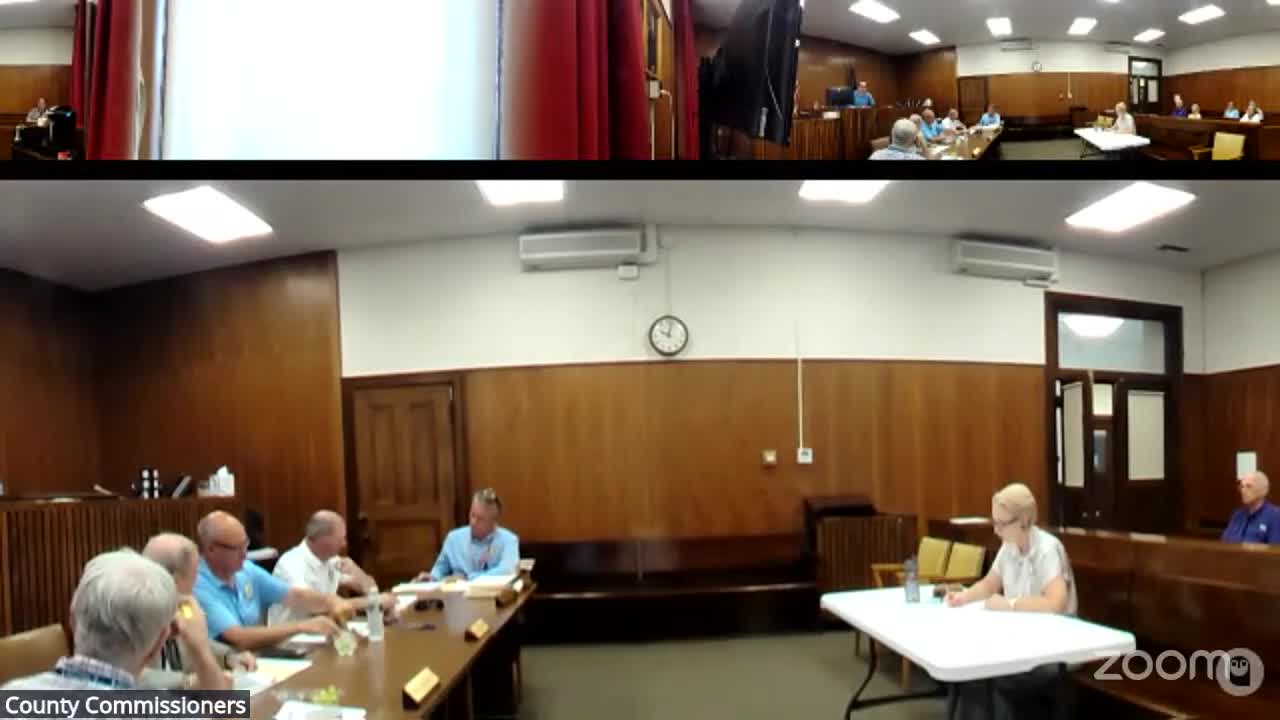
Summary
Panelists reviewed a template application for opioid settlement funds, discussed eligible applicants and reporting requirements, and deferred final approval until commissioners review settlement-driven requirements. Commissioners debated whether for-profit entities and syringe-service programs should be eligible.
Penobscot County’s opioid advisory workshop on Aug. 25 reviewed a draft application template for distributing local opioid settlement funds and discussed eligibility, reporting complexity and priorities for allowable uses.
Commission staff said the county account contains roughly $1.2 million in settlement proceeds and that an initial annual award round could be about $400,000, with annual disbursements expected to average roughly $250,000. Commissioners and committee members agreed not to approve the application at this meeting and to review additional reporting and settlement paperwork before finalizing the packet.
Pat Kimball, the staff contact for reporting templates, and a consultant from the Moss Group provided background documents and a suggested reporting structure. Commissioners asked how complex the reporting should be and whether mandatory measures in the state guidance — such as tracking bed days, naloxone administration or other outcome metrics — should be required of applicants. “Those are on the wish list of the state, not mandated,” a staff member said, adding that reporting will depend on the kinds of programs funded.
Committee members debated eligible applicant categories. Several commissioners argued that the county should restrict the first round to nonprofit organizations to avoid diluting limited funds, while others suggested keeping for-profit entities eligible to avoid excluding hospitals or evolving providers that may provide needed services. One commissioner noted that an organization named Freshstart began as a for-profit and later converted to nonprofit status, and that hospitals may be potential applicants.
The committee also discussed harm-reduction services. Some commissioners supported harm-reduction broadly but opposed funding needle distribution or syringe-exchange programs with settlement funds, arguing state funds already support those services. Staff said the template follows the settlement’s broad allowable uses, which include prevention, treatment, and expansion of syringe-service programs; the county can expressly decline specific items when finalizing local application criteria.
Members agreed on several administrative points: a one-year period of performance for awards, biannual reporting to county staff, and consideration of a drawdown payment process (partial disbursements) for multi-month or staffing proposals. The committee intends to refine the application language on reporting and eligibility and to return the packet for formal consideration at the Sept. 3 commission meeting.
Ending: Staff will circulate an updated application and the Moss Group’s suggested reporting items before the next meeting so commissioners can decide which state-recommended metrics to require and whether to exclude specific uses such as syringe distribution from the local grant program.