
Senators, utilities and advocates spar over gas pipelines, reliability and the Northeast Supply Enhancement project
Get AI-powered insights, summaries, and transcripts
Subscribe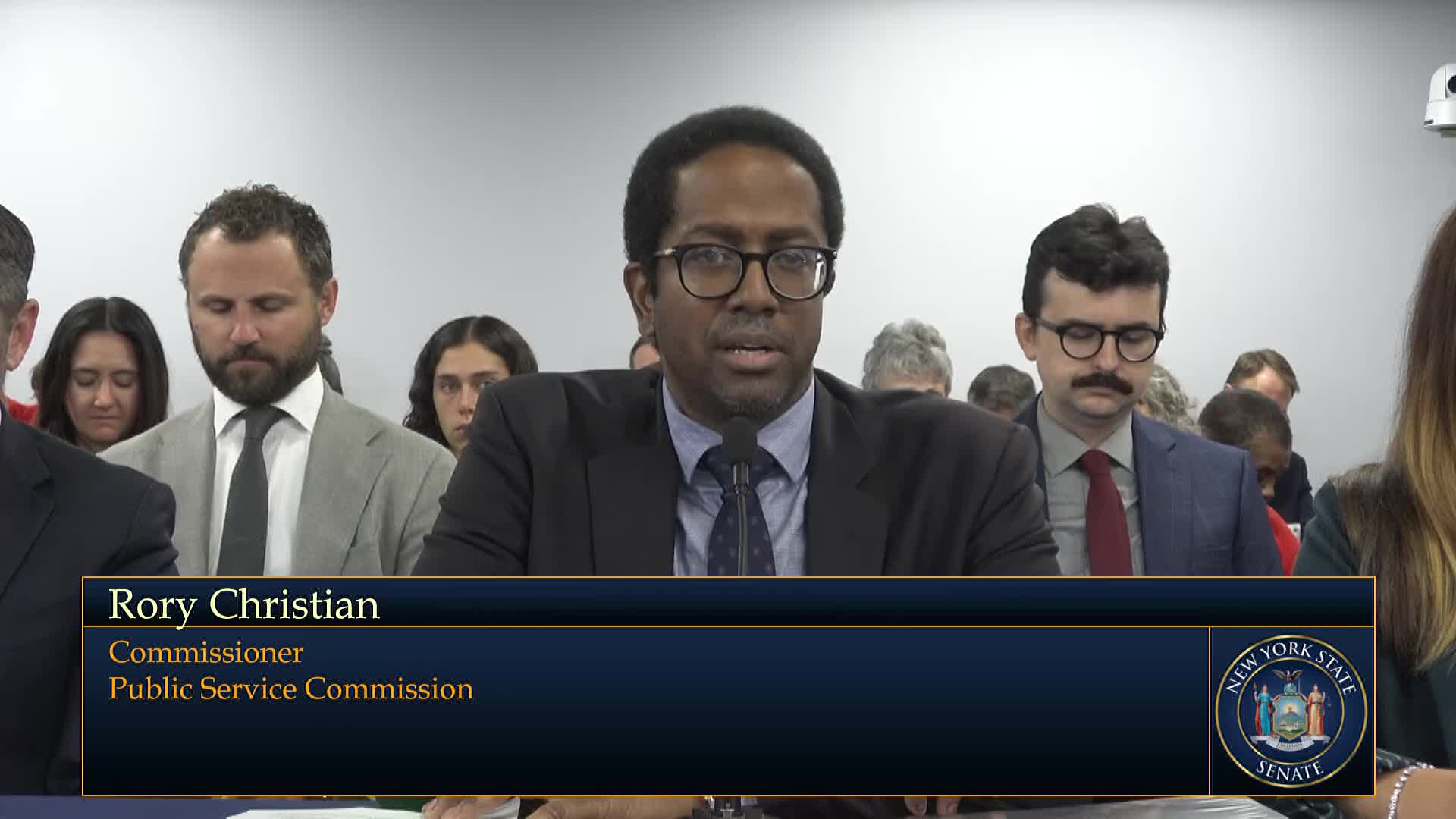
Summary
Lawmakers and utility witnesses debated gas system reliability, trucked LNG deliveries and the Northeast Supply Enhancement (NESI/NESE) question during a lengthy Senate committee hearing. Utilities defended investments in gas capacity for reliability and the short‑term need during extreme weather, while advocates
The Senate joint hearing brought a focused debate on natural‑gas reliability and proposed pipeline projects, with senators, advocates and utility witnesses trading sharply different views on whether new pipeline capacity is needed and how to balance costs, climate mandates and near‑term reliability. Senators raised the recurrence of trucked liquefied natural gas (LNG) deliveries as evidence of a capacity gap. One lawmaker said that hundreds of LNG truck trips are operating on state roads and asked whether projects such as the Northeast Supply Enhancement (NESI, sometimes referenced as NESE or "Nessie") or other interstate pipeline proposals should be approved to reduce truck traffic and winter vulnerability. National Grid and other utility witnesses told the committee that a combination of causes — aging pipeline infrastructure, extreme weather events and growing winter demand — has stressed the downstate gas system. National Grid officials said the company identified a reliability need during winter storm Elliott and that certain supply projects can fill that need. The PSC on a recent action concluded that NESI provides a reliability benefit in the long‑term gas planning docket; utility witnesses said that decision reflected a demonstrated near‑term reliability concern. National Fuel and other gas operators argued that the gas system remains a practical part of the state’s energy mix for the foreseeable future; witnesses pointed to opportunities to decarbonize that system over time with renewable natural gas (RNG), hydrogen blending and other fuels while keeping service reliable for customers. Advocates and some state senators pushed back. Environmental groups and community witnesses argued that investing in new pipeline capacity could lock in decades of gas dependence and increase long‑term costs for ratepayers, contrary to CLCPA goals. Several speakers said the PSC should require quantitative CLCPA compliance analysis and sector‑level greenhouse‑gas benchmarks for gas utilities to avoid approving projects that conflict with statewide emissions limits. Opponents also said existing contingency measures — trucking, contracts and other temporary fixes used after the 2015 NESE denial — are costly and risky but still preferable to committing to a large pipeline build that may become a stranded asset as the state decarbonizes. Senators asked about alternatives. Witnesses pointed to demand flexibility, targeted transmission investments, storage and distributed clean energy as ways to reduce system stress. Utilities highlighted the role of targeted transmission and distribution upgrades and discretionary programs such as non‑pipe alternatives in planning. Several legislators sought clearer timelines and data: they asked the Department of Public Service and utilities for year‑by‑year projections of when particular resource additions will be needed, how they will affect rates, and what alternatives were considered. National Grid, National Fuel and other companies told the committee they work with the New York Independent System Operator and state agencies on planning and that some proposals — including NESE/NESI — were identified after assessing regional needs, but they acknowledged the tradeoffs and the PSC’s case‑by‑case review. Lawmakers requested follow‑up analysis and asked utilities and the PSC to provide clearer comparisons of truck deliveries versus pipeline investment costs and the likely rate impacts of different reliability solutions.