
Monroe County Council opens 2026 budget hearings as public urges health funding be preserved
Get AI-powered insights, summaries, and transcripts
Subscribe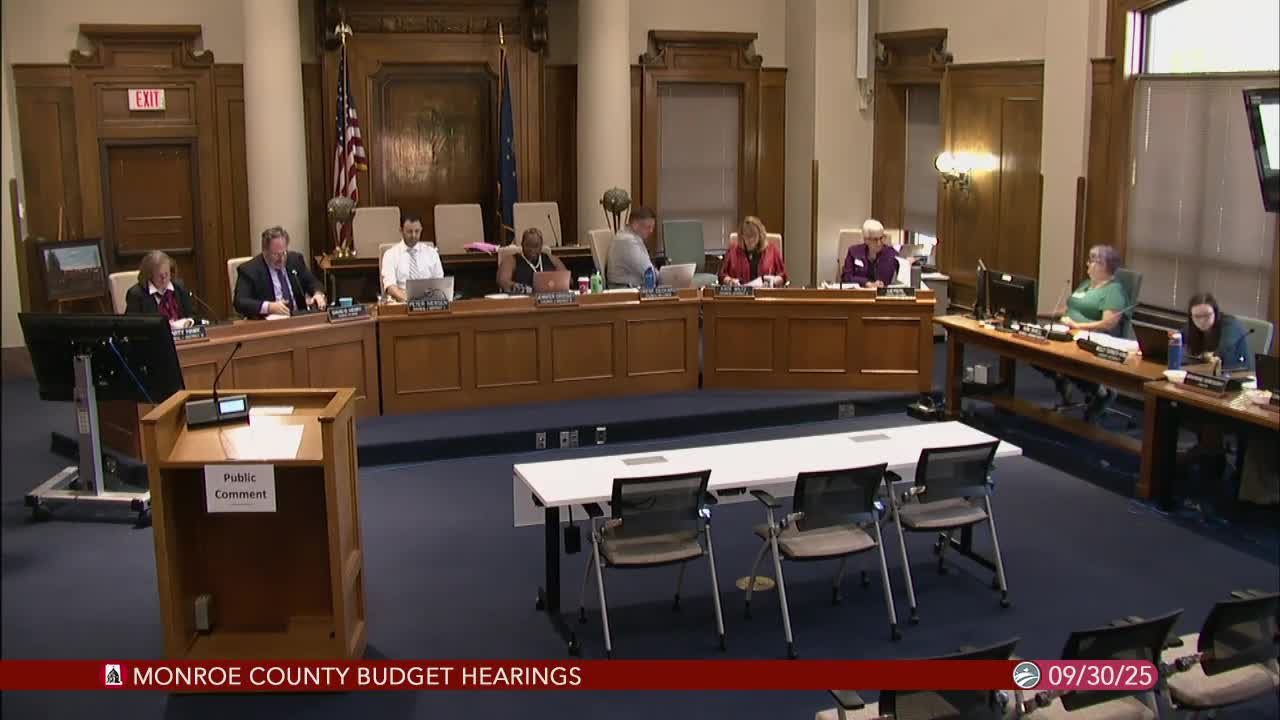
Summary
Councilors read 2026 budgets into the record and set second readings for Oct. 14; public commenters and several councilors urged preserving health department funding and criticized proposed reversion of COVID and health levy dollars.
The Monroe County Council on Tuesday read multiple 2026 budget ordinances into the record and opened public hearings on them, setting second readings and final votes for Oct. 14. The council read into the record the proposed budgets for the county government, the Monroe County Waste Reduction District and the Monroe Fire Protection District, then took public comment before closing the hearings for those items. Members of the public used the hearings to press the council on public-health funding. Dr. Lisa Hannah Robinson, speaking as a private citizen, urged the council not to cut levy-funded lines that support the Monroe County Health Department and said $3 million in shortfall should not be remedied by reducing the department’s levy-funded operating budget. She also said money labeled as COVID-19 capital funds — about $750,000 in discussion — cannot be reverted to the general fund because state rules require those funds be used for capital improvements. The council scheduled the second readings and votes for Oct. 14, 2025, and councilors and staff repeatedly reminded the public that the first readings are procedural: the budget language is read into the record, public comment collected, and a final vote will occur at the next scheduled meeting. Council discussion and context: several councilors and staff clarified technical points during the hearings. Councilor Wilkes noted that the Monroe County Solid Waste Management District has legally changed its name to the Monroe County Waste Reduction District but that the Department of Local Government Finance documents still show the old name. Councilor Hawk asked the auditor’s office to confirm whether state law requires reading both current-year and proposed numbers aloud during the first reading; staff said they would check and correct the second reading if necessary. Public commenters also urged restraint on personnel-driven costs and recommended a hiring freeze or reduced cost-of-living adjustment to help close the county’s projected deficit. Jeff McKim, a former council member, urged the council to address rising personnel costs — including increases in health insurance — and recommended options such as a hiring freeze or smaller cost-of-living adjustments. Why this matters: the council faces a projected multi-million dollar shortfall for 2026 and is balancing statutory processes for adopting budgets against pressure from residents and department heads to preserve services such as public health programs. The Oct. 14 second readings are the next moment when elected members will convert these first readings and public comments into final appropriations and possible amendments. Looking ahead: council staff and the county auditor said they will provide more detailed fund-by-fund analyses before the Oct. 14 vote, including updated deficit estimates that reflect amendments passed in the Sept. 30 meeting and the cost impact of personnel decisions the council makes before adoption.