
Huntington Board adopts three-year district goals, highlights AI training, safety pilots and family-engagement plans
Get AI-powered insights, summaries, and transcripts
Subscribe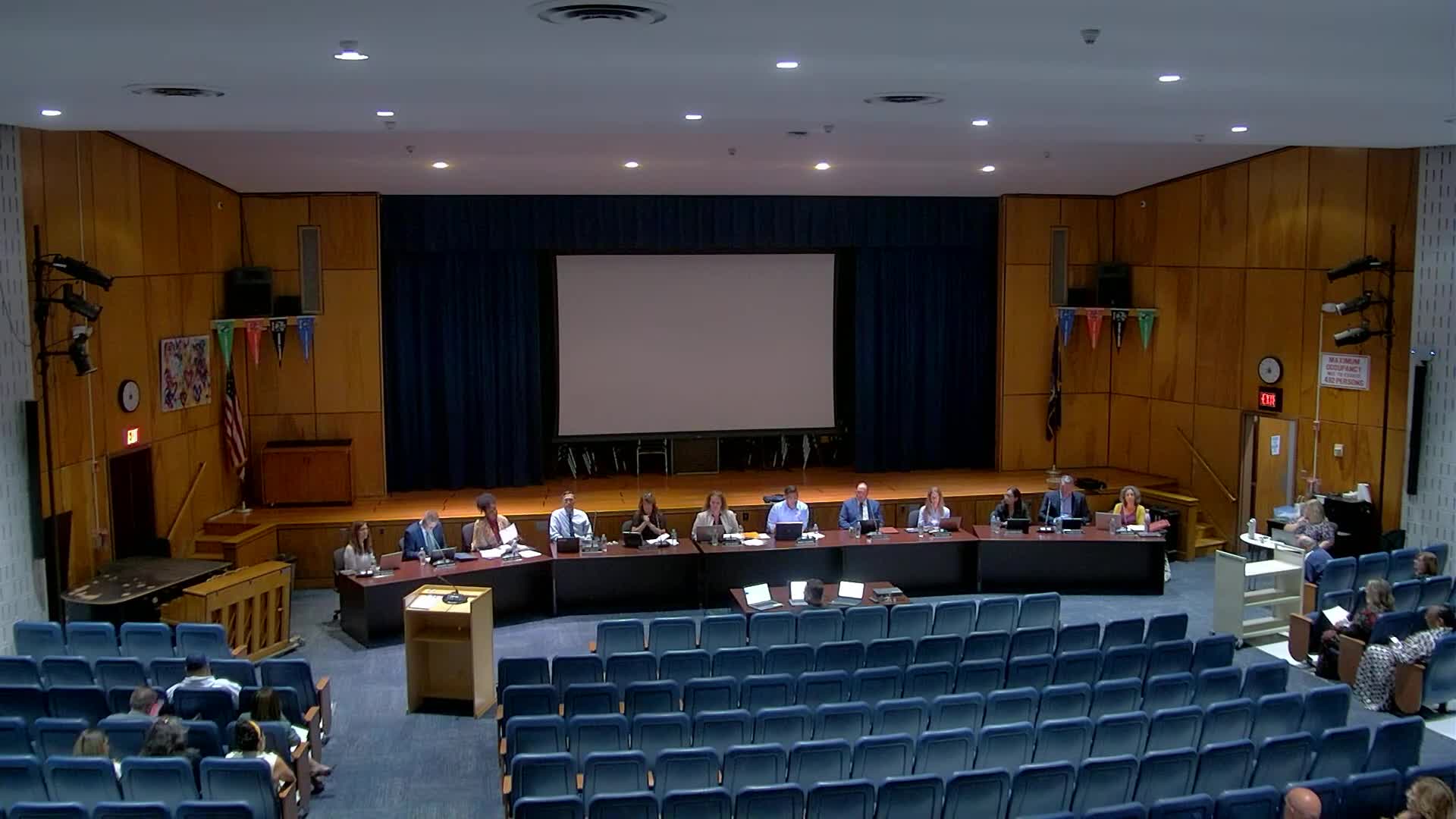
Summary
The Huntington Union Free School District Board of Education on Sept. 30 voted to adopt district goals for 2025–26 and heard presentations laying out a three‑year plan that emphasizes academic rigor, student experience, operations and family engagement.
The Huntington Union Free School District Board of Education on Sept. 30 voted to adopt district goals for the 2025–26 school year and heard presentations from elementary, secondary and central-office leaders describing work planned over the next three years.
The goals, adopted unanimously after a motion from board member Teresa and seconded by Annie, set four priority areas: academic excellence; student experience; operations (including safety and food service); and family and community engagement. The board then received more detailed presentations on items the administration plans to start this year.
Administrators said the district will train teachers on ethical, classroom uses of artificial intelligence and expand those lessons so students learn how to use AI as a learning tool rather than a shortcut. "If you're shown the pathway to say, okay, through, for instance, prompt engineering...the way that you engineer a prompt can really drive your learning further," said Mr. Cusack during the secondary-level presentation. Cusack said tech mentors will lead required spring professional development for all staff.
The presentations also described operational pilots and communications work the district will pursue. Elementary-focused items included consistent administrative presence at drop-off and dismissal and expanded use of ParentSquare as a single district communications platform so parents with children in multiple buildings can see a consolidated calendar. Central office staff said they have installed GPS tracking on buses using Transfinder and Beacon Mobility and that they are working through “glitches” with both vendors. "We have installed the GPS tracking on all buses, and prescheduled routes. Of course, there are going to be some glitches and we are working through those with Transfinder, as well as with Beacon Mobility," Mr. Hender said.
Other operational items described by administrators include piloting swipe-card entry systems at the secondary level to manage building access, research on assigning security personnel to monitor gym doors before and during practices, and creating public-facing social-media updates for the food service program.
On academics, the district said it will expand AP and dual-enrollment offerings while maintaining supports for students who need extra help, continue “focus walks” (short administrative classroom visits tied to a district-wide set of look‑fors), and pilot project‑based learning starting at the middle school. Elementary administrators described plans for targeted professional development, vertically aligned technology use and digital literacy lessons, and an elementary mentorship program pairing older and younger students.
The board’s presentations also highlighted social‑emotional programming and plans for parent and staff workshops on social media and mental health, tied in part to the district’s new cell‑phone policy. Emily, a student who spoke during board communications, said the new cell‑phone policy has had “positive impacts in our environment,” describing increased in‑person interaction and use of free time for homework and crafts.
Board members asked clarifying questions about timelines and next steps; the administration emphasized that the documents presented represent the initial items for the first year of a three‑year plan and that additional subgoals will be assigned and tracked over time. No additional formal actions were taken beyond the vote to adopt the goals.
The district will present more specific implementation items for the board to consider as the year progresses, including cost estimates for swipe-card pilots and any staffing changes necessary to support expanded security or mentorship programs.