
Board of Adjustment denies variance to split 53‑acre Wisquois parcel over prime soils
Get AI-powered insights, summaries, and transcripts
Subscribe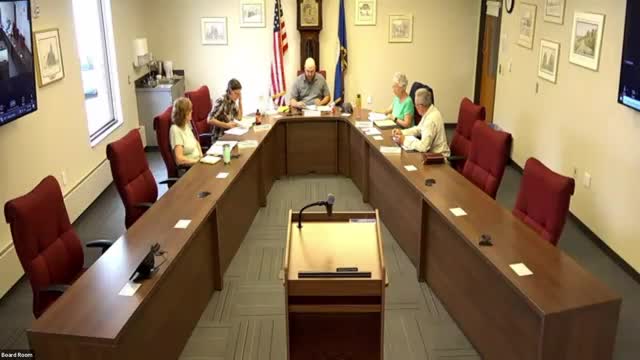
Summary
The Winona County Board of Adjustment denied a request to allow a new smaller residential parcel on land the county classifies as prime soils, concluding the applicants had not shown the practical difficulties required for a variance.
The Winona County Board of Adjustment on Sept. 18 denied a variance request that would have allowed a 53‑acre Wisquois Township parcel to be split so a house site would sit entirely on soils the county treats as prime.
The request sought permission to recognize an existing house site as a separate, smaller parcel even though the county’s soil classification (Winona County ordinance chapter 10.476) treats the site area as prime. Planning staff and the county attorney recommended denial, and the board voted to deny the variance after public hearing and discussion.
Staff planner Eric (planning staff) told the board the property is a 53‑acre parcel in Section 13 of Wisquois Township with an existing house, crushed‑rock driveway and roughly 40 acres of timber and woodland. He said the county’s soil rules (chapter 10.476) use USDA classifications but treat type 3 soils as prime for county purposes, which made the proposed split trigger conditional‑use requirements that were not met. Eric also said staff found conflicts with multiple ordinance findings and recommended denial.
Realtor Chad Garteski, representing the petitioners, said there were existing easements along the driveway and that potential buyers had offered on the two proposed pieces; he said the larger woodland portion (parcel B) likely would remain woodland and that dividing the land made the property more marketable. Chad said the buyers’ offers were contingent on approval of the variance and any subsequent conditional‑use permit.
County attorney Steve told the board that the definition of “practical difficulties” is governed by statute and ordinance and read the statute’s criteria, including that economic considerations alone do not constitute practical difficulties. Several board members said the applicants had emphasized economic motives and had not demonstrated unique circumstances tied to the property that would meet the legal standard for a variance.
After discussion the board adopted findings reflecting staff recommendations and denied the variance. The chair read the appeal rights to district court at the meeting’s end.
The denial leaves the parcel as currently zoned (Agricultural Resource Conservation); proponents may pursue other parcel configurations or a conditional‑use process but would still need to meet the county’s soil and permitting standards.