
District outlines K–12 curriculum priorities: literacy, math, AI training and new electives
Get AI-powered insights, summaries, and transcripts
Subscribe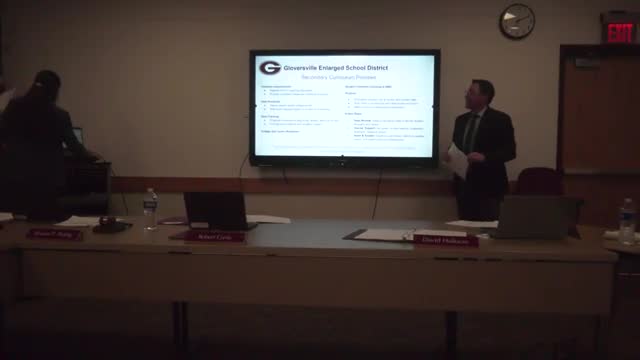
Summary
Curriculum leaders described K–12 priorities including CKLA v3 implementation, Ready Math refinements, Project Lead The Way at grades 3–5, an accelerated OpenSciEd rollout at middle school, student-centered coaching, and staff AI trainings.
Curriculum staff provided an overview of elementary and secondary priorities for the school year, emphasizing literacy, math, student engagement and career-readiness pathways that align with regional BOCES goals.
Presenters identified the elementary priorities as full implementation of CKLA version 3 for foundational literacy, Ready Classroom (Ready Math) with a K–1 focus on small-group centers and differentiation in grades 2–5, student-centered coaching and use of diagnostic tools (Acadience) to place students into targeted "WIN" intervention groups. At Boulevard (elementary campus) staff said Project Lead The Way will be introduced during library periods for grades 3–5 to teach coding, design thinking and problem solving.
At the secondary level, presenters described an updated reading model at the middle school in which the reading-intervention team will focus on one grade at a time (sixth, then seventh, then eighth) to allow flexible group movement; an accelerated OpenSciEd rollout (two-year implementation) with weekly lab kits and phenomenon-driven instruction; and multiple new high-school electives (including community-connections, integrated science/literacy, athletic-training classes, and new art offerings). The district will also pilot student-centered coaching at the middle school and expand professional development on questioning strategies, collective teacher-efficacy work, and AI training for all K–12 teachers (staff training scheduled in the coming days).
Why it matters: the curriculum changes align with a regional portrait-of-a-graduate direction and BOCES priorities to emphasize interdisciplinary learning, career and technical education pathways, and modern instructional practices (including ethical and practical AI use). The transcript records program names, rollout plans, and embedded professional-development supports but does not include formal board action on curriculum adoption at this meeting.