
Lewisville council adopts 1,000-foot density rule and a 150-unit cap for short-term rentals
Get AI-powered insights, summaries, and transcripts
Subscribe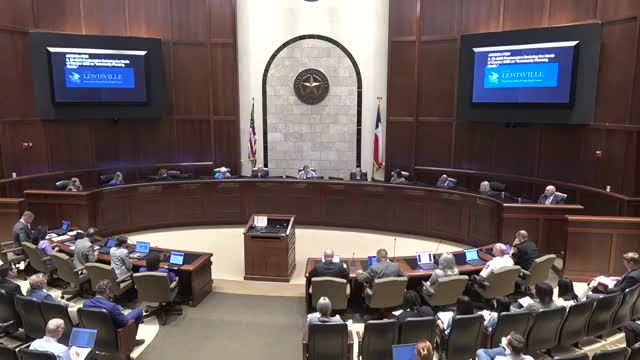
Summary
The Lewisville City Council approved a 1,000‑foot separation rule and a multifamily cap for short‑term rentals and amended city code to set a 150 active‑permit limit, concluding months of outreach and debate about neighborhood impacts.
The Lewisville City Council approved two linked actions tightening rules for short‑term rental units (STRs): a Unified Development Code amendment that requires a 1,000‑foot separation between STRs and single‑family/duplex homes and limits STRs in multifamily complexes to the greater of 3% or two units; and an amendment to City Code Chapter 4 that sets a citywide cap of 150 active STR permits and updates permitting, occupancy and inspection language.
The UDC amendment (item D1) passed unanimously, 6‑0. Richard Lutke, the city’s planning director, summarized the city’s outreach and timeline and said Planning & Zoning recommended the UDC changes on July 15, 2025. Lutke said staff’s updates would add a 1,000‑foot separation requirement and a multifamily cap of ‘‘3% of all units within a complex or 2 units, whichever is greater.’’ He also said existing permitted STRs that remain active and timely in their renewals will be allowed to continue even if they do not meet the new distance rules; nonconforming STRs must discontinue for six months to lose grandfathering and then would have to comply with separation rules.
Chris McGinn, director of Neighborhood Inspection Services, explained Chapter 4 edits to align occupancy counting, inspections and reinspection-fee criteria with the UDC changes and said the ordinance would increase the maximum number of active STR permits from the prior temporary cap to 150. McGinn said the city’s current active and permitted counts are in flux: staff identified 135 STRs citywide at the time of the presentation, with 114 permitted and issued, 9 permits in process and 12 identified locations ‘‘not permitted or in the enforcement process.’’ He also said staff was tracking ‘‘about 123 applications and permits’’ in a related count and that multifamily operators had not requested STR permits.
Public commenters included Mei Shan of 1742 Creek Bend Drive, who opposed the UDC distance provision but supported the larger numerical cap, and Jeff Woods, who supported both measures. Resident Nathaniel Thorsen, of 1428 Drake Lane, told council he believes rising rental and nuisance activity in his neighborhood has reduced his property values and urged stronger enforcement. ‘‘My wife and I — we need to move now because if we don’t, our property value is going to basically go in the toilet,’’ Thorsen said.
Council debate centered on balancing neighborhoods’ stability and housing choices. Council member Bradley (first name used in remarks) urged conservative limits to protect single‑family neighborhoods and cited studies linking STR growth to rising rents; Bradley said a cap protects long‑term housing affordability. Other council members said the primary concern that prompted the interim cap a year earlier was density on particular streets and that the city’s new 1,000‑foot density rule addresses that core risk. Several council members also said the 150 cap was intended to be a measured, reversible limit and could be adjusted later if demand and staff capacity warrant.
The council voted 6‑0 to approve D1 (the UDC distance and multifamily provisions). On the Chapter 4 ordinance (G9), after discussion and public comment, the council approved the amendment implementing a 150‑unit cap, updated definitions, inspection standards and boilerplate provisions; the motion passed after a tied roll call that was broken when a council member who had not yet voted cast a deciding vote in favor. The ordinance establishes the 1,000‑foot separation, applies the multifamily percentage limit (3% or two units), and specifies that currently permitted STRs may continue so long as their permits do not lapse.
Staff said they will continue to monitor STR trends and enforcement compliance and will return with updates as needed. The council also tabled a separate lighting/technical item related to a sports facility to a future meeting for legal review of a proposed condition limiting high‑intensity lighting to pickleball courts.