Get Full Government Meeting Transcripts, Videos, & Alerts Forever!
Get email alerts on the Keaukaha Tourism Impact topic
No spam. Unsubscribe anytime.
Keaukaha residents present data showing cruise-ship visits overwhelm Hilo shoreline; call for community-driven visitation model
Summary
A Keaukaha stewardship pilot presented data showing heavy spikes in commercial tour and cruise-ship visitors that community members say displace residents from local beaches. Presenters recommended a community-designed visitation model, visitor fees tied to local benefit, and expanded engagement with tour operators and state tourism bodies.
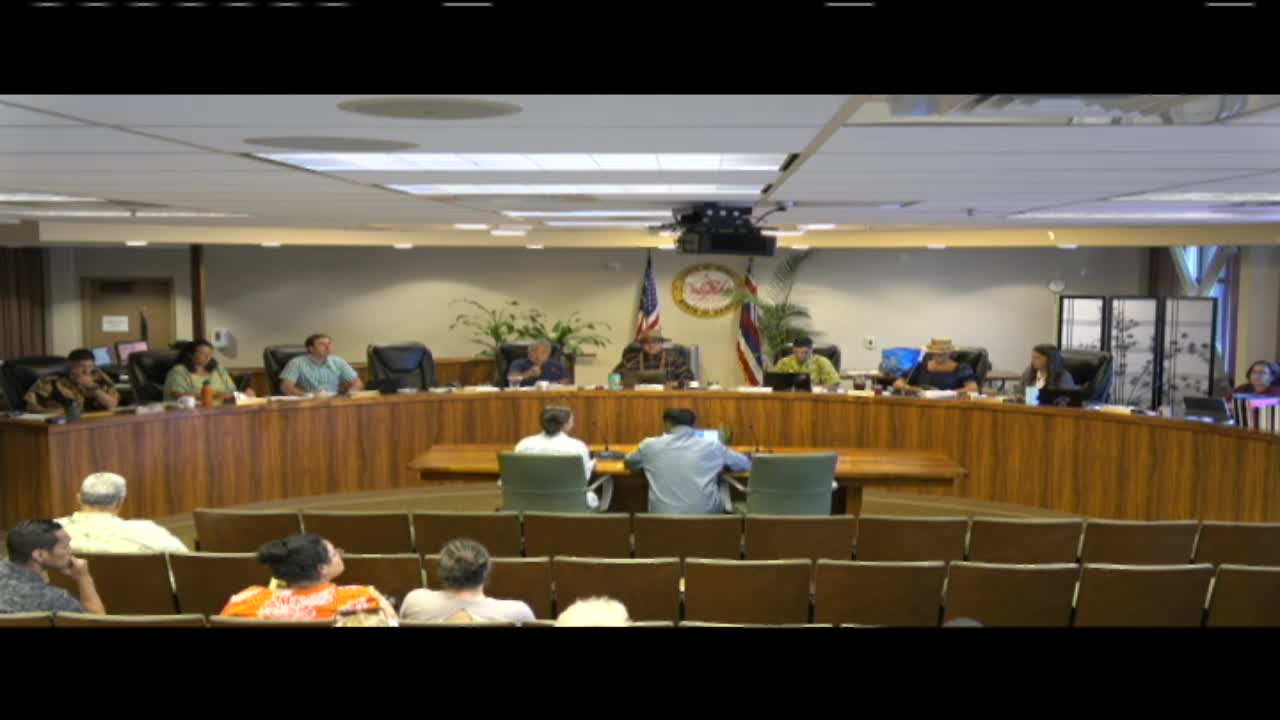
Members of the Keaukaha community presented a stewardship pilot to the county committee that documents heavy commercial-tour and cruise-ship impacts at multiple Hilo shoreline parks and recommends a community-led visitation model.
Aina Aloha Iowane, executive director of the Kelly E. William Ewanee Legacy Foundation, described a several-year community effort to inventory park usage and cultural practices and to reconstitute local kapu and kanawai (traditional protections and management tools). Iowane said volunteers and partners collected regular counts at Waiuli (Waioli), Kealoha Pāka, Onekahakaha and Lehia Beach Park and added that commercial-tour vehicle counts spike sharply on cruise-ship days. "On 06/24/2025, Stewarts collected that over 1,200 people accessed Waiuli on that given day," she told the committee.
The group's data show commercial tours increase roughly tenfold on cruise-ship days and that residents report avoiding parks on those days because of traffic, parking shortages and crowding. Iowane told the committee an average monthly beach attendance at Waiuli reached about 24,000 and estimated about 220,000 visits in a 12-month period at that park alone; the group estimated roughly 120 cruise-ship calls to Hilo annually and identified more than 65 commercial vehicle operators including shuttle companies and ride-hail services.
Iowane and community members urged county-led, community-designed management actions including a Keaukaha visitation model, reservation or guided-visit systems, clearer loading/unloading and parking protocols for commercial vehicles, local economic capture so the community benefits from tourist spending, and better integration of schools, homesteads and nonprofits in interpretation and stewardship. The stewardship group plans to publish collected park-usage data on a public website and pursue funding with stakeholders to create a tourism-management plan.
Hawaii County Director of Research and Development Benson Medina told the committee the county has been looking to models such as the Hana Lei initiative on Kauai and has begun discussing a county approach that balances visitor experience, low community and environmental impact, profitability for tourism operators and cultural grounding. Medina said the mayor supports local management approaches developed with community input and that county staff have met with Japanese travel industry representatives who have expressed interest.
Committee members praised the data-driven community approach and encouraged staff to continue convening tour operators and state partners, including the Hawaii Tourism Authority, to align management and funding. The committee voted to close the file on communication 5‑06 after the presentation.