Get Full Government Meeting Transcripts, Videos, & Alerts Forever!
Get email alerts on the Inland Port topic
No spam. Unsubscribe anytime.
Inland Port authority outlines project-area amendment, projects and projected tax gains for Box Elder County
Summary
Representatives of the Utah Inland Port Authority told the Box Elder School District Board they are seeking to amend the Golden Spike project area to add Willard City parcels and reviewed newly committed investments, saying the project-area tax model could generate $234,000,000 in new taxable value over 25 years.
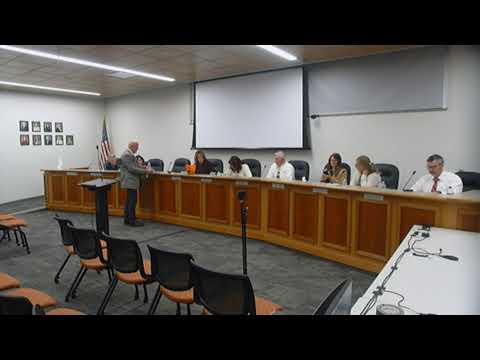
Representatives of the Utah Inland Port Authority told the Box Elder School District Board of Education that the port authority is pursuing an amendment to the Golden Spike project area to add land in Willard City and described recent private investments that have already triggered tax-differential revenue under the project-area model.
The presentation matters to the district because the port project captures most new property-tax growth inside project-area boundaries for up to 25 years and then returns that new tax base to local taxing entities once the area expires.
Scott Wolford, vice president of business development for the Inland Port Authority, said the authority was at the meeting to “talk about an amending of the boundaries of the inland port project area that already exists in Box Elder County and to just answer any questions, kind of give a high level overview of what that means, what the implications are as far as tax and budget, and answer any questions that the board might have.” Stephanie Pack, associate vice president who covers Northern Utah, and Wolford described how the state statute that creates port project areas freezes the existing tax base and allocates new tax differential into the project area. “No consent is required,” Pack said, explaining that within a port project area “the land use authority speaks on behalf of all taxing entities.”
Wolford reviewed the port authority’s accounting of the Golden Spike project area and its early results. He told the board the base-year taxable value shown in the plan was $163,000 and that the authority’s conservative projection of total new taxable value over the 25-year project life is $234,000,000. Under the state allocation the presenters described, 25 percent of the incremental property-tax revenue continues to flow to taxing entities each year and 75 percent is reserved inside the project area for infrastructure, incentives and other project-area uses. Wolford estimated that 25 percent of the projected differential would represent “between $36 million and $42 million” in additional tax receipts to local taxing entities over 25 years.
Pack and Wolford described several recent development achievements inside the project area: Lakeshore Learning held a ribbon-cutting in June and had hired about 400 employees; Nucor announced a planned $200 million expansion and a new 250,000-square-foot facility that the presenters said would create about 263 jobs; and the authority is processing an amendment request from Willard City to add about 178 acres between the Union Pacific rail line and I-15. The authority said the Lakeshore parcel triggered the project-area clock this year.
Board members pressed for details on local impacts and workforce origin. A board member asked whether the authority tracks whether new hires are local or relocated from outside the county. Pack said the authority plans annual key performance indicators and will monitor unemployment and workforce patterns, but that businesses do not always provide employee home-origin data. Wolford said the authority’s recruiting emphasis is on employers that will be “good corporate citizens” and that many new jobs are expected to be filled by people who previously commuted out of the county. “Those 400 employees that are working at Lakeshore, we don't think for the most part that those are families from outside that are coming in to impact your schools,” Wolford said.
Board members also raised the district’s near-term capital needs: several board members asked how the district should reconcile immediate school construction and operating needs with the fact that a significant portion of any new property-tax revenue generated inside a project area will initially be used for infrastructure or incentives and not flow to the district until later. Wolford responded that the statute does allow communities to target incentives and that the port authority can work with local partners to structure agreements, and he noted the statute also permits bond-related extensions in limited circumstances if debt service remains outstanding.
The Inland Port presenters invited continued coordination with the district. Wolford said the authority meets monthly with local stakeholders and will return annually with a project-area report. Pack agreed to provide the board, on request, with annual metrics such as which companies have located inside the area, the assessed values triggered on the next tax-assessment cycle and data on employees and jobs when available. The board asked that future annual reports include the project-area contribution to school-district taxable value and employee-origin information when feasible.
Box Elder School District staff member Neil (district liaison) and other board members said they would work with the inland-port steering committee and suggested conditioning incentives on local internships and educational partnerships to support student career pathways. The presenters said communities can include workforce and internship requirements in incentive agreements and that the authority frequently recommends such conditions.
The inland-port representatives said they will return with the authority’s annual report and that they are finalizing the Willard amendment in the current amendment cycle. The board did not take formal action on the amendment at the meeting; presenters asked only for questions and discussion and said the amendment process will continue with local governments and the Inland Port Authority’s statutory process.