Get Full Government Meeting Transcripts, Videos, & Alerts Forever!
Get email alerts on the State Legislation topic
No spam. Unsubscribe anytime.
City attorney summarizes 2025 Oregon legislation and flags code updates Scappoose must track
Summary
City legal counsel gave a 2025 legislative briefing covering housing, land use, labor, and public-safety rules; several bills require Scappoose to amend development code and operational procedures, city staff said.
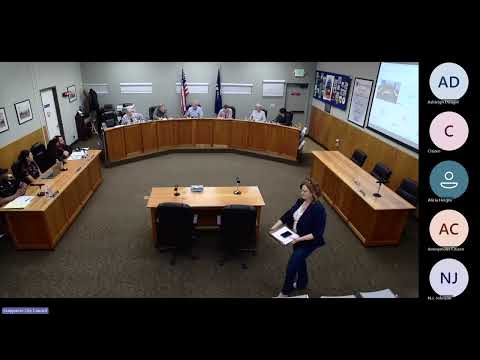
City legal counsel Ashley Dubille, of Berry, Elsner & Hammond, briefed the Scappoose City Council on the major bills passed in Oregon’s 2025 legislative session and highlighted those that the city must address in its municipal code and operations.
Dubille said the 2025 session was unusually active and that while many bills passed, a smaller subset will have immediate effect for Scappoose. “We made progress, but we aren’t done,” she said.
Why it matters: Several enacted bills remove or limit local discretion on land uses, set new timelines for engineering reviews, change wage and hiring rules, and require municipal code updates by specific deadlines. Council and staff will need to update ordinances and development standards to avoid legal and procedural conflicts.
Key items Dubille flagged included: - Land use and housing: House Bill 2138 (the governor’s housing bill) permits greater “middle housing” density and simplifies some land-division requirements. Dubille said the law makes several middle-housing and tree-code rules “clear and objective” and removes some local approval barriers, meaning staff must review the development code and implement changes before statutory deadlines. - Engineering plan-review timelines: Senate Bill 974 sets explicit clocks for engineering plan review after land-use approvals, including a 30-day completeness review and a 120-day final decision period. Dubille warned that the change will require Scappoose to assess internal processes and coordinate with outside reviewers so approvals do not become “presumed approved” by default if time limits are missed. - Limited land-use decisions: The same bill expands the types of matters treated as limited land-use decisions (staff-level, appealable to council) to include certain upzonings, planned unit developments and variances, which reduces the initial public-hearing opportunities the city can require. - Child care, preschool and treatment homes: Bills now require local governments to allow preschool on places-of-worship parcels and residential treatment homes in certain zones; Scappoose must confirm which zones are affected and update its code by the deadlines cited in the statutes. - Prevailing wage and public-works definition: Changes expand the definition of “public works” to include off-site fabrication done specifically for a public project, which can affect prevailing-wage obligations. - Employer and labor changes: Dubille noted a suite of employment bills: one requires written statements of paid deductions to employees; another extends ASL (American Sign Language) pay differentials where multilingual pay is offered; and Senate Bill 916, she said, requires up to 10 weeks of unemployment benefits for employees participating in lawful strikes (operative in January), a significant change for public employers.
City-code implications and next steps: Dubille repeatedly advised the council that many of these laws are already effective and that Scappoose’s municipal code may include out-of-date restrictions that must be removed or revised (for example, limits on real-estate professionals on planning commissions). Community Development Director Lori Oliver Joseph and staff will inventory affected code sections and prioritize updates. Dubille also recommended staff and council discuss whether to keep some local restrictions in place even where state law now permits greater flexibility.
Councilors asked procedural questions about timing and practical effects. Dubille said some statutory rulemakings (for example, by the Department of Land Conservation and Development) will continue into 2026 and require watching; she suggested using League of Oregon Cities resources and the firm’s support for code drafting and compliance reviews.
The council took no formal action at the briefing; Dubille’s presentation closes with a list of specific bills and linked references provided to staff for follow-up.