
Carol Stream residents raise health, utility and environmental concerns about new data center
Get AI-powered insights, summaries, and transcripts
Subscribe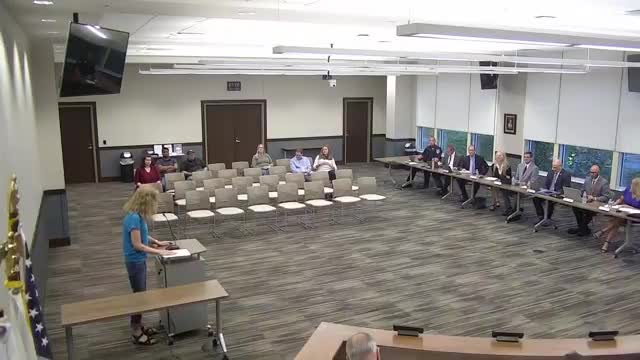
Summary
Three Carol Stream residents told the village board they were not notified about a data center under construction on Kehoe and raised concerns about energy use, water demand, air and noise pollution, nondisclosure agreements and tax benefits during the Oct. 6 meeting.
Three Carol Stream residents told the Village Board on Oct. 6 that a data center under construction in the village’s industrial area has raised health, utility and transparency concerns.
The comments came during the board’s public listening post. Laurie, a Carol Stream resident, said she learned only recently that a data center was being built and asked whether residents were notified before permits were granted. Michael Baker, a Carol Stream resident and physics teacher, and Heather Allred, a Carol Stream resident and nurse at CDH, also spoke about potential impacts including energy and water demand, noise, air pollution and nondisclosure agreements surrounding the project.
The remarks matter because speakers warned the facility could increase local utility infrastructure needs and household energy costs and could create air and noise emissions from backup diesel generators. Those concerns touch on public health, municipal utility planning and the transparency of permitting in industrial zones.
Laurie told the board she was not aware of the project until recently and asked whether residents had been notified or given an opportunity to comment before permits were issued. She said she was worried about higher ComEd bills, increased water charges, noise from a facility operating 24/7 and electromagnetic-field sensitivity among some residents. "I did a bunch of research, and read everything about it, but I'm concerned for wildlife being detracted. EMFs are a real thing," she said.
Michael Baker estimated the facility’s electrical footprint and described steps he said the village should take. "Based on the size of the facility, we can approximate that it will operate around a 10 megawatt capacity," Baker said. He added that if the center runs at that capacity for about 12 hours a day, "that is roughly equivalent to the annual power consumption of 4,000 homes." Baker said some costs—such as additional distribution infrastructure or price effects from increased demand—could be shared across the utility’s customer base.
Baker also listed pollutants that can be emitted from diesel backup generators and noted monthly generator testing. "These generators produce nitrous oxides, particulate matter, carbon monoxide, formaldehyde, benzene, and PFAS forever chemicals," he said, adding that communities near data centers have reported higher asthma incidence in some studies.
Baker said residents had gathered signatures and offered three recommendations to the board: ensure the data center mitigates energy use and pollution (for example, with on-site renewable generation and exhaust treatment), ensure tax revenue offset community costs and that funds benefit the community, and block future expansion or additional data centers in the village. He told the clerk he could submit the petition.
Allred said she learned about the project through a local Facebook group and called for more public involvement. "It was just a post in the local Facebook group... I had no idea this was even going on," she said, and asked whether an environmental-impact study had been performed, noting the facility is in an industrial area but not far from other neighborhoods.
None of the speakers proposed or reported any formal action by the board during the meeting; their remarks were part of the public comment period. The board did not announce any new study, ordinance, vote or specific staff direction on the record at the Oct. 6 meeting.
The speakers raised multiple practical questions for the village such as which municipal or regional agencies will review emissions and generator testing, whether water withdrawals are subject to local or regional permitting limits, and whether nondisclosure agreements signed by the developer limit disclosure to residents. Those procedural and technical questions were not answered on the record during the public comments.
The village clerk recorded the comments as part of the meeting record. Members of the public seeking follow-up were advised to correspond with village staff after the meeting.