Get Full Government Meeting Transcripts, Videos, & Alerts Forever!
Get email alerts on the Overlay Zoning Personal Care Homes topic
No spam. Unsubscribe anytime.
Committee supports change to Northeast Overlay to bar personal care homes and tighten approval standard
Summary
The Committee on Rules voted to report Bill 250,721 with a favorable recommendation and to suspend the rules to permit first reading; the bill would amend the Northeast Overlay District to prohibit personal care homes and group‑living uses in specified residential districts and require a variance showing hardship.
The Committee on Rules voted to report Bill 250,721 with a favorable recommendation and to suspend the rules to permit first reading. The bill would amend Section 14‑515 (Northeast Overlay District) of the Philadelphia zoning code to prohibit personal care homes and group‑living uses in RSD, RSA and RTA‑1 residential districts across parts of the Central Northeast, Far Northeast and North Delaware planning districts.
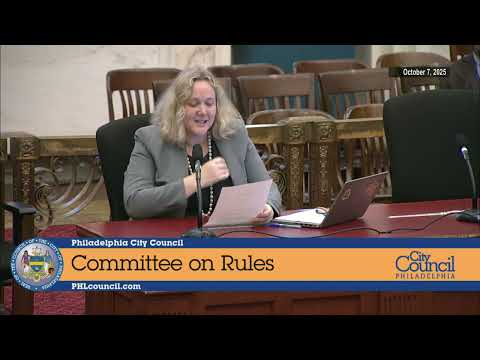
Paula Brumbelow Burns of the Philadelphia City Planning Commission said the amendment would remove the special‑exception path in some districts and require applicants to seek a variance, under which they must prove hardship. In her testimony she described the definition of personal care homes as “a subcategory of group living that provides housing where food, shelter, and personal assistance are offered for a period of over 24 hours to 4 or more adults who are not related to the operator.”
Councilmember O'Neil, who introduced the bill and said it was cosponsored by Councilmember Mike Driscoll, explained the change as intended to give neighbors greater ability to contest proposals. In extended remarks during the committee meeting, O'Neil characterized the current special‑exception process as problematic for neighbors, saying, “It's a fraud on the community and the neighbors of any property that is under a special exception.” He urged converting the special‑exception standard to a variance requirement so communities would have a clearer burden and stronger opportunity for input.
Under the bill, applicants would still attend the Zoning Board of Adjustment but would be required to demonstrate hardship for a variance rather than meet the special‑exception standard, which O'Neil and others in the hearing said can leave neighbors with little meaningful recourse. The Planning Commission will consider the bill at a future meeting in October 2025 and the committee advanced the measure for first reading by Council after a voice vote in the hearing; the transcript records the committee’s voice vote but no roll‑call tally.
The committee record does not show additional public testimony for or against this provision in the hearing; councilmembers on the committee discussed the bill’s intent to increase community input rather than eliminate the zoning‑board review process.