Get Full Government Meeting Transcripts, Videos, & Alerts Forever!
Get email alerts on the School Finance topic
No spam. Unsubscribe anytime.
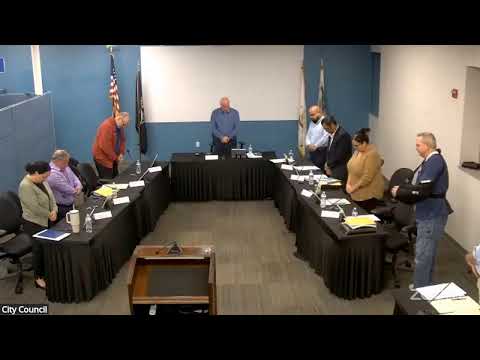
Pawtucket council questions $1.1 million design fee and capacity for more school bonding
Summary
Councilors pressed the school committee's plan to commit $1.1 million for design/Stage 2 submission work and warned the city may lack bonding capacity to fund large new-school projects while a $330 million high-school project is underway.
Pawtucket City Councilors on Tuesday pressed the school committee over a proposed $1.1 million design fee and broader plans for future school bonding, saying the city may lack the bonding capacity to authorize major new projects while a previously approved $330 million high-school bond is active.
The discussion matters because councilors said the $1.1 million the school committee proposed to spend on design work for a potential new school would draw from limited capital resources and could leave taxpayers exposed to additional debt service if a subsequent construction bond is pursued.
President Mercer raised financial history, noting a 2018 bond authorization from which roughly $45 million was thought available but later spoken for by prior school projects; council leadership said that package had been largely allocated. Councilors also referenced the voters' 2022/2023 authorization for up to $330 million for a unified high school and stressed the city must consider overall debt service and cap limits before approving more bonding.
Council members asked whether alternative, less costly ways exist to meet state submission requirements for “Stage 2” school-construction paperwork and whether the Rhode Island Department of Education (RIDE) might use a reimbursement mechanism similar to one used in Central Falls that reduces municipal carrying costs. President Mercer asked staff to explore whether RIDE offers a similar reimbursement arrangement and to consult the city’s finance and bond counsel about feasibility.
Councilor Gregor said he was “absolutely astounded” by the level of deferred maintenance observed in a walkthrough of Slater Junior High School and argued that immediate, lower-cost health-and-safety repairs might better serve students and teachers than committing $1.1 million to design work for a new building that could come years later.
Several councilors emphasized that the body supports school construction in principle but must weigh affordability and timing. The discussion produced no binding vote to allocate the $1.1 million; instead the council requested further information from the administration and school finance staff and signaled that any move to bond additional large sums would require clear plans and coordination with the mayor’s office and bond counsel.
Councilors said the school committee had been advised of the process and of the need to coordinate with city finance but that communication and collaborative planning had not, in their view, yet occurred. The council will expect a follow-up report from the administration and the school department on feasible funding options and any potential reimbursement mechanisms from the state.