Get Full Government Meeting Transcripts, Videos, & Alerts Forever!
Get email alerts on the Traffic Safety Enforcement topic
No spam. Unsubscribe anytime.
Poulsbo clarifies enforcement, warning timeline for stop‑sign camera at 305 and Bond
Summary
City officials and the police chief clarified how the new stop‑sign camera at Highway 305 and Bond will be enforced, saying the camera enforces existing law (RCW 46.61.055), flashes do not automatically mean a citation, warnings run through Oct. 30 and paid citations begin Oct. 31.
Poulsbo officials on Oct. 8 clarified how the city’s newly activated stop‑sign camera at 305 and Bond will be used, and they announced a scheduled end to the warning period and the start of ticketing.
The details matter because the camera photographs northbound traffic at the intersection and has drawn public attention: the city said the device enforces existing state law and that the visible “flash” does not automatically equal a ticket.
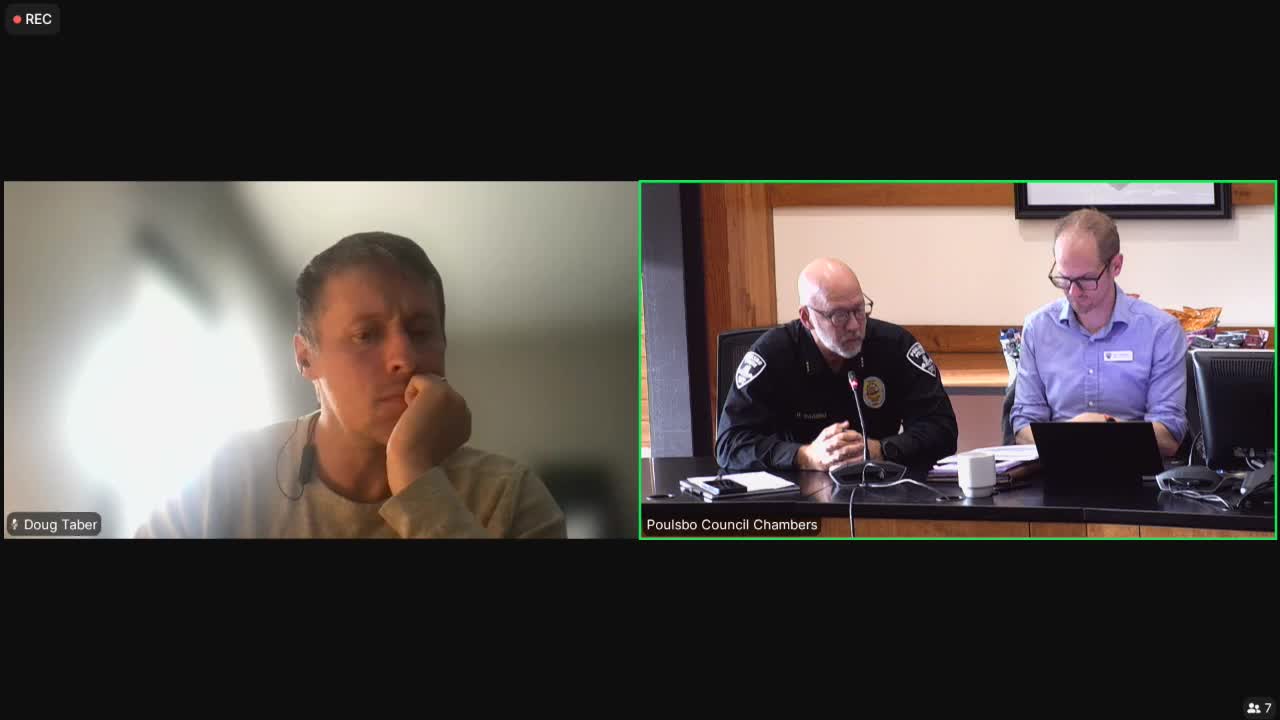
Police Chief Harding told the council that the turn‑on‑red rule at that intersection remains governed by Washington law (RCW 46.61.055) and that drivers “just have to stop. Make sure there's no traffic or pedestrians, and then you can execute a turn safely.” He said the city did not change the law; the camera provides an additional method to enforce the statute.
Harding said every camera flash is reviewed in two stages: first by the vendor (VERA) and then by city staff if the vendor is unsure whether a violation occurred. “A flash doesn't mean someone's getting a ticket. It just means that an event was captured,” he said.
Harding also gave operational details and a timeline: the city is in a warning phase that will continue through Oct. 30; notices labeled as warnings will be mailed to the registered owners, and paid citations will begin Oct. 31. He said warnings should start arriving by mail “early next week.”
City officials said the camera is safety‑driven. Harding said staff had recorded nearly 500 flashing events in the camera’s first seven to eight days of operation and cited examples of risky driving, including a vehicle that passed through the intersection at more than 50 mph shortly after the light turned red. Councilmember Eckert said the count illustrated “the level of unsafe behavior in that intersection” and urged compliance, adding that the goal was to reduce injuries rather than raise revenue.
Councilmember Stern raised budget and operational questions tied to expanded enforcement and court caseloads; city staff said they are monitoring court and public‑defender impacts and had previously added a court clerk position in anticipation of changing demands.
Officials also noted that the camera enforces northbound lanes only and that it will operate 24/7. Harding invited residents to call the police department with questions; he and staff said they will continue outreach and post updates on the city’s social channels.
The camera program’s legal basis cited during the meeting was RCW 46.61.055. The council did not take a formal vote on the camera at the Oct. 8 meeting; staff provided the operational clarification and schedule and said they would continue to report usage and impacts to council.