Get Full Government Meeting Transcripts, Videos, & Alerts Forever!
Get email alerts on the Student Assessments Njsla topic
No spam. Unsubscribe anytime.
Ocean Township presents 2024–25 NJSLA results; district posts gains amid remaining gaps
Summary
District officials presented 2024–25 New Jersey Student Learning Assessments (NJSLA) and Dynamic Learning Maps results, noting higher participation and year‑over‑year gains in ELA, math and science while identifying persistent subgroup gaps and plans for targeted interventions and upcoming adaptive field tests.
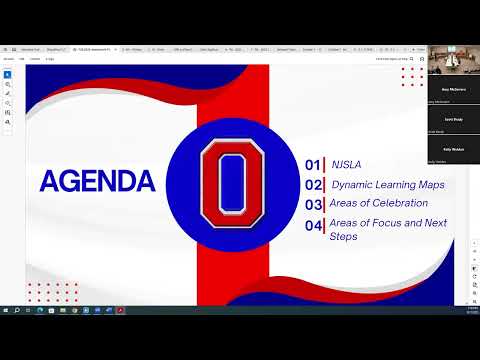
Dr. Kalisha Morgan, district administrator, presented Ocean Township School District’s 2024–25 New Jersey Student Learning Assessment (NJSLA) and Dynamic Learning Maps (DLM) results to the board, reporting higher participation rates and several year‑over‑year gains while flagging continuing gaps in specific grades and subgroups.
The results matter because they inform curriculum, intervention and professional development decisions across the district; Morgan said the data will guide targeted tutoring, scheduling reviews and inclusive instructional practices aimed at closing gaps.
Morgan told the board that district participation rates were high: districtwide participation was about 97% in ELA, 98% in math and 99% in science for tested grades. She reported district percentages meeting or exceeding expectations of about 60% in ELA, 45% in math and 32% in science, and highlighted grade‑level comparisons where Ocean outperformed statewide averages (for example, grade 3 ELA: district 68% vs. state 45%; grade 4 ELA: district 71% vs. state 54%). Morgan also noted strong gains in elementary math—grade 5 saw an 18 percentage‑point increase in students meeting or exceeding expectations.
Morgan cautioned that subgroup gaps remain and said the district will continue “evidence based instructional practices, implement targeted small group interventions, and continue professional development on inclusive strategies, scaffolds, and culturally responsive practices.” She described LinkIt as a data tool administrators and teachers use to identify areas for improvement and to design targeted action plans.
Board members asked how forthcoming changes to state testing would affect longitudinal comparisons. Board member Snyder asked whether adaptive testing will become necessary; Morgan said the state will move to computer adaptive testing and that the district will participate in a statewide field test from Oct. 27 to Nov. 14 and urged families to let students take part to familiarize them with the new platform. "Beginning in the spring, students will transition to the new NJSLA adaptive and the NJSLA GPA adaptive assessments," Morgan said, adding the field test is a non‑scored trial of the adaptive platform.
Members pressed on middle‑school math and ELA declines in some grades. Board member Skillman asked whether a new middle‑school math program or scheduling could be responsible for lower scores in grades 6 and 8; Morgan said the district has been reviewing middle‑school intervention services and implementing eight prioritized instructional strategies since the summer, and that teams will observe classrooms to ensure those strategies are in place. Public commenter Alex Hayes asked whether block scheduling might correlate with lower middle‑school math outcomes; Morgan said the district is evaluating scheduling but had not yet tied performance differences to schedule structures.
Morgan also presented results for the Dynamic Learning Maps assessment, used for students with the most significant cognitive disabilities; she said 27 students participated in 2025 and that results are reported districtwide because each grade had fewer than 10 students.
No formal board action or vote was taken during the presentation; the session closed with board members thanking staff and asking administration to provide additional comparative subgroup data on request. Morgan concluded by thanking the community: "Thank you for your continued partnership and support of our schools, students, and staff."