Get email alerts on the Zoning Accessory Structures topic
No spam. Unsubscribe anytime.
Village amends accessory-structure rules, limits size, number and interior conversions
Summary
The board adopted a zoning text amendment limiting accessory-structure height, number and footprint and prohibiting certain interior features to prevent covert dwelling conversions.
The Gurney Village Board on Oct. 6 adopted a zoning text amendment (Ordinance No. 2025-70) that changes how accessory structures are regulated in residential districts.
David Ziga, community development director, told the board the amendments modify definitions and measurement rules and adjust four main aspects of how accessory structures are regulated: height, quantity, footprint and use. The board discussed the issue after staff presented draft language and the Planning and Zoning Board reviewed the topic earlier in July.
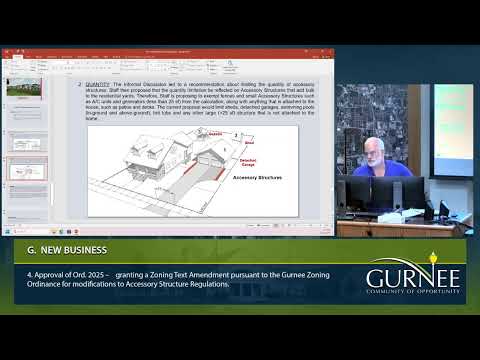
The ordinance makes four principal changes: it changes how accessory-structure height is measured relative to the principal structure; it limits the number of accessory structures to no more than three larger structures per residential yard (items smaller than 25 square feet are exempt); it reduces the allowed cumulative accessory-structure footprint to 75% of the home's footprint and lowers the yard coverage cap from 50% to 40%; and it prohibits permanent stairways to attic spaces in accessory structures in addition to an existing prohibition on bedrooms, kitchens and full bathrooms. Ziga told the board the intent is to reduce bulk and prevent unpermitted conversions into additional dwelling units.
A motion to adopt the ordinance was made by Trustee Helmick and seconded by Trustee Baumas; roll call recorded Garner — aye; O'Brien — aye; Baumas — aye; Boysenston — yes; Ross — aye, and the motion carried. The board did not record any amendments at the meeting.
The ordinance follows a moratorium the board placed last May on accessory structures larger than 600 square feet; staff said the moratorium allowed time to survey other communities and draft the changes adopted on Oct. 6.
AI generated
The text on this page is AI generated. Summaries, highlights, analysis, and video transcripts are all produced from the original source material.
AI can make mistakes, so if you spot one, and we will fix it for everyone.
Note: the source content is unaltered by us. Any content source we link to, be it a video, an audio recording, or a document, is presented exactly as its publisher released it. That publisher is usually a government body, sometimes an individual official or another organisation.