Get Full Government Meeting Transcripts, Videos, & Alerts Forever!
Get email alerts on the Housing Fund Rubric topic
No spam. Unsubscribe anytime.
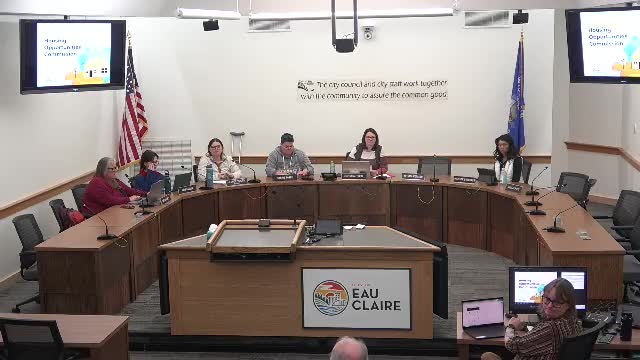
Housing commission adopts revised scoring rubric prioritizing deeper affordability and quicker starts
Summary
The Housing Opportunities Commission on Oct. 8 approved a revised scoring rubric for its affordable-housing fund that raises the weight on deep affordability and sets percentage-based incentives for units targeted at lower incomes.
The Housing Opportunities Commission on Oct. 8 approved a revised scoring rubric for its affordable housing fund that increases emphasis on deep affordability and on projects that can start quickly.
The commission voted to adopt the rubric "based on the decisions we made today," moving the measure by motion and approving it by voice vote, after staff walked commissioners through edits from legal and previous meetings.
Commissioners said the rubric now awards unit-targeting points by percentage rather than raw unit totals. Under the new approach a project earns points based on the share of its units dedicated to a targeted income bracket (example breakpoints agreed in the meeting: 20% = 1 point, 40% = 2, 60% = 3, 80% = 4, 100% = 5). Commissioners also doubled the earlier values so that the rubric's top sections total roughly 150 points; staff noted projects can also earn up to nine bonus points, making a possible top score of 159.
Why it matters: Commissioners said the change is intended to avoid bias toward large multifamily projects or toward tiny single-unit projects and to explicitly reward deeper affordability. Commissioner Posner and others argued the rubric should reflect a priority on housing for households with the lowest incomes and on projects that can be brought online quickly.
Major decisions and specifics - Unit-targeting: The commission moved from counting raw units to awarding points by percentage of units dedicated to the targeted population; commissioners agreed on the 20/40/60/80/100 percentage breakpoints for scoring the item. - Weighting: The commission set the two central questions in the rubric (income targeting and unit mix) to carry the largest weights: 10 points for the income-percentage question (A1 in the packet) and 40 points for the deeper-affordability question (A2), as part of a rebalanced total that was described during the meeting as roughly 150 points across all categories before bonus points. - Site and funding readiness: The commission directed that applicants must demonstrate funds sufficient to move a project forward as a threshold in the RFP. Commissioners agreed an applicant should show a majority of project funding committed (the group discussed 60% and discussed 75% as an alternate threshold; the body settled on the RFP language requiring a majority commitment unless the request would fully fund the project). Commissioners also combined site-readiness and permit-readiness into a single item and agreed to score it accordingly. - Time-bound affordability: Legal suggested, and commissioners accepted, language requiring projects to guarantee affordability for a minimum period; legal recommended a baseline 20-year affordability guarantee for certain projects and a five-year minimum in other instances. - Conflict-of-interest: Legal advised that commissioners who work for entities that might apply should recuse themselves from the rubric review and application evaluation; the body affirmed that guidance.
Discussion points and caveats Commissioners emphasized trade-offs: awarding points by percentage avoids privileging small duplexes while still incentivizing projects that reserve a high share of units for lower incomes. Several commissioners warned that questions aiming at serving people who are homeless must avoid tying funding to services ("funding can't be used for any services, tied to homelessness," staff said) because the fund's restrictions could limit eligible applicants. Commissioners asked staff to reflect those legal limits in the RFP and scoring instructions.
Commissioner Stokes and others pressed for clarity on verification and monitoring: several items, such as commitments to serve certain populations at application and at expected construction dates, require staff to define how the city will verify compliance over time. The commission asked staff to supply clarified language and to circulate an updated, final document for quick review.
Formal action - Motion: "We approve the affordable housing application scoring rubric based on the decisions we made today." (mover not specified in the record; seconded) - Outcome: Approved by voice vote; no roll-call tally recorded in the transcript.
Next steps and implementation Staff said they will finalize written rubric language, incorporate the point allocations and thresholds decided at the meeting, and circulate the final document to commissioners for a confirmatory review. The commission directed staff to include the 60%/majority-funding threshold language in the RFP and to add site-readiness and permit readiness scoring mechanics.
Source excerpts from the meeting transcript are available on file with the commission.