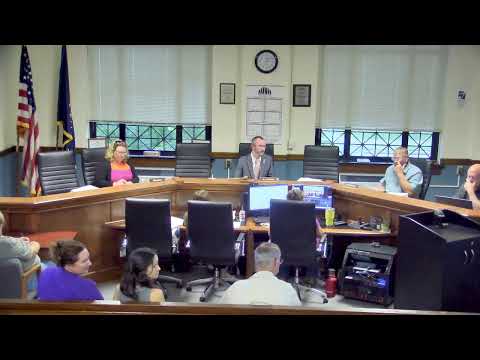
Vermillion County commissioners decline to adopt temporary moratorium on commercial solar projects
Loading...
Summary
After more than an hour of public comment and commissioner debate, the Vermillion County commissioners declined to adopt Ordinance 2025-14, a proposed temporary moratorium on new commercial solar projects, and agreed instead to convene county planning stakeholders to review the Unified Development Ordinance (UDO).
At an October 2025 meeting, the Vermillion County Board of Commissioners declined to adopt Ordinance 2025-14, a proposed temporary strategic moratorium on new commercial solar projects, after public comment and a split among commissioners.
The moratorium was proposed as a short-term pause to review the county’s Unified Development Ordinance and related regulations for commercial solar siting. Proponents asked for a pause ranging from 30 days to one year so county boards could meet with planners, drainage and highway officials and other stakeholders; opponents said a moratorium would halt economic activity and was unnecessary while the UDO could be reviewed without stopping current permitting.
The matter drew sustained public comment. Brandon Ruth of Cayuga said the moratorium “is not a ban on solar projects in the county. It's not a ban on commercial solar projects at all. It's simply a pause, given that this is one of the first major projects that we're looking at the county, it's a pause to see if our ordinances are in line with what the public wants.” He also told commissioners he had circulated a petition “almost to a 100 signatures” in favor of pausing to review rules.
Other residents split sharply. Neil Castello, a Fairview Park resident and a member of the local council’s District 2, told the board: “This is private land we're talking about and I don't like to tell people what to do with their private land.” Michael Turner and other speakers argued that large private investments could bring substantial tax and employment benefits and said county rules should not bind landowners from entering leases with developers.
Technical and infrastructure concerns were raised by Ron Mack, Vermillion County surveyor, who warned the county lacks consolidated engineering data and road-capacity information needed to vet large construction projects. “We don't know what we don't know and we're just not prepared,” Mack said, citing questions about bridge capacities, right-of-way accuracy and drainage that he said must be resolved before large-scale development.
Speakers repeatedly referred to a proposed Apex project. Public comments and commissioners’ remarks noted that Apex had recently applied for a permit under the current UDO; the meeting record shows the application was filed the week before the meeting, and commissioners said a moratorium enacted now would not retroactively stop that filing. Commenters gave varying figures for the Apex proposal and other proposals—statements at the meeting referenced a roughly $270 million investment figure and project footprints described as “over 1,500 acres” or about “1,600 acres” and a 200-megawatt scale; those numbers were presented by speakers and remain their claims in the meeting record.
Commissioners discussed competing policy aims: some cited the county’s 2022 Vermillion County Comprehensive Plan language urging protection of agricultural land and woodlands (cited during public remarks as Chapter 10 and Chapter 11 goals), while others emphasized private-property rights and the potential economic development value of large private investments. The board’s discussion also noted that the UDO already regulates many land uses and that any review should account for existing rules and the county’s long-term land-use goals.
No formal vote was taken on Ordinance 2025-14 at the meeting. Commissioners reported that two members opposed moving the moratorium forward; with no majority to adopt the ordinance, the commissioners declined to read the measure for a final vote. Instead, the board agreed to arrange a meeting in October that would include commissioners, the Area Plan Commission, the county council, the drainage board and other stakeholders to review the solar sections of the UDO and discuss whether targeted revisions are warranted.
Next steps recorded in the meeting: the commissioners will schedule a stakeholder meeting in October to review the county’s UDO and the solar ordinance language; staff were directed to coordinate invitations. The meeting record also notes the county has multiple signed leases recorded with other developers and that the longer the county waits to review rules the harder it may be to influence projects already under way or with investments in progress.
Why this matters: commissioners must balance private property rights, long-term land-use goals in the comprehensive plan and immediate questions about infrastructure capacity and drainage. The board did not adopt a moratorium; it opted for a stakeholder review process and left existing permit applications under the current UDO in place.