
Cocoa Beach adopts ordinance regulating electric bicycles and similar devices; chief recommends targeted version
Get AI-powered insights, summaries, and transcripts
Subscribe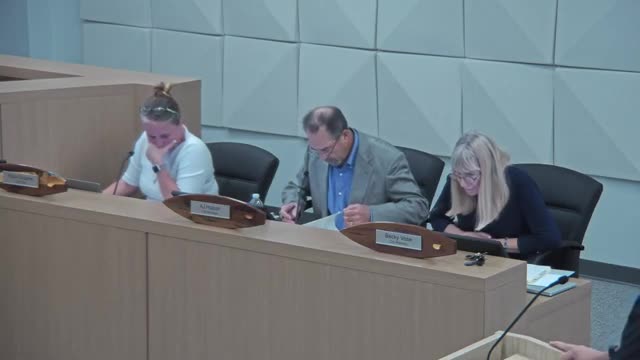
Summary
On second reading the commission adopted Ordinance 1700 adding section 22-2.5 to regulate electric bicycles and similar devices on specified rights-of-way; the police chief's edited version was accepted and the ordinance passed after commissioners discussed citywide vs. special-events approaches.
The City Commission on Sept. 4 adopted Ordinance 1700 on second reading, adding a new section (22-2.5) to the city's streets-and-sidewalks code to regulate electric bicycles and similar devices on specified rights of way.
Police Chief West Mullins presented the ordinance and told commissioners that two versions of the ordinance were included in the packet: the version approved on first reading and a second, edited version drafted by the police department. Chief Mullins recommended the department's edited version; the city attorney also indicated the edited draft was preferable.
Debate among commissioners and the police chief focused on where the restrictions would apply and how to handle special events. Several commissioners said they favored a citywide safety approach rather than limiting restrictions to a single street. Commissioners discussed a practical path: adopt the ordinance as written and use resolutions to add specific streets or special-event limits as needed. The chief cautioned that enforcement could be difficult in certain locations; he also suggested signage and special-event permit conditions that would require people to walk electric devices during crowded events.
During discussion, Commissioner Skip (first name not recorded in the meeting record) said the city could ask people to walk electric devices in downtown areas during events. Chief Mullins noted the department's enforcement limits and recommended a trial run. Vice Mayor Camille Williams and others said they wanted public safety across the whole city and supported the police-recommended edits and a phased approach that could be refined after real-world experience.
Commissioner Jackson moved adoption on second reading; the motion was seconded and passed on roll call: Commissioner Jackson, Commissioner Tomlenty, Vice Mayor Williams and Mayor Keith Capizzi voted yes; no commissioners recorded opposing votes. The roll call recorded the ordinance adoption as unanimous in the final vote (5-0), and commissioners directed staff to return with resolutions as needed to add streets or special-event restrictions.
The ordinance creates a regulatory framework that staff said can be revised by subsequent resolution to add or remove specific rights-of-way and to establish special-event restrictions. Chief Mullins and staff will implement the ordinance and coordinate signage and permit conditions for events where pedestrian density requires people to dismount or walk electric devices.
Commissioners said they view the measure as a first step and agreed to monitor enforcement outcomes before considering stricter or expanded measures.