
Commission grants advisory opinion finding grandfathering for Broward school board member’s preexisting law contracts
Get AI-powered insights, summaries, and transcripts
Subscribe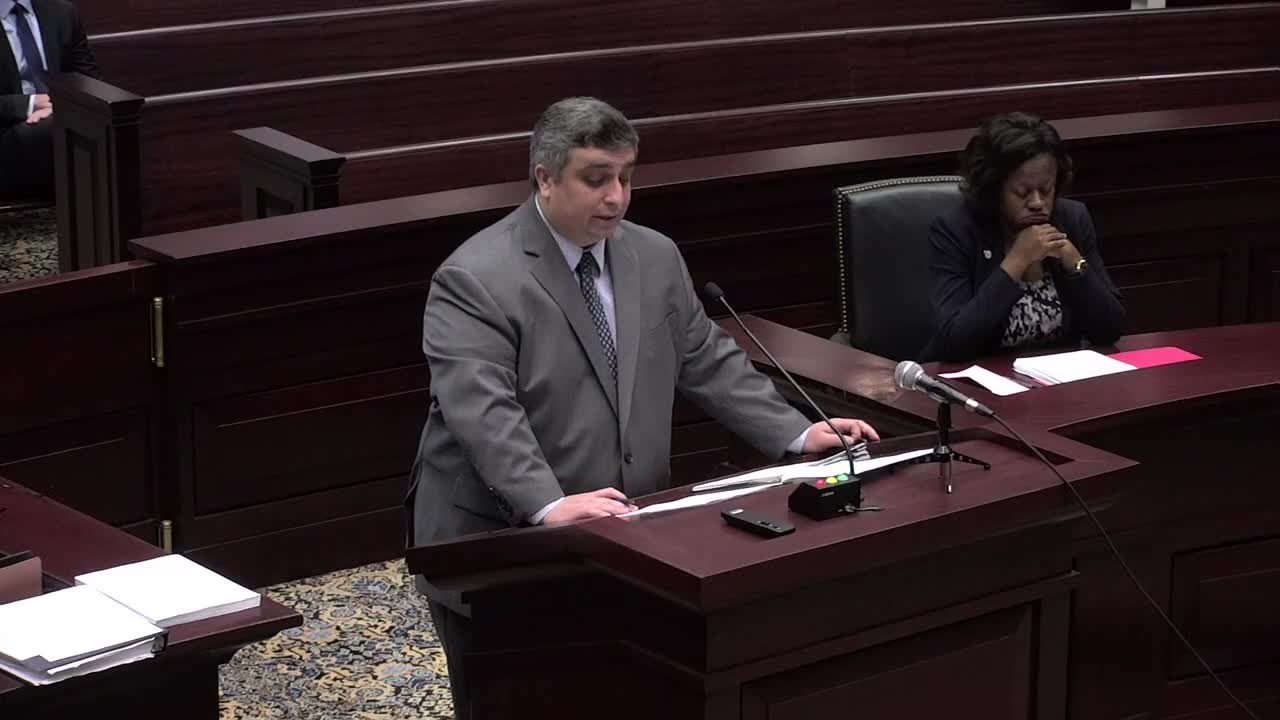
Summary
An advisory opinion adopted by the Commission on Ethics concluded that a Broward County School Board member’s preexisting law-firm contracts are grandfathered; new litigation agreements would create a conflict and the member must abstain from votes that would create or remove billing opportunities for the firm.
The Florida Commission on Ethics on Sept. 10 adopted an advisory opinion finding that a Broward County School Board member’s employment at a law firm that holds contracts with the board is, in part, negated by statutory grandfathering for agreements entered before the member took office.
Assistant counsel Michael Terry presented the draft opinion (file No. 2821), telling commissioners that the law firm in question held two contract types with the school board: a multiyear special-counsel services agreement with two contemplated extension options, and discrete litigation contracts entered on a case-by-case basis. "Grandfathering will apply to negate those conflicts" for contracts in place prior to the member’s appointment, Terry said, but he warned that newly negotiated litigation agreements would create a prohibited conflict.
Terry’s draft also concluded that extensions expressly contemplated by the original agreement and made on the same terms may remain covered by grandfathering; by contrast, wholly new litigation engagements undertaken after the public appointment would not be grandfathered. The opinion instructs the public officer to abstain from voting on any measure that would create or remove a billing opportunity for his firm, though he may participate in discussions and ask questions to stay informed.
Why it matters: the staff analyzed the facts against the first clause of Florida Statutes Section 112.313(7)(a), which forbids a public officer from entering into a contractual relationship with an entity that is doing business with or regulated by the officer’s agency. The staff also noted Section 112.313(3)(d) (grandfathering of preexisting contracts) and existing commission precedent on extensions and contract terms.
The commission voted to adopt the staff draft. The opinion supplies immediate guidance to the board member and to other public officers who join boards but whose private employers already do business with those agencies.
Practical effect: the member may continue to be associated with the firm for contracts that predate his appointment and for contemplated extensions on the same terms, but the member’s firm may not take on new litigation contracts with the school board without creating a prohibited conflict for the member. The member also must abstain from votes that would directly affect his firm’s billing opportunities.
Next steps: staff will finalize and publish the advisory opinion and inform the school board and the requester of the abstention requirements.