
California Department of Insurance briefs Tuolumne supervisors on wildfire insurance access and mitigation programs
Get AI-powered insights, summaries, and transcripts
Subscribe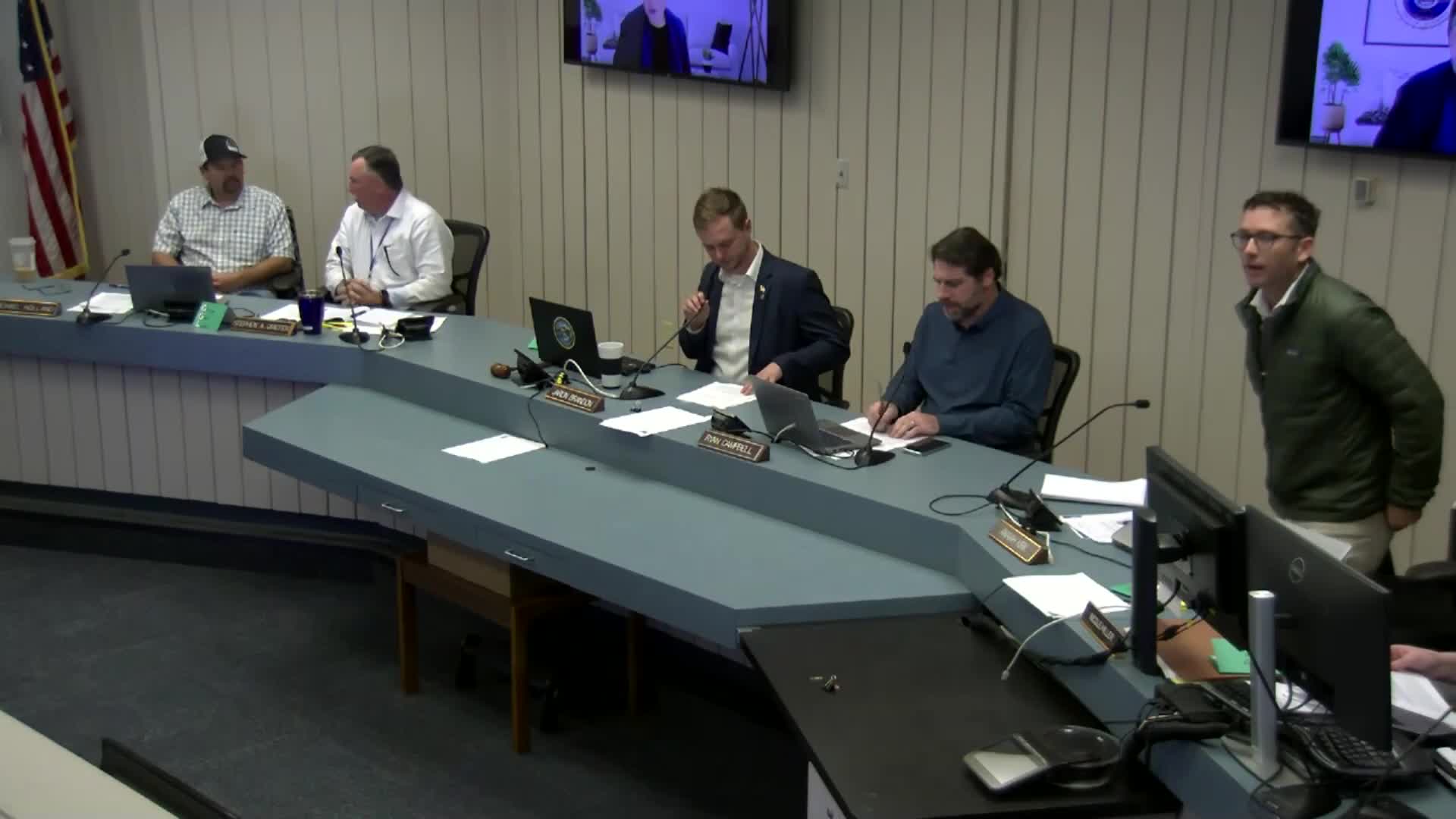
Summary
A deputy commissioner from the California Department of Insurance described tools the department is using to widen insurer access in wildfire‑affected areas, outlined consumer protections after fires and said companies have been asked to write more policies in distressed zones; supervisors pressed for public models, local engagement and financing.
The California Department of Insurance (DOI) presented a post‑wildfire update to the Tuolumne County Board of Supervisors on Oct. 7, outlining consumer protections, newly allowed catastrophe risk models, mitigation incentives and temporary exceptions for claims handling after declared disasters.
Julia Juarez, deputy commissioner for community relations and outreach, told the board DOI guidance and state emergency declarations limited nonrenewals for residents affected by recent fires and that insurers must continue paying additional living expenses until homes become habitable. She said the department is pressing the market to expand coverage in distressed wildfire zones and has authorized calibrated catastrophe risk models (Moody’s/Verisk/other vendors) to be used in underwriting, provided companies commit to expand writing in high‑risk areas.
Juarez described steps the DOI is taking to help homeowners after loss: expedited claims handling for smoke and fire damage, temporary content‑coverage rules (30 percent of contents without a detailed inventory, with pending legislation to raise that floor), and an extended 36‑month additional‑living‑expense protection following disasters declared by the governor. She also said the DOI is pursuing tools to make its catastrophe modeling public and noted a partnered effort with Cal Poly to develop a public model for comparison.
During wide‑ranging board discussion, supervisors pushed for greater transparency, local site visits, and financial mechanisms to assist communities with mitigation. Several supervisors said Tuolumne County leads the state in per‑capita fuels‑reduction spending and Firewise participation yet still faces high insurance costs and high reliance on the California Fair Plan; they asked how mitigation and community projects would be reflected in underwriting. Juarez said the safer‑from‑wildfires framework and the new modeling approach permit insurers to account for hardening and community mitigation and that the DOI expects insurers to report how mitigation efforts are reflected in their risk calculations.
Juarez said the DOI has asked major carriers to commit to minimum writing in distressed areas (she named Mercury, Allstate and AAA/CSAA as carriers filing expanded access plans) and that the Fair Plan remains a last‑resort market. She offered DOI follow‑up: sharing presentations from private model vendors, providing outreach webinars for municipalities, and arranging further technical briefings. Supervisors asked DOI to provide the underlying model inputs where possible and to meet on county sites to evaluate local mitigation work and financing options such as COIN/PACE‑style programs.
Public commenters and supervisors praised some DOI efforts but criticized the state’s pace and called for more proactive, locally tailored support. Juarez said DOI staff would follow up with the county, provide the vendor presentations and consider deeper, county‑specific engagement and technical assistance. The board did not adopt any formal resolution; the meeting ended with staff and DOI agreeing to follow up.