
Public accuses Supervisor Holland of tapping county water line; Holland says hydrant was installed with county permission
Get AI-powered insights, summaries, and transcripts
Subscribe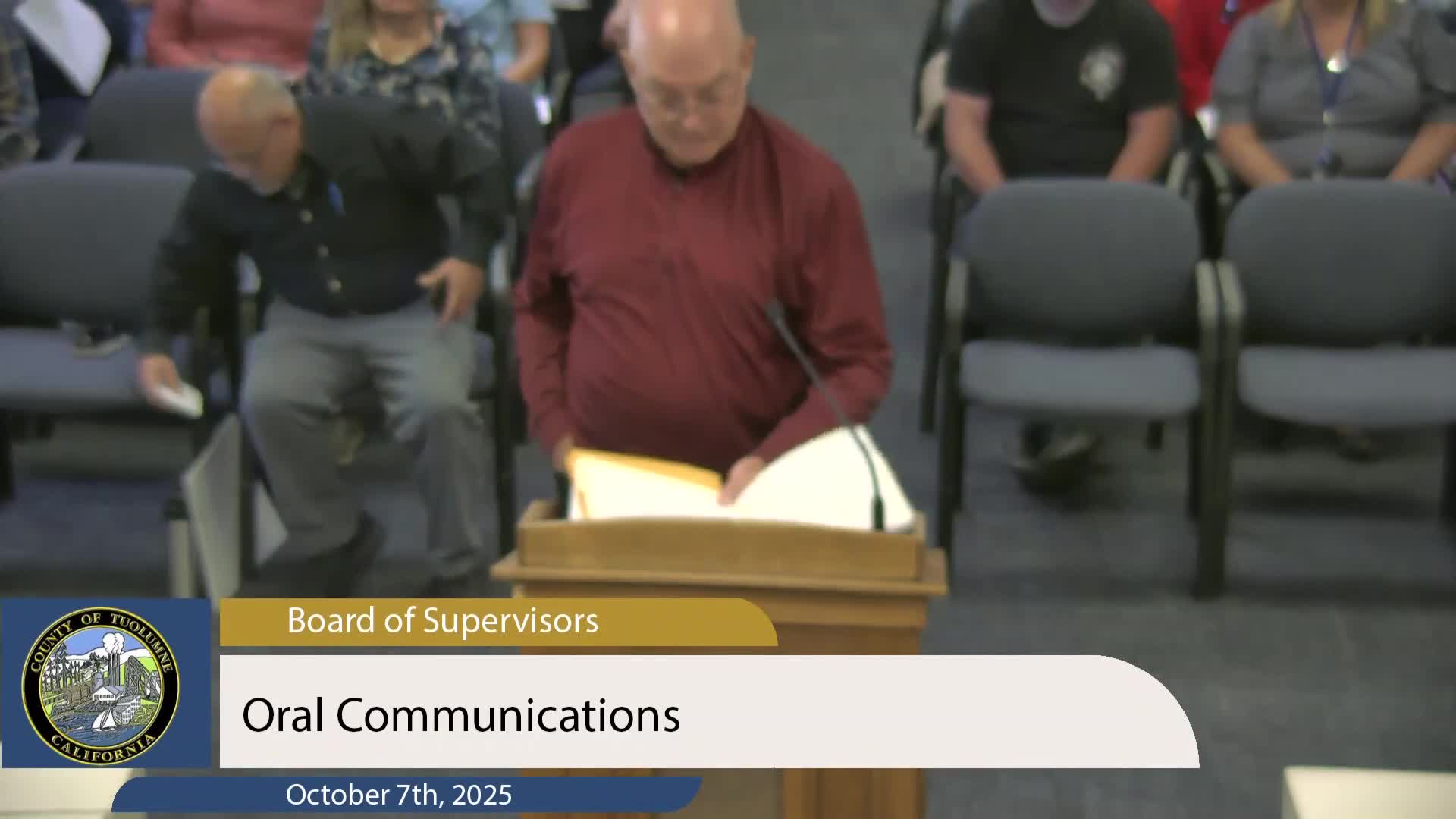
Summary
Multiple speakers at oral communications accused Supervisor Mike Holland of illegally tapping a county or TUD water line; Holland told the board he obtained permission from a former county administrator and said the hydrant, reportedly valued at more than $10,000, was donated to the county.
At the Tuolumne County Board of Supervisors meeting on Oct. 7, several members of the public accused District 1 Supervisor Mike Holland of improperly connecting a fire hydrant to a county water line and of failing to obtain required permits. The accusations appeared primarily in oral communications rather than as an agendized item.
Christopher Butner, who identified himself as a community journalist, said he had investigated a report in the local newsletter Engage Tuolumne alleging that Holland or his private company had tapped a Tuolumne Utility District or county water line to support a construction project. Butner said the allegations warranted investigation by law enforcement and county administration and referenced a February 2024 warning letter from the California Fair Political Practices Commission related to the supervisor’s campaign finance filings.
Other public speakers repeated the allegation and urged the board to investigate; one speaker said a “red tag” had been issued and later removed. Jason Reboard told the board he believed Holland had connected a hydrant without a permit on county property and that the installation was a misuse of public resources.
Holland addressed the board during the board‑reports portion of the meeting. He said he had asked county staff “over 2 years ago” about placing a fire hydrant on a county water line that he said was needed for his project. Holland told the supervisors that former county administrator Tracy Riggs had given permission for the connection and that the installed hydrant “belongs to the county.” He said the hydrant cost more than $10,000 and that the paperwork documenting the arrangement was in county files. Holland denied that the hydrant was private or that he had unlawfully used county water and said he had met with multiple county staff about the matter before he became a supervisor.
County Counsel reminded members that the public‑comment period was for comment and not for board discussion. No law‑enforcement action, investigation, or formal disciplinary matter was put on the board agenda that day. The board did not take formal action; Holland’s response was made as part of his board report.
The allegations and Holland’s reply were the principal public‑comment controversy at the meeting but produced no immediate formal outcome. Board members did not vote on or order an investigation during the meeting; several public speakers said they intended to pursue the matter with the grand jury and other agencies.
Proper legal or administrative determinations about permits, ownership and whether any statutes were violated would require review of county records cited by Holland and, if warranted, investigation by appropriate enforcement agencies.