
Tuolumne supervisors ask staff to return with scaled options to ease steep environmental health fee increases
Get AI-powered insights, summaries, and transcripts
Subscribe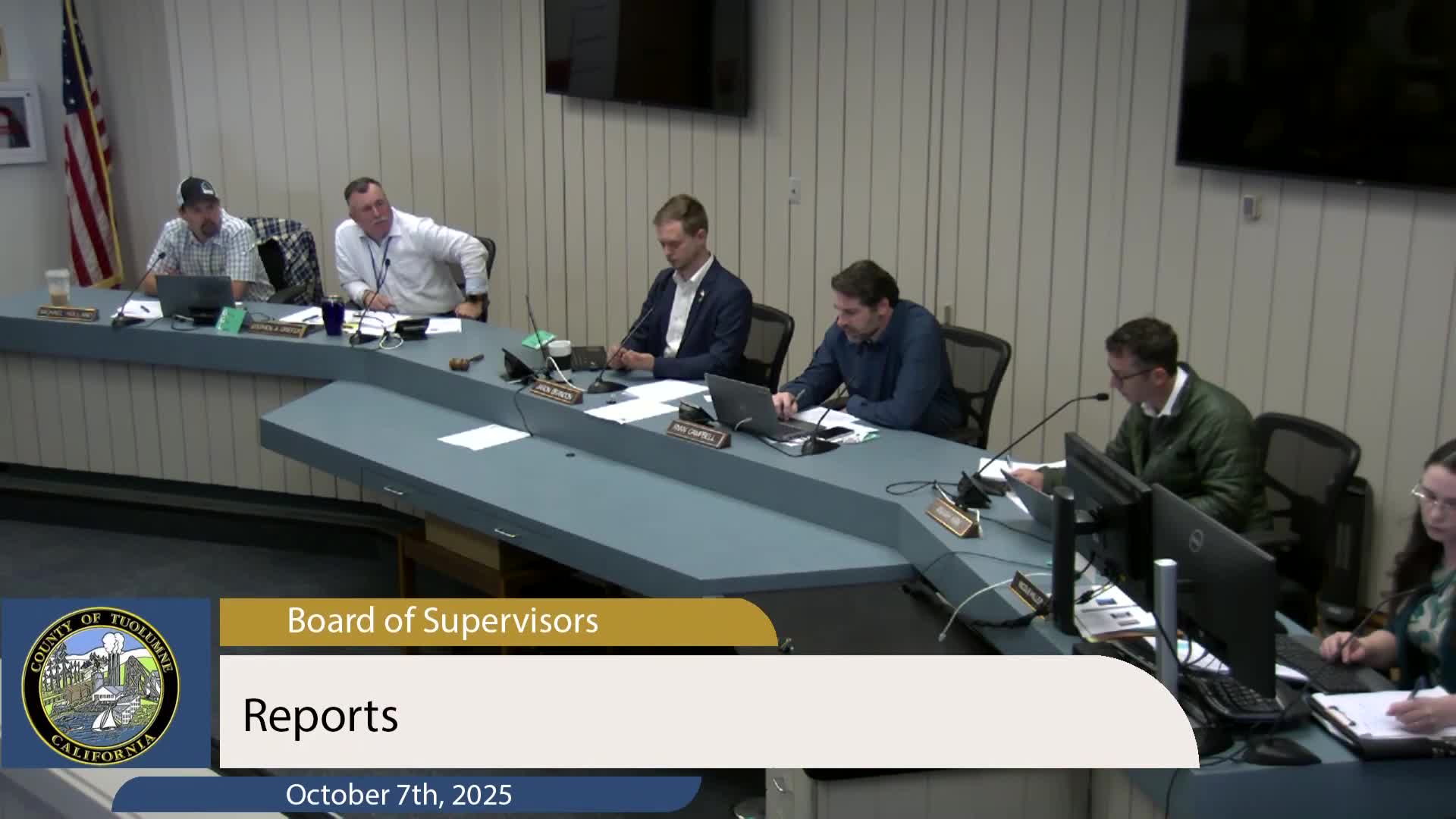
Summary
After business owners described fee spikes that reached triple earlier levels, the Tuolumne County Board of Supervisors asked staff to return in December with a matrix of fee options based on the 2023 baseline and estimates of impacts to the general fund and affected businesses.
Tuolumne County supervisors directed staff on Oct. 7 to return with specific, numbered options for rolling back recent environmental health consumer-protection fee increases and projections of how each option would affect the county general fund.
The request followed an extended public and board discussion in which small-business owners and county supervisors described fee hikes that, by some accounts, rose by as much as 300 percent after the county adopted a 100 percent cost-recovery goal. Interim County Administrator Roger Root said staff will use the county’s 2023 fee schedule as a baseline and present a matrix showing how moving to different cost-recovery percentages would change fees and how much the general fund would have to make up.
The issue drew sustained comment at a town hall and in public testimony. Supervisor Mike Holland and others said businesses understood that some fee increases were necessary but objected to the abrupt size of last year’s increases, which they said fell hardest on very small operators. Supervisor Kirk and other board members said they wanted options that would reduce sticker shock and allow businesses to adapt over time. Root said operational process improvements — for example, grouping multiple pool inspections at a single site to avoid duplicate travel charges — could also reduce costs and would be pursued without further board action.
Staff said they had used the MGT fee study as the technical baseline for modeling and provided preliminary figures during the meeting: a 10 percent across‑the‑board rollback from the most recent fee level would reduce fee revenue by about $85,020 and increase the general‑fund subsidy by roughly that amount; moving fees to an 85 percent cost‑recovery target (versus the 100 percent target previously adopted) would leave a general‑fund gap of about $54,000 under staff calculations presented at the meeting. Board members asked staff to show multiple scenarios so the board could choose a recovery percentage and see the direct general‑fund and business impacts of each.
Supervisor Stephen Campbell said he wanted staff to return with a December agenda item presenting the matrix and the projected revenue gap for each option so businesses could see new January charges in advance. Several supervisors asked staff to include targeted fixes for particular fees that had risen most sharply — the meeting repeatedly cited tattoo‑parlor fees and multi‑pool facilities as examples — and to present process improvements (self‑certification in alternating years, hourly inspection billing when appropriate) that could reduce costs without shifting more burden to the general fund.
Root said staff would prepare: (1) a baseline comparison of fees (2023 vs. current), (2) a matrix showing fee schedules at multiple cost‑recovery percentages and the resulting general‑fund shortfall for each scenario, and (3) a list of operational changes that would lower business costs and improve inspection efficiency. The board did not adopt an ordinance or take a formal vote on fee changes that day; supervisors provided direction to staff to return with the analysis and recommended options.
The board’s relayed direction closes the immediate public hearing stage and shifts the discussion to a staff‑driven set of fee alternatives and operational reforms to be brought back to the board for a public decision in December.