Get Full Government Meeting Transcripts, Videos, & Alerts Forever!
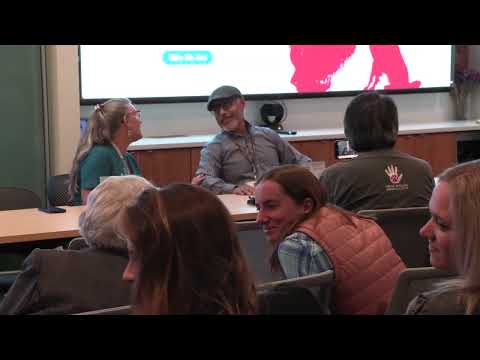
Native American Humane Society urges tribal-led animal services, cautions against outsiders 'stealing' animals
Summary
Brandy Tomhaive, executive director of the Native American Humane Society, told a Missoula audience that tribes need resources and control over animal services, described the organization's programs and partnerships, and warned that removing animals without tribal permission undermines tribal sovereignty.
Brandy Tomhaive, executive director of the Native American Humane Society, told a Missoula audience that tribal nations need the capacity to run their own animal services and that well-intentioned outside interventions can cause harm if they bypass tribal leadership.
Tomhaive described the Native American Humane Society as “the only national organization dedicated to supporting tribes and their communities and developing their own animal services.” She said the organization was founded 10 years ago, and that she became executive director on Aug. 15 of the prior year. The group’s work, she said, centers on supporting tribal-led decision-making rather than imposing outside fixes.
Tomhaive explained structural funding limits for many tribal governments: because reservations are primarily federal land, tribal governments “don’t have the same capacity as the county or the city next door to impose taxes, which is what funds animal services,” she said. She argued that outside groups that “parachute into communities” to perform spay/neuter or remove animals can undermine tribal sovereignty and create a legacy of dependency.
“None of us can be or should be in too much of a hurry to skip that step,” Tomhaive said, describing the need to obtain explicit tribal permission before working in a community. Later she defined “stealing” as taking an animal from a tribal community without tribal consent — a practice she said persists even though removing Native children to boarding schools is now widely condemned.
Tomhaive listed programs and partnerships the Native American Humane Society is pursuing: a new humane-education curriculum for kindergarten through fifth grade developed “by natives for natives,” pilot implementation in Pomo tribal schools in Northern California, and work to increase access to veterinary care. She named specific partners and sites: the Seneca Nation in Upstate New York; the Turtle Mountain Band of Chippewa in North Dakota; the Northern Arapaho on the Wind River Reservation in Wyoming; Utah Navajo chapters on the Navajo Nation; and Pomo tribes in Northern California.
She also cited workforce gaps and outreach priorities: “less than 1% of all veterinarians are Native Americans,” she said, and the organization is working to…
Already have an account? Log in
Subscribe to keep reading
Unlock the rest of this article — and every article on Citizen Portal.
- Unlimited articles
- AI-powered breakdowns of topics, speakers, decisions, and budgets
- Instant alerts when your location has a new meeting
- Follow topics and more locations
- 1,000 AI Insights / month, plus AI Chat