
Dr. Michael Yellowbird ties indigenous practice and neuroscience to the human–animal bond
Get AI-powered insights, summaries, and transcripts
Subscribe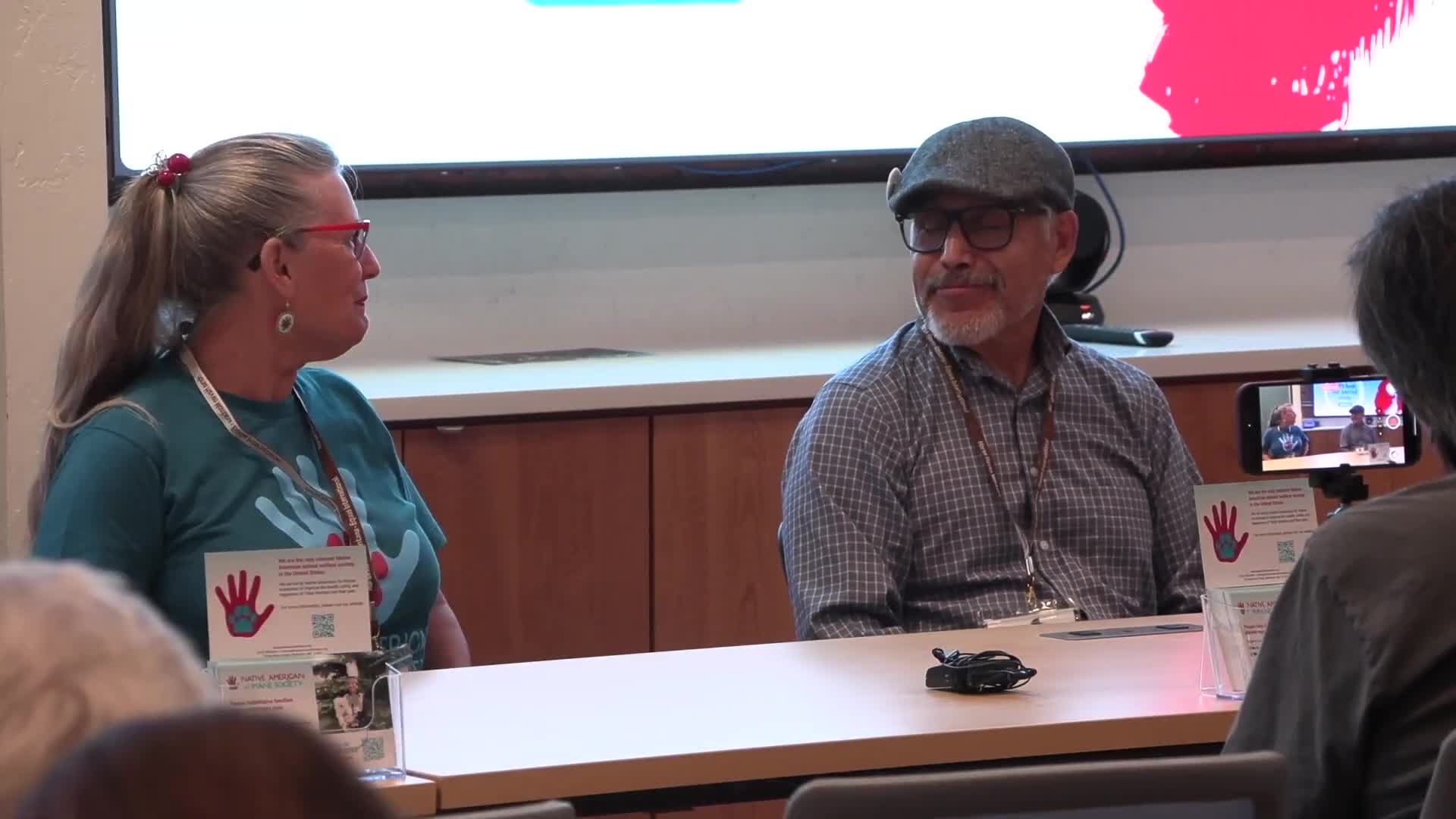
Summary
At an Arts Missoula session, Dr. Michael Yellowbird connected Indigenous ceremonial practice, personal experience with horses, and contemporary neuroscience to explain how humans and animals share trauma pathways and opportunities for healing.
Dr. Michael Yellowbird, president of the Native American Humane Society and a member of the Mandan, Hidatsa and Arikara tribes, spoke in Missoula about the historical and neurobiological roots of the human–animal bond and how Indigenous contemplative practices inform healing for people and animals.
Yellowbird described growing up on the Fort Berthold Reservation and the cultural practices that tied people and animals together, including naming traditions and ceremonies. He said those practices persisted even as communities adapted to changing circumstances: “we still have some of those remnants in our community,” he said, describing how animals were integrated into daily life and ceremonial medicine.
The presentation wove personal anecdotes, clinical concepts and genetics. Yellowbird discussed genetic markers and trauma, citing the COMT gene and a variant he described as associated with heightened placebo responsiveness, and ADRA2B as linked to “enhanced emotional vividness” that can deepen traumatic memory. He described how trauma can be triggered by “sight, sound, taste, touch, smell” and how a single cue can retrieve consolidated memories in both humans and animals.
Yellowbird used a family story to illustrate how Indigenous ceremony has been used to treat trauma in people and horses. After a riding incident involving his son, Yellowbird said the community’s Sundance chief performed ceremonies both for the rider and for the horse and for the place where the incident occurred. Yellowbird said the elder told him that after battles the people would “cleanse that place for everybody,” a practice that reflected an integrated view of place, people and animals.
He connected those practices to contemporary neuroscience. Yellowbird discussed the temporal–parietal junction and related brain circuits associated with empathy and emotional intelligence, arguing that contemplative practice can activate and sustain those circuits and thereby improve the capacity to read and respond to animals’ emotional states. He said that when people “calm down, we quiet down, we turn inward” those neural circuits become more active and that both humans and animals use cues that can be learned and read.
Toward the end of his talk, Yellowbird raised the role of technology, saying artificial intelligence and machine learning are becoming tools that can augment—but not replace—human understanding of animals. He described projects on his home reservation that combine traditional storytelling and spirituality with machine learning as a “hybrid model” for future work.
Why it matters: Yellowbird’s framing links cultural practices, neuroscience and genetics to practical approaches for trauma-informed animal work, suggesting that animal-welfare programs that respect Indigenous knowledge and that incorporate contemplative practice and trauma science may yield different outcomes than purely transactional interventions.
Speakers
- Dr. Michael Yellowbird — President, Native American Humane Society; tribal member, Mandan, Hidatsa and Arikara tribes (government/tribal affiliation) - Brandy Tomhaive — Executive Director, Native American Humane Society (nonprofit; introduced Yellowbird and moderated) - Commenters/Audience members — (citizen)
Discussion vs. decision
- Discussion points: Indigenous naming and ceremonial practices; genetics and trauma (COMT, ADRA2B); neuroscience circuits (temporal–parietal junction) and contemplative practice; anecdotal examples of ceremonial healing for people, horses and places; future use of artificial intelligence to study animal communication. - Directions: None recorded as formal directives in the session. - Decisions: No formal actions or votes recorded.
Authorities
- policy: “federal government’s trust responsibility” — referenced by Brandy Tomhaive when discussing tribal service funding and limits (referenced_by: Brandy Tomhaive remarks at 3166–3236)
Clarifying details
- category: personal background; detail: Yellowbird said he is a member of the Mandan, Hidatsa and Arikara tribes and was born in 1954; value: not specified for verification; source_speaker: Dr. Michael Yellowbird - category: genetics; detail: COMT and ADRA2B genes discussed as factors influencing trauma sensitivity; source_speaker: Dr. Michael Yellowbird - category: neural circuitry; detail: temporal–parietal junction (TPJ) and anterior cingulate cortex discussed as related to emotional intelligence and empathy; source_speaker: Dr. Michael Yellowbird
Proper_names
[{"name":"Dr. Michael Yellowbird","type":"person"},{"name":"Fort Berthold Reservation","type":"location"},{"name":"Mandan, Hidatsa and Arikara (Three Affiliated Tribes)","type":"organization"},{"name":"Arts Missoula","type":"organization"}]
Community_relevance
- geographies: ["Missoula","Fort Berthold Reservation","Turtle Island (general Indigenous context)"] - impact_groups: ["tribal communities","horses and domestic animals","trauma survivors"]
Meeting_context
- engagement_level: {"speakers_count":3,"duration_minutes":not_specified,"items_count":not_specified} - implementation_risk: "low" - history: []
searchable_tags
["indigenous","human-animal bond","trauma","neuroscience","horses","Dr. Michael Yellowbird"]
provenance
{"transcript_segments":[{"block_id":"seg_309_374","tc_start":"00:05:09","tc_end":"00:06:14","local_start":0,"local_end":80,"evidence_excerpt":"Thank you. So it's really a pleasure for me to be here, and thank you for that beautiful land acknowledgment.","reason_code":"topicintro"},{"block_id":"seg_2668_2675","tc_start":"00:44:28","tc_end":"00:44:35","local_start":0,"local_end":60,"evidence_excerpt":"When we calm down, we quiet down, we turn inward, and we and we're contemplative, we grow this part of our brain.","reason_code":"topicfinish"}]}
salience
{"overall":0.52,"overall_justification":"Academic and cultural framing of trauma and animal welfare is relevant to local animal-welfare providers and tribal partners but does not create an immediate policy change in this session.","impact_scope":"regional","impact_scope_justification":"Applies to tribal communities and animal-welfare practitioners regionally.","attention_level":"medium","attention_level_justification":"Specialist interest among animal-welfare and tribal stakeholders.","novelty":0.45,"novelty_justification":"Combines established neuroscience with Indigenous practice in local presentation.","timeliness_urgency":0.30,"timeliness_urgency_justification":"Informative rather than urgent; no immediate decision required."}