
California Unemployment Insurance Appeals Board reports sharp case-timeliness gains, still short of DOL 30-day target
Get AI-powered insights, summaries, and transcripts
Subscribe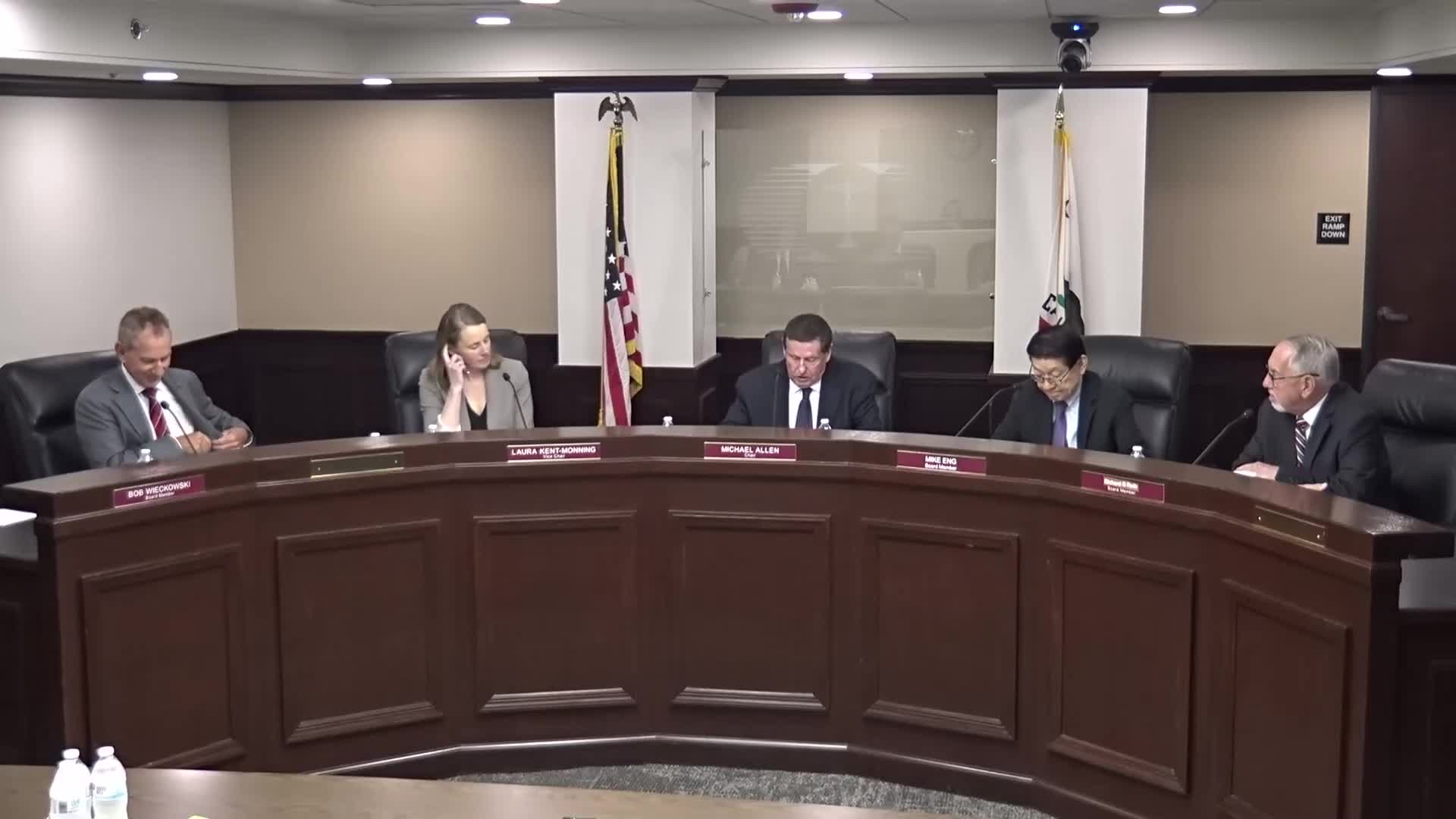
Summary
The California Unemployment Insurance Appeals Board reported large improvements in field and appellate processing in July, including reductions in average case age and increases in the share of cases closed within key time windows, but officials said the federal 30-day Department of Labor timeliness goal remains just out of reach.
Chair Michael Allen on Wednesday reported the board closed more than 998 cases in July using the California appeals management system (CAMS), and said the agency is making “great progress toward reducing our caseloads.”
The board’s executive director and chief judge, Judge Koutre, told members the field offices issued nearly 23,000 decisions in July and that the average case age fell from 38 days to about 31 days. He noted the U.S. Department of Labor guideline for average case age is 30 days and that the board has not met that benchmark since September 2020.
“The field continues to do everything it can to improve on all of these measures, and you're seeing those results now,” Judge Koutre said. He warned July is typically a high-leave month and inventory rose slightly as a result, a trend he described as temporary.
Vice Chair Laura Kent Monning commended the field offices, citing a July case-age figure of 31.1 days and noting the Department of Labor standard of 30 days or less. “That is just incredible, and I hope that everyone feels proud of that accomplishment,” she said.
Supervising Administrative Law Judge Bach reported appellate performance near Department of Labor targets: the board is closing roughly 47.7% of appellate cases within 45 days (near the 50% DOL guideline) and reported closing 95.8% of appellate cases within 75 days, with an average appellate case age of 32.2 days.
Field-timeliness submetrics showed notable month-to-month gains, the board said: the share of appeals closed within 30 days doubled from 12% to 24%, and the share closed within 45 days rose from 55% to 69%. Officials described those gains as the result of sustained operational effort across field offices.
Board members asked about the effect of recent wildfires and other disasters on appeals volume. Judge Koutre said the system absorbed wildfire-related filings without major disruption and offered to provide exact counts between meetings. Members also discussed Pandemic Unemployment Assistance (PUA) cases, which are a small fraction of inventory and tend to be more complex; officials said remaining PUA case aging is largely tied to registration and overpayment issues and that overall course corrections are under way.
No formal board action was taken on timeliness at the meeting; members received the reports and asked staff to continue progress updates.