
County and Lakeshore begin contract review for transfer station; equipment, woody debris and hauling reliability top concerns
Get AI-powered insights, summaries, and transcripts
Subscribe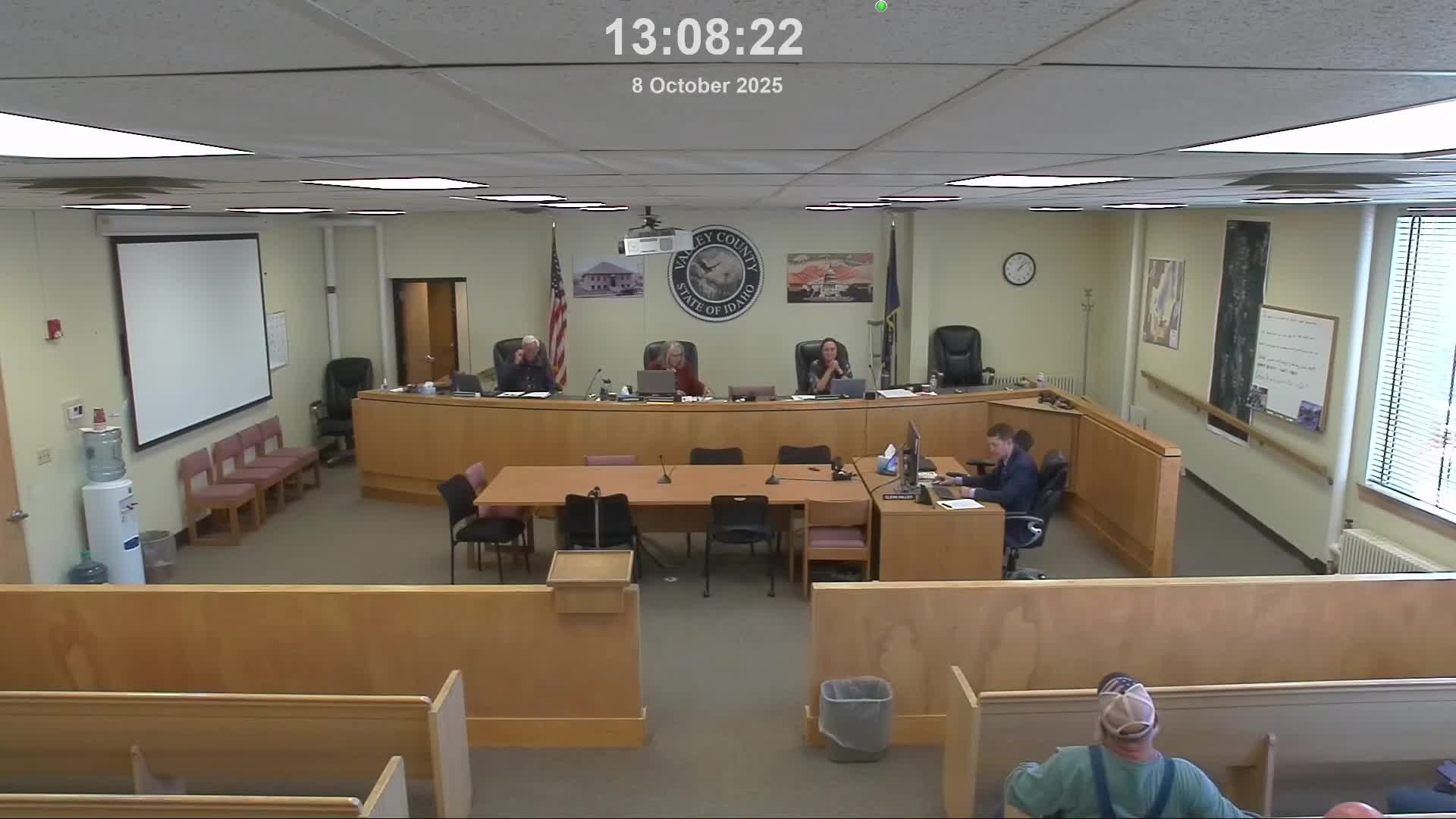
Summary
Valley County commissioners and Lakeshore Disposal opened a workshop to rewrite the county's transfer-site management contract, citing recurring truck breakdowns, woody-debris processing questions, hazardous-waste control and recycling economics.
Valley County commissioners opened a multi-hour workshop with Lakeshore Disposal to begin rewriting the county's transfer-site contract, focusing on operational reliability, hazardous-waste control, woody debris processing and long-term disposal options.
County staff and commissioners stressed that the current contract language has left "gray areas" and disputed expectations, and asked Lakeshore to provide a marked-up draft of the existing agreement for comparative review. "My goal this time is to make sure before we each sign something, each 1 of us knows exactly what the expectations are so that there is no disagreement," a county commissioner said.
Lakeshore representatives described equipment and staffing improvements. A Lakeshore speaker identified as Nate, the company controller, told the board the company had added two spare hauling trucks, a spare commercial truck, a new roll-off truck and two additional trailers for long-haul work; the company also added staffing for the transfer station, including a spotter and additional operators. "We brought in a maintenance manager from Alaska. We got 2 spares trucks up and running for the hauling side," the Lakeshore representative said.
Commissioners and staff pushed Lakeshore on recurring operational problems they have heard from residents: trucks that break down, long delays when roads are impassable in winter, and loads arriving with mixed material. County facilities and transfer-station staff described frequent equipment outages in past years and asked for contract language requiring prompt equipment replacement and parts maintenance.
Several county speakers urged clearer rules for woody debris and C&D (construction and demolition) materials. County and Lakeshore staff discussed separating clean woody biomass (for grinding and hog fuel) from C&D that includes paint, stains or treated lumber; one Lakeshore representative said combining separated loads at the site had been done to create hog fuel, but that contamination (dirt and trash in loads) increases grinder blade wear and processing costs. County staff suggested the woody-debris program might be split into a separate contract because market handling and processing arrangements are changing quickly.
Hazardous-waste control, including more frequent hazardous-waste collection than the current once-a-year event, was raised by one county official who called the current handling "a free for all" and recommended a permanent hazardous-waste solution at the transfer site. The county and Lakeshore also discussed potential options for expanded recycling, including co-locating a recycling bailer and splitting building utility costs, or hauling sorted materials to a processing center outside the county. Lakeshore noted the transportation cost is the biggest factor in recycling economics in rural Idaho.
Tipping fees and overall haul costs were discussed in public detail. Lakeshore and county staff described current composite costs around $130 per ton, combining haul fees, long-haul contractor costs and tipping fees at the regional landfill. Commissioners asked for more frequent budget information and advance notice of proposed price increases; Lakeshore agreed to provide budget numbers in March to feed the county's April budgeting timetable.
County staff and Lakeshore agreed on several near-term actions to inform the new draft contract: Lakeshore will produce a marked-up copy of the current agreement showing desired changes; the county will request clearer, annual reporting on Lakeshore's permanent commercial accounts and container counts for assessor and billing purposes; and both parties will clarify the treatment of woody debris, hazardous waste, and responses to service interruptions. Commissioners also asked Lakeshore to provide suggested language on repair/replacement obligations for equipment and on how to handle exclusivity or third-party contractors who haul material to county sites.
No formal contract vote was taken at the workshop. Commissioners directed staff to continue developing the draft agreement and return for follow-up sessions, and suggested a separate agreement or addendum for rapidly changing woody-debris processing could be considered.