
Troy police chief details training and explains reasons behind traffic-stop disparities
Get AI-powered insights, summaries, and transcripts
Subscribe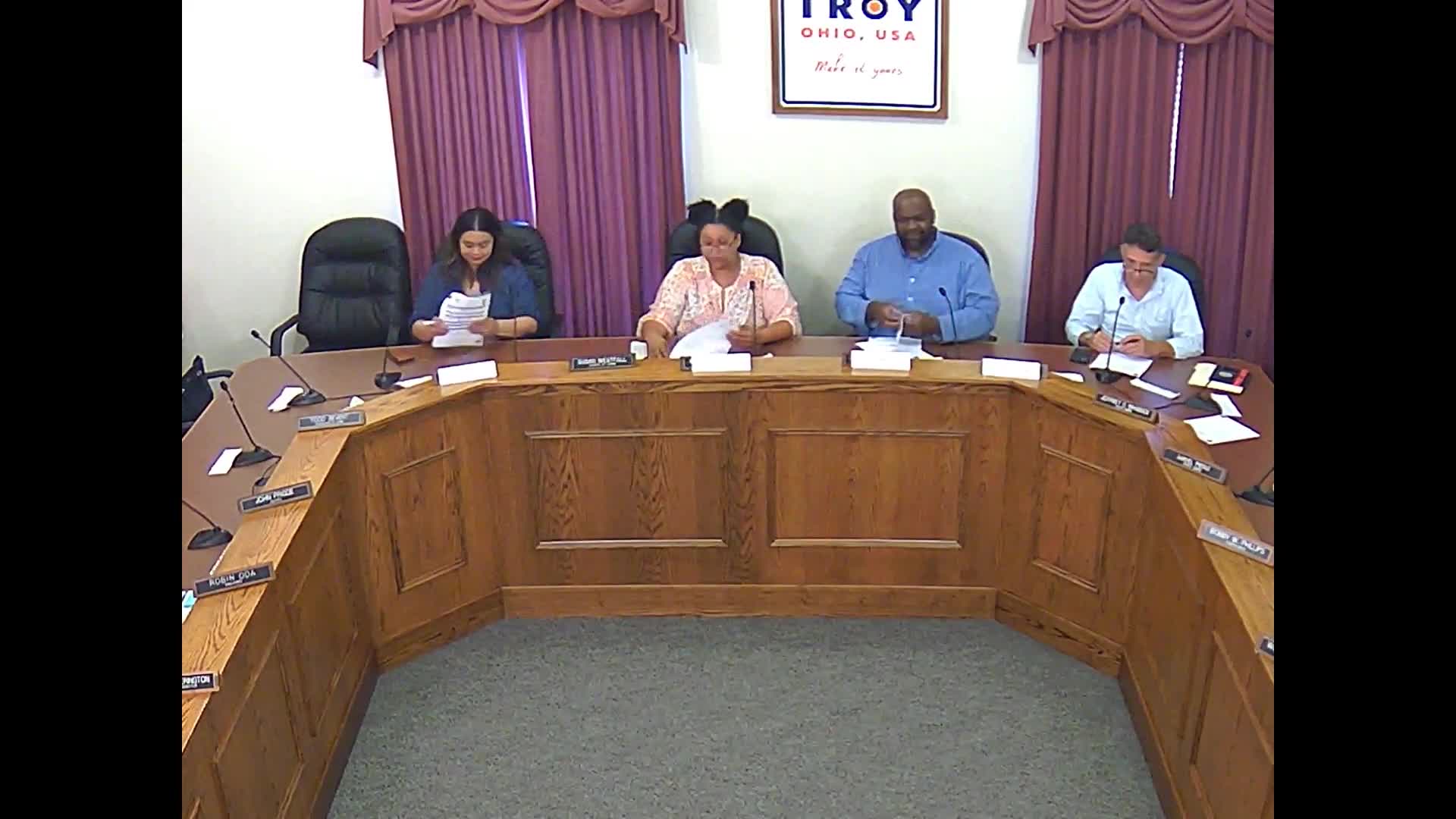
Summary
Troy’s police chief reviewed officer training, department policy and month-by-month citation and warning counts after commissioners raised questions about racial disparities in traffic enforcement.
Troy — The city’s police chief outlined training requirements, department policy and month-by-month traffic-stop data during a Human Relations Commission meeting after commissioners raised questions about apparent disparities in who received citations and warnings.
Commissioners say the discussion matters because traffic enforcement intersects with neighborhood safety and community trust; the chief provided detailed case-level examples to explain why some stops led to citations while others resulted in warnings.
The chief said about two-thirds of Troy officers now have less than five years’ experience and described required training that includes 16 hours of cultural diversity and procedural-justice instruction, 5 hours of ethics training and 16 hours of the Blue Courage series, supplemented by state-mandated continuing professional training. He repeated the department’s written policy forbidding bias-based policing and said the primary goal of traffic enforcement is “to reduce collisions and enhance safety.”
The chief walked commissioners through November and December stop data to show how case details affect whether an officer issues a citation or a warning. For November he reported 24 citations issued to 18 Black men: 11 for driving under suspension or without a valid license, three for driving under the influence (which generated multiple charges), one school-bus violation, two speeding incidents (one recorded at 90 mph on an interstate and one at 40 mph in a 25 mph area), one expired plate and a stop-sign or turn-signal incident an officer said had “almost caused an accident.” He told commissioners that roughly three of those 24 citations were discretionary; the rest were, in his view, appropriate to write based on the facts in the officer reports.
By contrast, the chief said officers wrote 79 citations to white men in November; he counted roughly 43 of those as discretionary (including stop-sign and other moving violations) based on his review of reports. In December the chief said 16 citations were issued to Black men (14 individuals) and that only one of those appeared discretionary. He also said a number of citations stemmed from mandatory responses — crashes, DUI investigations originating in 9-1-1 calls, and confirmed driving-under-suspension cases — which staff cannot properly resolve with a warning.
The chief noted a related change at state level that reduced the number of ways a license can be suspended (for example, for some administrative reasons such as certain unpaid fees or ancillary penalties) and said he expects that change to reduce suspension-related stops over time. He told the commission that officers are instructed not to give warnings for some high-risk offenses — for example, impaired driving, driving under suspension and failing to stop for a school bus — and that supervisors expect citations when drivers exceed the limit by large margins (the chief used a 30-mph-over example to illustrate his supervisory guidance).
Commissioners also reviewed warnings data the chief’s office compiled: in November he reported 21 warnings to Black males (eight moving violations, four equipment violations and licensing-related warnings) and, for the two-month period he reviewed, roughly 100 warnings to white males in each month (a mix of moving, equipment and license-plate infractions). The chief cautioned that small stop counts for some demographic groups make percentages volatile — “if you only stop a handful of Hispanic women, one ticket will move the needle,” he said — and that the department’s internal recordkeeping requires staff to open individual reports to verify circumstances, a time-consuming process.
Commissioners asked whether differing stop counts — the chief acknowledged there are more stops of white drivers in the months reviewed — create more opportunities for discretionary decisions. The chief agreed that greater exposure increases the opportunity for discretion but emphasized that officers generally seek to avoid actions that could later become social-media controversies and that body cameras often provide context for stops.
The commission asked about specific traffic-control concerns at local intersections (for example, the signal at 25A approaching the YMCA). The chief said signal timing falls under the county engineer’s jurisdiction and offered to coordinate with the city engineer to contact the county on commissioners’ behalf.
Discussion points: officers’ training, department policy forbidding bias-based policing, statistical differences in stops and citations by race, state changes to suspension rules. Direction: chief and staff to provide more months of data on request; staff to contact county engineer about a signal-timing concern. No formal policy change or vote occurred on enforcement practices.
Ending — The chief concluded the presentation by urging commissioners to consider the data in the context of case-level details and enforcement priorities; commissioners asked for further, longer-range reports so they could assess trends beyond the two months presented.