Get Full Government Meeting Transcripts, Videos, & Alerts Forever!
Get email alerts on the Temporary Permits Extension topic
No spam. Unsubscribe anytime.
Council adopts resolution extending emergency temporary placement permits pending hardship review
Summary
The council adopted Resolution 251 directing the town manager to accept applications to extend Emergency Temporary Placement Permits (ETPs) that were set to expire Sept. 23, 2025, establishing hardship criteria, a six‑month review cadence and a processing fee structure; extensions may be denied and noncompliant units referred to code enforcement.
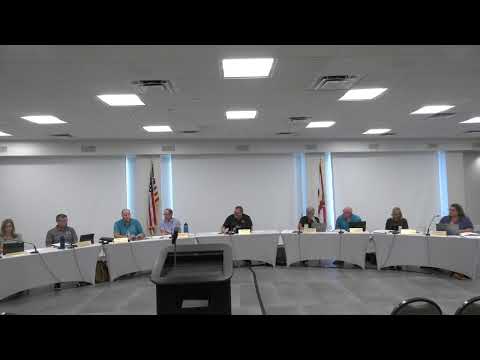
The Fort Myers Beach Town Council on Aug. 18 adopted Resolution 251 to extend existing Emergency Temporary Placement Permits (ETPs) that were due to expire Sept. 23, 2025, and directed the town manager to begin accepting applications for extensions no later than Sept. 2, 2025.
Town Manager Will McCanny and Town Attorney Nancy Stuprich framed the resolution as a targeted, temporary measure to give property and business owners a path to remain in place while they complete reconstruction or otherwise resolve documented hardships. McCanny told council, "The deadline for ... removal or the permitting of these structures or units, appears to be the prior permits will be expiring on September 23." He said the town has 51 commercial and 158 residential ETPs on file; staff expects overlap with FEMA records but noted some nuance in counts.
Resolution 251 directs the town manager to accept applications and to grant extensions only upon demonstration of a qualifying hardship. The resolution lists nine hardship categories that the town will accept as bases for extension, including: delay in Elevate Florida processing; mortgage/financing delays; inability to find licensed building professionals; disputes with licensed building professionals or insurance adjusters; lack of available equipment or materials; inability to sell property; inability to secure an alternate location to operate; permitting exchange delays; and extended family illness or death. Council added clarification in the meeting that the definition of "licensed professional" be understood to mean building professionals (contractors, engineers, architects) where relevant.
Applicants must provide documentation of the claimed hardship and a plan for resolving it. The council required that any extended ETP include an evacuation plan and that the unit be road‑ready, licensed and registered so it can be removed quickly for storms; the town will retain authority to enforce adherence to evacuation plans. The resolution also states that any structure or use identified in an ETP that is noncompliant with the town's floodplain regulations, or any ETP not extended, "shall be referred to code enforcement." The council added that previously imposed permit conditions remain enforceable.
Council and staff discussed administrative processing. The resolution authorizes an administrative fee for extension applications (the council settled on $100 for residential and $200 for commercial extensions during the meeting discussion) and allows the town manager discretion to waive fees in demonstrated hardship cases. Councilors directed staff to prepare an electronic application and outreach materials; McCanny said staff would begin accepting applications on or before Sept. 2 and recommended that staff notify permit holders known to the town to reduce avoidable backlogs.
Councilor Karen Woodson moved adoption; Councilor John King seconded. The resolution passed unanimously. After the vote the council directed staff to send the draft to the Local Planning Agency (LPA) for policy discussion on longer‑term temporary‑use rules and to return to council for any formal code changes.
Councilors stressed that the extension process is not intended to create permanent new uses or to shield ongoing code violations. Emergency permits that have been removed (the physical unit taken off the property) will not be eligible for extension; noncompliant cases remain subject to code enforcement and magistrate processes.