
Council approves master development and design‑build steps to advance downtown conference center
Get AI-powered insights, summaries, and transcripts
Subscribe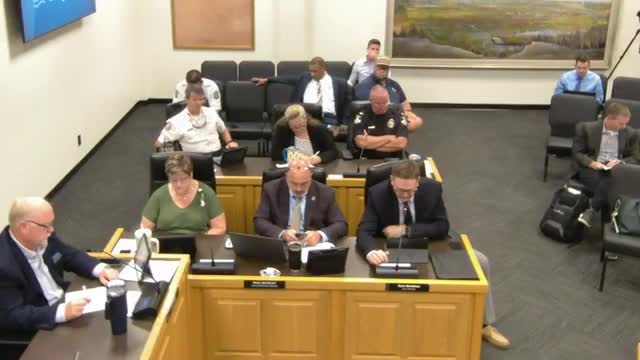
Summary
Jefferson City council approved a master development agreement, a design‑build contract and creation of a nonprofit to hold the hotel property, and authorized a tax‑credit application to help finance the planned hotel, conference center and parking garage in downtown Jefferson City.
Jefferson City council voted this week to advance a package of agreements and financing steps intended to build a hotel, conference center and parking garage in downtown Jefferson City.
The council approved a master development agreement naming Garfield Public Private as the city’s primary development partner, adopted a design‑build agreement with McCallum‑Gordon to design and construct the project and voted to create a nonprofit corporation — Capital City Corporation for Growth — to hold the hotel property. The council also authorized an application to the Missouri Development Finance Board for up to $4 million in tax credits that city staff said could be leveraged into as much as $8 million in charitable‑gift funding for the project. The master development agreement passed by roll call vote, 8–2.
Supporters of the plan told council the project is meant to be an economic driver for downtown, give the city meeting space that can attract conventions and groups that now go elsewhere, and spur additional private investment in retail and restaurants. Opponents warned that the scale of public subsidy and long‑term debt expose taxpayers to risk.
City staff described the agreements as necessary steps to move past planning and into a construction phase. “This is the document that engages Garfield Public Private to lead this project on behalf of the city, for the duration of the project,” city staff member Ryan Camolone told council during the ordinance presentation.
Council action and votes - Master development agreement with Garfield Public Private (ordinance 2025‑039): approved by council, outcome: approved; roll call 8 ayes, 2 noes. - Design‑build agreement with McCallum‑Gordon (resolution 2025‑35): approved; roll call 8 ayes, 2 noes. - Creation of nonprofit Capital City Corporation for Growth (resolution 2025‑36): approved; roll call 7 ayes, 3 noes. Council discussion stated the nonprofit would initially be governed by the city council and mayor as its board during construction, with the option to reconstitute the board later. - Authorization to apply for Missouri Development Finance Board tax credits (resolution 2025‑38): approved; roll call 9 ayes, 1 nay. Staff said a successful $4 million award could be used to attract charitable contributions and potentially double the value available to the project if donors participate.
Council members and public speakers debated the balance of risk, subsidy and community benefit. Councilwoman Maly, who said she respects the project’s supporters, explained she would vote against conference‑center items because she viewed public financing as a risky “gamble.” As she put it on the record: “I personally am unwilling to gamble with the taxpayers' dollar any further on this project.”
Proponents stressed long‑term economic benefits and the inability of current local facilities to host many statewide association meetings. Multiple members of business and association communities testified during public comment that groups currently meeting in Branson or St. Louis would prefer a centrally located, walkable venue near the state Capitol if Jefferson City had adequate space. The chamber president Gary Plummer urged council members to support “this transformative project for our entire community.”
Several financing details explained during debate - Special taxing districts: staff described three on‑site, hotel‑only sales taxes (a community improvement district, a transportation development district and a port improvement district) that together would add 3% sales tax on purchases at the hotel; those revenues are intended to support hotel‑related bonds. - Revenue pledges: city staff said citywide lodging‑tax and parking revenues will be pledged to some bond classes; hotel operating revenues are intended to support hotel bonds. Staff emphasized the city is not issuing a general‑obligation tax to cover the hotel bonds, but noted that if citywide pledged revenues fell short chronically and debt‑service reserves were exhausted, the council would face decisions about backstops. - Tax credits: staff described the Missouri Development Finance Board contribution tax credit program and said the city could use credits to attract charitable gifts to the nonprofit owner, increasing funds available to the project.
Next steps and oversight Staff and project partners said a guaranteed maximum price (GMP) will be presented to council after design and trade‑bid solicitation under the design‑build structure; council retains the authority to approve the GMP before construction. City staff advised council that keeping the city council as the nonprofit’s board during construction reduces the risk of governance disagreements while construction — the riskiest phase — is underway, and that the board could be reconstituted after construction to include community stakeholders. Garfield Public Private and McCallum‑Gordon will remain engaged to provide project and financing expertise during the transition.
Why this matters: downtown economic strategy Project supporters argued the facility would keep conference and association spending in Jefferson City, create hotel and restaurant demand, and anchor downtown revitalization. Critics pointed to long‑term operating costs, potential transfers from city revenues in a prolonged downturn and opportunity costs of borrowing. Council members said they weighed those tradeoffs before voting.