Plantation council backs local bill to dissolve Plantation Acres improvement district; requests special referendum
Loading...
Summary
The Plantation City Council voted to pursue a local bill that would ask the Legislature to dissolve the Plantation Acres Improvement District, asking that any voter referendum be held as a special election and that dissolution not take effect before Oct. 1, 2026.
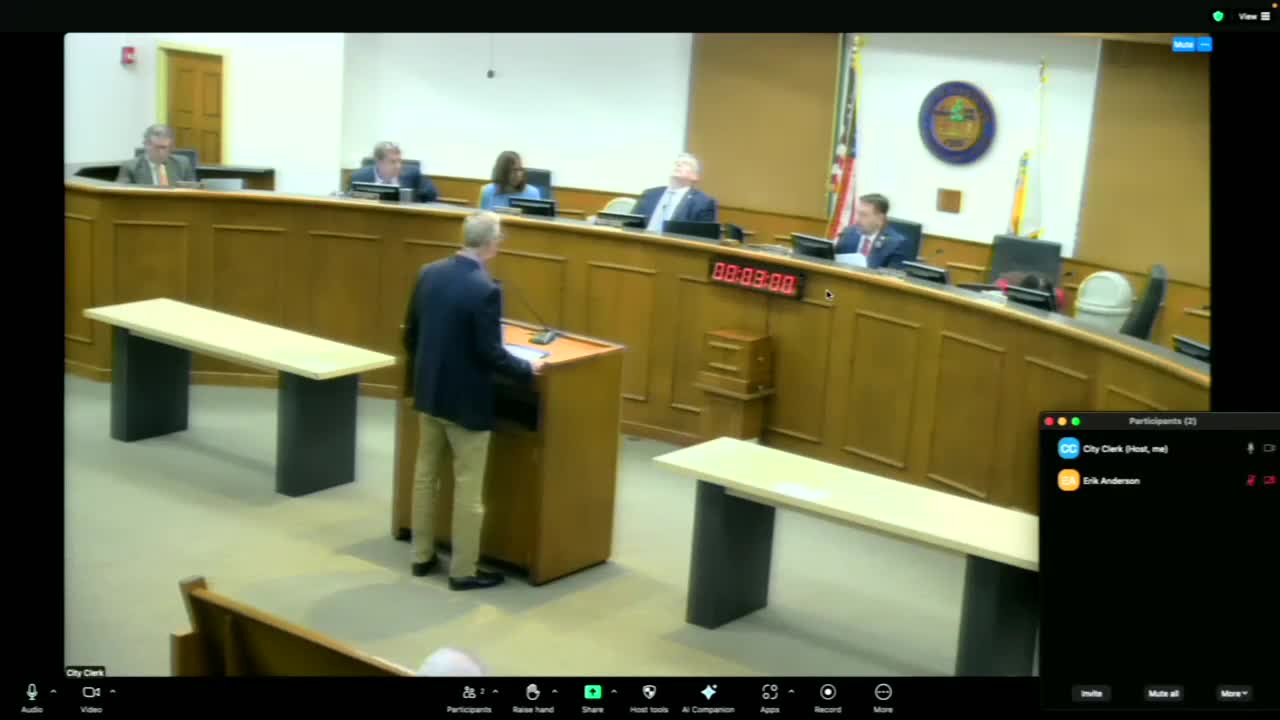
The Plantation City Council on Wednesday voted to ask the Broward County legislative delegation to file a local bill to dissolve the Plantation Acres Improvement District (PAID), and to seek a special referendum for voters in the district on whether PAID should be dissolved.
The council’s action follows a 4–1 vote by PAID’s board on Sept. 25 to reaffirm support for putting dissolution to a referendum. City administration asked for flexibility on timing and an effective date so the city would not assume responsibility for the district before Oct. 1, 2026, to allow time to finalize budgets and transition plans.
City Chief Administrative Officer Jason Nunemaker told the council that PAID’s board “met on September 25 in a special call meeting, and voted 4–1 to reaffirm its support for a referendum on dissolution.” He said staff prefers a stand‑alone election but will work with PAID and the Supervisor of Elections to minimize costs and explore options to lower the administrative expense. Nunemaker also asked the council to give staff latitude to set an effective takeover date of Oct. 1 or later so the city would have time to prepare budgets and transition documents.
Council members debated whether a referendum was legally required. Council President Reinstein read the relevant statute aloud: “If the governing body of an independent special district created and operating pursuant to a special act elects by majority vote plus one to dissolve the district … the voluntary dissolution … may be effectuated only by the legislature.” He said that because PAID’s board voted to dissolve, the Legislature ultimately must act and a referendum is not strictly required by that provision; however, the PAID board itself had asked that the question go to voters.
Several council members said a referendum was prudent to give PAID ratepayers a direct vote, and to allow the city and PAID to present details to residents about how the city would handle assets, liabilities and service if dissolution is approved. Councilmember Fadgen said a referendum is “the most democratic” route and urged flexibility so the election could be run at the least cost and with maximum turnout. Councilmember Horland moved that the local bill request include a special election provision and that dissolution not take effect before Oct. 1, 2026; the motion was amended on the floor and seconded.
Public comment at the meeting was extensive and strongly split. Dozens of Plantation Acres residents urged the council to move forward with dissolution and a stand‑alone referendum, saying PAID previously had been unresponsive and overly administrative. Dennis Conklin, a Plantation resident, asked the council to “limit the structural [height] to three stories” if a redevelopment of the old Plantation General Hospital site proceeds; other residents described past problems in the district and urged the city to take over stormwater and infrastructure work. Opponents of dissolution also spoke, asking the council to preserve local control and to consider the potential costs and operational impacts of consolidation.
The Supervisor of Elections’ memo provided to staff listed baseline costs for a concurrent election ($12,239 for a single ballot question; $13,555 for two pages) and said a stand‑alone special election held on a non‑countywide date would be substantially higher. Nunemaker and council members discussed whether PAID could pay the election costs and noted PAID’s audited fund balance could cover a stand‑alone vote. The council’s resolution states the city’s funds shall not be used for the required referendum; the expectation expressed in the meeting is that PAID would bear the referendum cost if the board and ratepayers approve it.
After an extended discussion and public comment period, the council voted to approve the resolution authorizing staff to pursue a local bill with the Broward Delegation that would: (1) request the Legislature dissolve PAID if the referendum so directs, (2) provide for a special referendum to be held on or before Nov. 3, 2026 (with staff to work with the Supervisor of Elections on scheduling), (3) include language specifying dissolution would not become effective prior to Oct. 1, 2026, and (4) reserve to the city the ability to adjust bill language in consultation with the city attorney. The motion, as amended on the floor, passed on roll call (recorded “yes” votes: Council members Anderson, Andreu, Fadgen, Horland and Reinstein).
Council and staff described follow‑up steps if the Legislature approves dissolution: staff would inventory PAID assets and liabilities, integrate PAID infrastructure and budgets into city systems, and identify a two‑year transitional approach for operations and rate structure. Utilities staff said developers and PAID would be expected to fund off‑site utility upgrades necessary to connect future developments; the city has begun engineering design work on a route and easement that would enable force‑main connections for future developments in the area.
The council’s vote sends the city’s request and a draft local act to the Broward delegation, and authorizes the city attorney to work with PAID and election officials to refine language, but final scheduling and exact election costs remain subject to negotiation with the Supervisor of Elections. The city clerk will transmit the approved resolution and draft local act language to the delegation for consideration by the Legislature.