Get Full Government Meeting Transcripts, Videos, & Alerts Forever!
Get email alerts on the Billboard Sign Regulation topic
No spam. Unsubscribe anytime.
Planning committee tightens billboard rules, approves text amendments to sign and subdivision codes
Summary
The Tupelo planning committee approved TA 25‑03, a text amendment to chapters 10 and 12 of the development code that narrows where billboards are allowed, reduces maximum billboard height and increases separation and visibility restrictions; the committee added a requirement for two parallel parking spots at cluster mailboxes as a caveat to final,
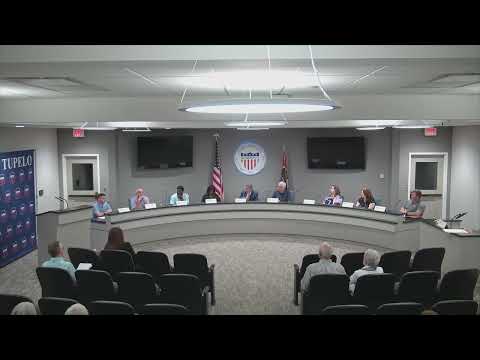
The Tupelo planning committee voted to approve TA 25‑03, a text amendment to chapters 10 and 12 of the Tupelo development code that imposes new limits on billboard locations, height and construction, and makes several procedural changes to subdivision processing.
The amendments restrict billboards to agricultural, open‑space and industrial zones, reduce allowed billboard height from 35 feet to 25 feet where local standards apply, increase minimum separation distances between billboards and from other freestanding signs, and add requirements that billboard supporting structures be enclosed in masonry cladding. The committee approved the text with a caveat that a designated two‑vehicle parallel parking area be included at cluster mailbox locations.
Planning staff described the goal of the changes as tailoring billboards to highways and reducing large signage within the city’s commercial corridors. City planner Pat said, "We're gonna change that look so that a billboard is appropriate on highway, but not inside the city on other top streets." Staff also said the city is coordinating with the Mississippi Department of Transportation, which has recently reasserted jurisdiction over previously state‑controlled corridors and limits what changes are allowed to grandfathered billboards.
The amendments add new proximity limits: no billboard closer than 100 feet to the nearest structure or to a zoning boundary, and no billboard located closer than 200 feet to any residential use regardless of zone; if a billboard would be closer than 500 feet to a residence, it must be oriented so it is not visible to that residential structure. Staff also said the separation distance between billboards will increase (from 1,500 feet to 1,750 feet in the proposed language) and require a 500‑foot buffer from other freestanding signs to reduce competitive visual impacts on ground‑level businesses.
The committee also tightened rules on replacing nonconforming signs: grandfathered nonconforming billboards will not qualify for upgrade to electronic displays under the new rules, and replacement may require ownership and removal of two existing billboards in some circumstances. Pat explained that some existing billboards are "grandfathered enhanced" under state inventory and cannot be materially altered without losing their nonconforming status.
A committee member moved to approve TA 25‑03 as drafted with the added requirement for parallel mailbox parking; the motion was seconded and passed. Staff noted that further procedural text amendments to chapters 2, 4, 5 and 11 remain under discussion or were tabled earlier in the meeting and may return for additional committee review.
The committee directed staff to circulate the final redlines and maps used to identify streets under MDOT jurisdiction before the ordinance proceeds to the next public hearing or council review.