
Board passes ordinance clarifying sheriff’s delegated powers after heated debate over statutory authority
Get AI-powered insights, summaries, and transcripts
Subscribe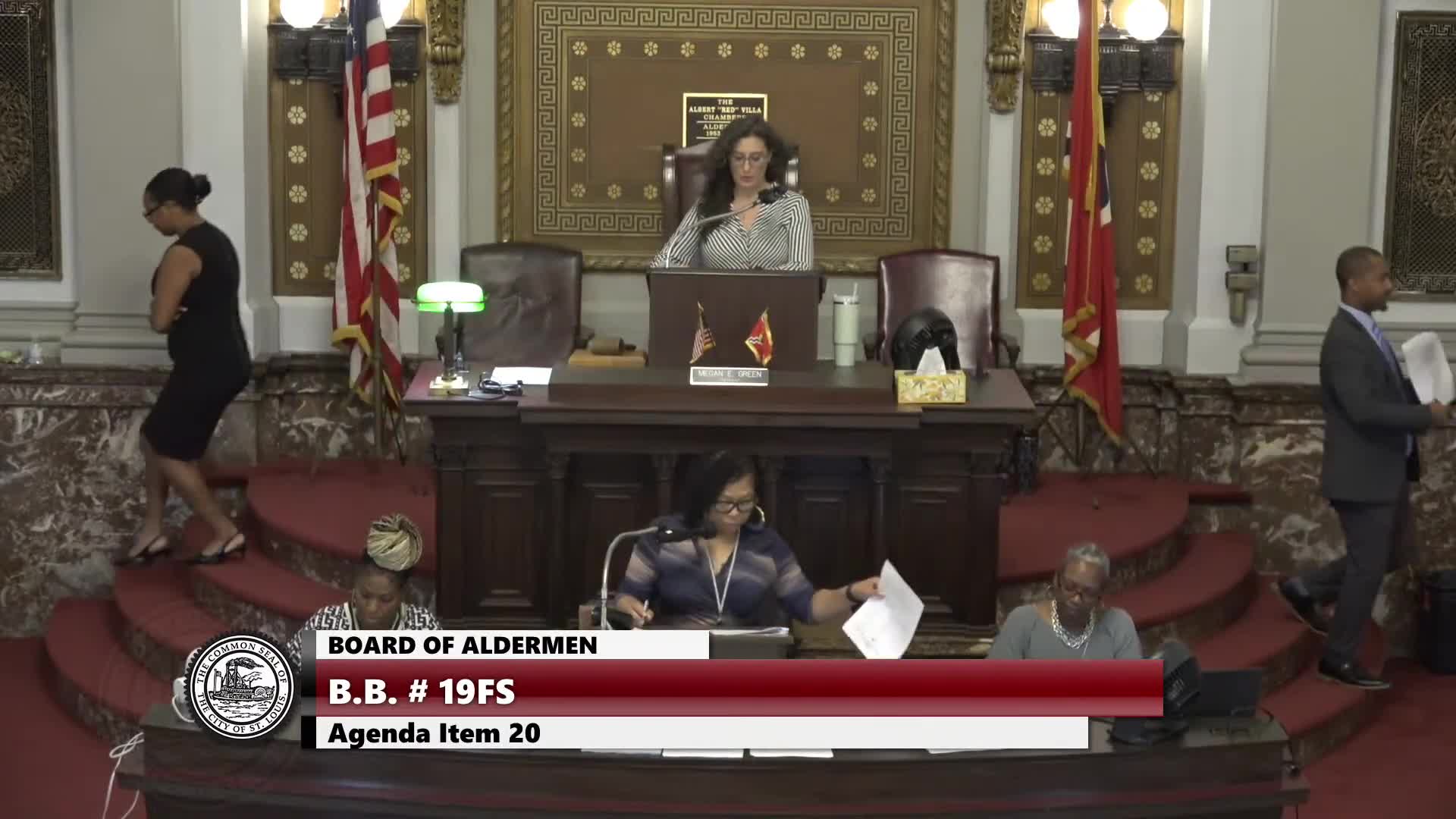
Summary
Board Bill 33, clarifying powers delegated to the St. Louis City sheriff and prescribing certain duties, passed after floor debate about whether the board can direct the sheriff to provide prisoner hospital transports and other tasks covered by state law.
The Board of Aldermen on third reading passed Board Bill 33, an ordinance setting out the powers delegated to the St. Louis City sheriff and defining activities not assigned to the office by the Missouri Constitution, state statute or city ordinance.
The bill’s sponsor, the Alderman from the fifth, asked the board to pass the measure after review of state statutes and case law. The sponsor said he was confident “we are on firm ground here” after consultation with the city counselor’s office and legal research.
The Alderman from the twelfth delivered the principal floor critique, arguing the board lacked authority to require the sheriff to perform certain transports or duties she said are governed by state law and judicial direction. She contested a specific statutory citation in the bill and characterized the measure as an overreach: “This piece of legislation is a mistake,” she said, adding the statute referenced “does not state that” the sheriff is mandated to transport prisoners to hospitals. She also read into the record an email from the sheriff’s office indicating a change in the sheriff’s transport policy, noting the sheriff’s office would “only transport prisoners for regularly scheduled medical appointments... notified about at least 2 weeks in advance” and that unscheduled or emergency medical runs would no longer be handled due to staffing and court‑related bailiff priorities.
The critic emphasized separation of local and state authority: board members cannot direct elected county officials, she said, and urged colleagues to vote no if the ordinance purports to mandate duties beyond state law.
The sponsor replied that statutory sections (he cited Section 57.45 and Section 221.04 during debate) addressed relevant issues and asked members to support final passage. After roll call the president announced the motion sustained; the clerk recorded 13 aye votes and 1 no vote and the bill was reported as finally passed and signed by the president.
The transcript records a policy dispute between the board and the sheriff’s office about transports and staffing priorities; it also records that the sheriff’s office had communicated a change in transport policy to city officials and that judges had told the sheriff to prioritize courtroom bailiff duties. The ordinance’s final text and any operational changes will be subject to legal interpretation and possible intergovernmental coordination with state courts and the sheriff’s office; the transcript does not record the sheriff’s office formal response to the final passage.