
Collingswood officials unveil joint recreation plan: fields upgrade, purchase of Good Shepherd and shared‑use agreement
Get AI-powered insights, summaries, and transcripts
Subscribe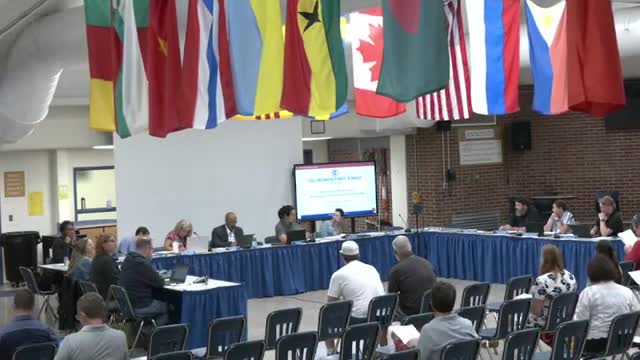
Summary
Collingswood borough and school district leaders on Monday presented a joint recreation master plan that would use a $15 million redevelopment bond to renovate athletic fields, buy the former Good Shepherd School at 100 Lees Avenue and the adjacent St. John’s convent for an ADA playground, and create a shared‑services agreement to open school facilities to the public during non‑school hours.
Collingswood borough and school district leaders on Monday presented a joint recreation master plan that would use a $15 million redevelopment bond to renovate middle‑ and high‑school athletic facilities, buy the former Good Shepherd School at 100 Lees Avenue and the adjacent St. John’s convent for an ADA‑accessible playground, and create a shared‑services agreement to open school buildings, fields and playgrounds to the community during non‑school hours.
The plan matters because officials say it combines borough borrowing power and district facilities to expand indoor and outdoor recreation without raising property taxes, while providing new space for programs such as recreation leagues, senior activities and community arts. The borough and district scheduled a community meeting to discuss designs and gather public feedback at Kinsley Middle School auditorium on Monday, Oct. 13, and identified additional outreach workshops to follow.
The joint statement presented at the school board meeting broke the initiative into three pillars: modernize outdoor athletic fields at the middle and high school, secure additional indoor recreation space by purchasing the former Good Shepherd building and its gym/kitchen/library, and convert the neighboring St. John’s convent into an ADA playground. A shared‑services agreement would set terms for community access to district facilities during non‑school hours.
Officials said the borough’s April 2025 redevelopment bond was timed to replace retiring municipal debt so the borrowing would be tax neutral for residents. Borough and district representatives said the borough would fund the field work and purchase the Good Shepherd site, while the district would ultimately own and operate the building for district uses and community recreation during non‑instructional hours. District leadership said it already maintains the Good Shepherd building under a lease and expects lease savings (about $71,000 per year) to be reallocated toward immediate maintenance such as a new gym floor.
Not all speakers endorsed the plan without reservations. One commissioner told the board that bond counsel had advised that, under the borough’s current bond ordinance, the borough could not finance a purchase of the school if the district were to use the building for education. He said counsel ‘‘weighed in today that we can’t purchase this building,’’ and urged a fuller public process before any purchase. Borough and district officials said they had sought bond counsel opinions and that counsel had been consulted repeatedly; other officials said counsel views differed and that the borough’s counsel had advised the bond could be structured to support recreational uses of the property.
Officials provided the following clarifying fiscal details during the meeting: the redevelopment bond amount being discussed is $15,000,000; the borough has approximately $181,000 in a recreation trust that can be applied to bond payments; a prior proposal discussed in March 2025 would have provided the district $3,000,000 from the redevelopment bond for general‑fund uses; and district staff estimated that a portion of the bond (public discussion identified figures such as $1.5 million for acquisition and about $13.5 million for fields in an early planning number) would cover the purchase and fields work but that final line items will be set after community input and design bids. Officials repeatedly emphasized that major renovation to make Good Shepherd a certified school would require additional capital and that the district does not have funds to fully convert the building to classroom use immediately.
District and borough leaders described operational details under discussion: the borough would initially acquire the Good Shepherd property and could convey it to the district (speakers described a possible nominal sale after borough acquisition), district custodial and buildings‑and‑grounds staff would maintain the site, capital reserves (about $1 million) would be kept intact rather than spent on acquisition, and any major capital projects to convert the building to full school use would likely require a future bond or other capital funding when district debt retires (district officials pointed to debt maturing in 2030 as a possible timing window).
Proponents stressed community benefits: new indoor gym and commercial kitchen space for programs, reduced wear on Knight Park by adding athletic capacity, immediate public access to a playground built on the convent parcel, and expanded indoor space for scouting, Odyssey of the Mind, senior programs and evening recreation. Opponents and several board members pressed for transparency on legal opinions, a clearer public engagement timeline and a breakdown of long‑term operating costs the district would assume if it owns the building.
Next steps identified on the record: the district and borough will host a public meeting Oct. 13 at 7 p.m. to review designs and solicit comment; the borough aims to finalize a shared‑services agreement by December 2025; the borough does not plan to borrow until 2026; and design and bidding work could proceed during winter so that construction could begin when conditions allow in early spring.
Community comment during the meeting included both endorsements of the plan from residents who said the town lacks indoor space, and skepticism from residents who worry the acquisition could be used later to reduce or close existing neighborhood schools. Officials said the plan will be refined in public sessions and that no final acquisition contract would be completed without further legal review and public discussion.