
Kent County commissioners hear court report on child-welfare timeliness, grievance process and specialty courts
Get AI-powered insights, summaries, and transcripts
Subscribe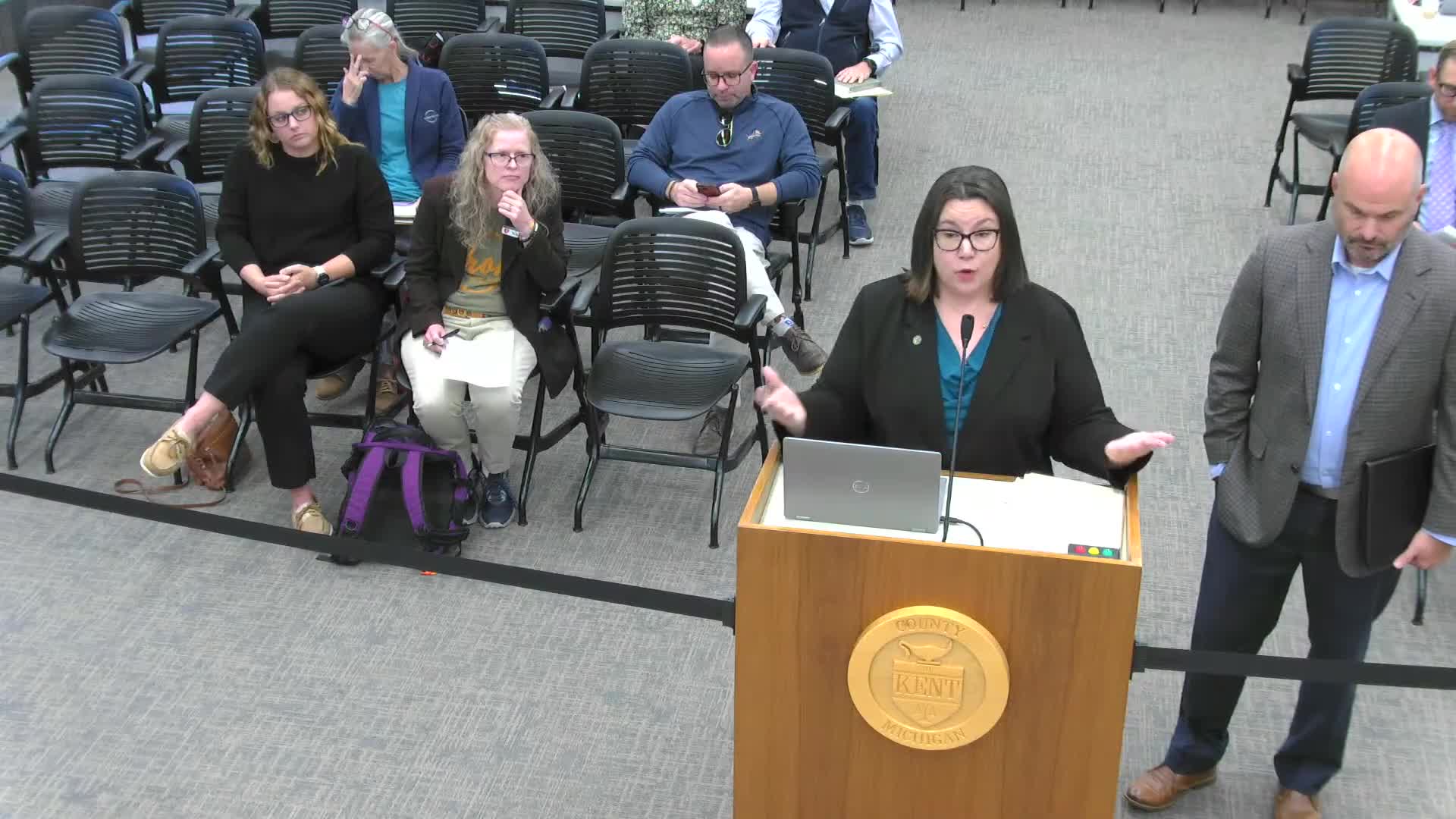
Summary
Court staff told the Kent County Board of Commissioners that the internal grievance process remains in place after the citizens advisory council was eliminated, child-welfare cases met time guidelines 80% of the time, and courts are pursuing evidence to justify additional judicial resources and outside funding for specialty courts.
At a recent Kent County Board of Commissioners meeting, court staff updated commissioners on family-court operations, including the county’s grievance process, child-welfare case timelines and prospects for outside funding and additional judicial resources.
The update mattered to commissioners because it affects the welfare of children involved in court cases, accountability for how cases are handled and whether the county can expand specialty court programs such as mental-health courts.
Tracy, a court staff member, told the board the county no longer has a citizens advisory council that previously reviewed grievances but that “that grievance process still exists.” She said the court investigates every grievance it receives and that in 2024 the court logged two grievances that were addressed through personnel action, additional staff training or both. “At the end of every year, all of this information is also turned over to the state court administrator’s office,” Tracy added, and the state office compiles reports that Michigan legislators review.
Commissioners pressed staff for details about specialty courts and performance metrics. Andy Thalhammer, a court staff member, said the county’s mental-health and other specialty courts produce annual reports used in applications for future funding. On whether an external body such as SCALE would fund additional courts, Thalhammer said, in his recounting of an outside opinion, “the statute does not include these types of things for specialty court programs,” and that federal funding prospects would be stronger if the county can demonstrate the programs are evidence-based and showing results.
Commissioners also asked about judicial resources. Thalhammer described the state’s process of collecting judicial time studies — which quantify minutes spent by judges on different case types — and a subsequent “secondary analysis” that considers referees, staff capacity and diversion programs before recommending additional judges. He said the secondary analysis is under way and will inform whether the county should request another judge.
Child-welfare timeliness drew particular attention. Commissioner Hennessy cited a chart showing the child-welfare category had the lowest percentage of cases resolved within the state time guidelines, at about 80 percent. Thalhammer said several factors contribute: greater attorney authorization for parents, worker turnover in the child-welfare system and the inherent complexity of these cases. “These are complex cases. Sometimes we go beyond the time guidelines,” he said, adding that judges sometimes keep cases open longer to ensure reunification plans and services are in place before meeting the guideline timeline.
Commissioner Feinstein asked for clarification about community outreach. Tracy said the court records about 80 outreaches with 20 organizations and that outreach work is “both” one-on-one case help in private settings and broader engagement with community partners; she cited examples such as work with a safe-haven program and partnerships at Puertas (as recorded in the meeting transcript).
Board members requested follow-up materials. When a commissioner asked for the specialty-court report, Thalhammer offered to provide the annual report and application details to commissioners. Commissioners did not take formal votes on policy changes during this discussion.
The board’s questions underscored oversight and resourcing concerns that county court staff say will be informed by forthcoming reports from the state and the court’s internal secondary analysis. Staff indicated they will provide the requested reports to commissioners for further review.